

Maddy summaryHR 4999, the ALYSSA Act, requires school districts receiving federal education funds to install silent panic alarms in every elementary and secondary school. These alarms, defined as manual devices for signaling life-threatening emergencies (like active shooters or lockdowns), must be used to alert law enforcement during security crises. The bill amends the Elementary and Secondary Education Act to make this requirement a condition for receiving federal funds, directly affecting all local educational agencies that receive such funding. It mandates that schools be prepared for security emergencies through these silent alarm systems, with no mention of funding specifics or implementation details beyond the basic requirement.
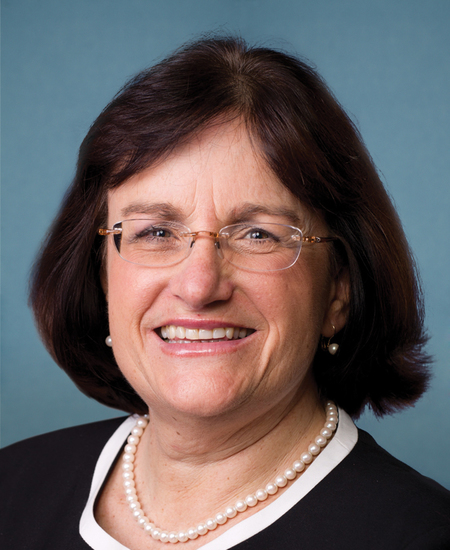
Rep. Ann M. Kuster
Sponsored bills
Maddy summaryHR 4942 extends and modifies the Conrad State 30 program, which allows states to sponsor foreign medical graduates to work in medically underserved areas in exchange for a commitment to practice for three years. The bill directly affects foreign medical graduates seeking to work in the U.S., states that sponsor them, and health facilities in underserved communities. Key provisions include creating mechanisms for physicians to change employers or states if they face issues with their current employment, adding requirements for employment agreements (including prohibitions on non-compete clauses), and establishing exceptions to the three-year work requirement under certain circumstances. The bill also creates a process for states to recapture waiver slots when physicians leave their employment and requires annual reporting on the program's usage. These changes aim to improve physician retention in underserved areas by providing more flexibility and protections for foreign medical graduates.
Maddy summaryThis bill directs the U.S. Treasury to mint commemorative coins marking the Marine Corps' 250th anniversary in 2025. It authorizes three coin types: $5 gold coins (max 50,000), $1 silver coins (max 400,000), and half-dollar coins (max 750,000), with surcharges of $35, $10, and $5 respectively. The surcharge proceeds will fund the Marine Corps Heritage Center's educational programs, with no net cost to taxpayers as the Treasury must recover all minting costs through the surcharges. The coins can only be issued during 2025, and the Treasury must ensure all costs are covered before distributing funds to the Heritage Foundation.
Maddy summaryHR 984, the Commitment to Veteran Support and Outreach Act, authorizes $50 million annually (2024-2028) for grants to states and tribes to improve outreach to veterans and their families. The bill provides funding to hire more county/Tribal veterans service officers, expand existing outreach programs, and ensure equitable access to benefits for vulnerable groups like American Indian veterans, elderly veterans, and women veterans. States and tribes must submit detailed plans, track how quickly veterans receive benefits, and report annually on progress toward outcome measures set by the Veterans Affairs Secretary. Grants must supplement, not replace, existing state/local funding and prioritize areas with critical officer shortages or high veteran suicide rates.
Maddy summaryThis bill amends the Child Nutrition Act to require school food service training programs to be scheduled during regular paid work hours whenever possible. If training must occur outside work hours, schools must compensate staff for attending, explain the necessity, and not penalize staff for missing it. Training must also be offered in-person with hands-on components when appropriate. The law directly affects school food service workers and their employers, mandating specific scheduling and compensation practices for required training.
Maddy summaryHR 4893, the Scientific Integrity Act, requires federal agencies that fund, conduct, or oversee scientific research to adopt policies preventing political interference in science. The bill mandates these agencies to prohibit suppression or distortion of research findings, establish Scientific Integrity Officers to enforce policies, and implement training and reporting systems. It directly affects scientists and engineers employed by or contracted with covered agencies (like the EPA or NIH), ensuring their work remains free from political pressure. Key mechanisms include annual public reporting on misconduct complaints, whistleblower protections, and requiring scientific conclusions to be based on evidence, not ideology.
Maddy summaryHR 4157, the "Not Just a Number Act," requires the Department of Veterans Affairs (VA) to produce annual reports on veteran suicide rates and their connection to VA healthcare and benefits. The reports must break down suicide rates by age, gender, and race, and examine how engagement with VA services (like Vet Centers, healthcare enrollment, benefits claims, and housing loans) correlates with suicide trends. The bill also mandates a VA toolkit for state/local coroners to improve veteran suicide death reporting, and a study on creating a dedicated VA suicide prevention office. These measures aim to standardize data collection and identify effective prevention strategies, directly affecting VA operations, congressional oversight, and veteran care systems.
Maddy summaryThe CHIPP Act (HR 4771) permanently extends federal funding for the Children's Health Insurance Program (CHIP), which provides health coverage to low-income children in families that earn too much to qualify for Medicaid but cannot afford private insurance. It removes previous expiration dates (like 2029) from CHIP funding provisions, ensuring continuous support for states administering the program. The bill also permanently extends related programs, including pediatric quality measures funding with automatic inflation adjustments, and modifies eligibility rules to allow states to expand coverage for children in higher-income households. This affects all 50 states that run CHIP programs and the millions of children and families who rely on this coverage.
Maddy summaryHR 4769, the PFAS Alternatives Act, funds research and training to develop PFAS-free turnout gear for firefighters. It authorizes $25 million annually (2024-2028) for grants to eligible organizations to research, develop, and test next-generation gear without per- and polyfluoroalkyl substances (PFAS), which are linked to firefighter cancer risks. The bill requires partnerships with firefighting organizations to ensure research translates into practical training and gear care guidance, including decontamination protocols. It also allocates $2 million yearly for training programs on proper gear use and maintenance, aiming to reduce exposure to hazardous chemicals during fire operations.
Helping Tobacco Users Quit Act This bill provides for Medicaid and Children's Health Insurance Program (CHIP) coverage of certain tobacco cessation services. Specifically, the bill provides for coverage, without cost-sharing, of diagnostic, therapy, and counseling services and pharmacotherapy, including prescription and nonprescription tobacco cessation agents, that are provided under medical supervision and in accordance with specified guidelines. It also applies a 90% Federal Medical Assistance Percentage (i.e., federal matching rate) for such items and services for five years.