

Maddy summaryHR 6519, the "No PFAS in Cosmetics Act," prohibits the intentional addition of perfluoroalkyl or polyfluoroalkyl substances (PFAS) to cosmetics sold in the United States. It directly affects cosmetic manufacturers and suppliers who currently use PFAS for functional properties like water resistance. The bill amends the Federal Food, Drug, and Cosmetic Act to make cosmetics containing intentionally added PFAS "adulterated" and illegal to sell, effective January 1, 2025. It also repeals a prior provision from the Modernization of Cosmetics Regulation Act of 2022 that had addressed PFAS. This is a substantive regulatory change targeting product ingredients, not a procedural measure.
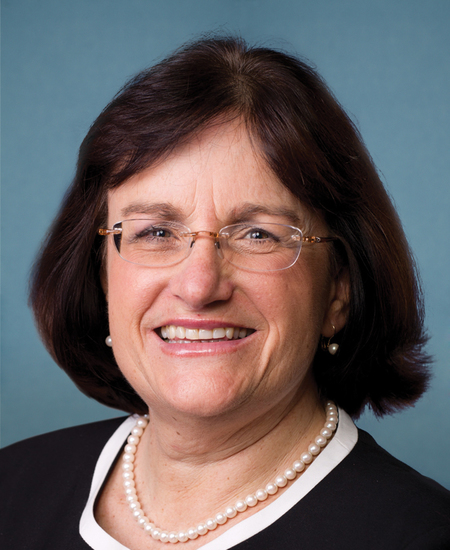
Rep. Ann M. Kuster
Sponsored bills
Maddy summaryThis bill creates a national registry to link state and tribal "responsible father registries," allowing possible biological fathers to register in one state and receive notice if they might be fathers in another state where a child is being placed for adoption. Adoption agencies, courts, and child welfare authorities would access the registry to identify possible fathers and prevent adoption delays caused by untimely notice. The registry aims to support timely permanent placements for children while protecting mothers' privacy - especially in cases of domestic violence or rape - by reducing the need for mothers to identify possible fathers. States without registries would receive guidance to establish them, and the registry would require a fee for searches.
Maddy summaryHRES 874 is a symbolic resolution expressing the House's support for designating November as "Prematurity Awareness Month." It does not create new laws or alter funding but urges the public, organizations, and communities to observe the month through events, promote awareness, and support preterm birth prevention programs. The resolution highlights statistics on preterm births (383,000 babies born preterm in 2021) and health disparities, but its sole action is endorsing the awareness designation. As a non-binding resolution, it has no direct impact on policy or affected individuals beyond raising public visibility.
Maddy summaryHRES 793 is a resolution passed by the U.S. House of Representatives calling on Hamas to immediately release all 199 hostages taken during Hamas' October 7, 2023 attack on Israel. The resolution condemns Hamas for the attack, the taking of hostages, and threats against hostages, while stating that holding hostages violates international humanitarian law under the Geneva Conventions. It demands the immediate release of all hostages and expresses sympathy for victims and their families. As a symbolic resolution, it does not create legal obligations but formally expresses the House's position.
Maddy summaryHR 6468, the Ban Water Beads Act, bans specific water beads products from sale after 180 days of enactment. It defines banned products as those made of water-absorbing polymers (like polyacrylamides), sold with beads small enough to fit in a child's mouth, and marketed as toys, educational materials, or art supplies. These products would be classified as "banned hazardous products" under the Consumer Product Safety Act, prohibiting their manufacture, import, or sale. The law directly affects manufacturers, importers, and retailers of such water beads products intended for children's use.
Maddy summaryHR 6451, the Mental Health Justice Act of 2023, provides $250 million in federal grants to states, tribes, and localities to hire mental health professionals as first responders for specific emergencies. It directs these professionals to replace police in situations involving mental health crises, substance use, or intellectual/developmental disabilities - such as when a 911 caller describes a mental health emergency or a first responder identifies someone needing mental health support. The bill requires grantees to train responders in de-escalation techniques, link individuals to community-based services (not incarceration), and report on outcomes like reduced arrests or use of force. It also mandates data collection on demographics and prevents funneling people into institutional settings, with annual reports to Congress on program effectiveness.
Maddy summaryThe Veteran Improvement Commercial Driver License Act of 2023 modifies rules for veterans' educational benefits to streamline approval of commercial driver education programs at branch locations. It allows a branch of an educational institution to be exempt from full approval requirements if it is appropriately licensed and uses the same curriculum as an approved main location. Schools must submit an annual report to the Department of Veterans Affairs verifying curriculum consistency, and the VA may withhold this exemption if needed. The changes will take effect 180 days after the VA establishes reporting rules, which must be finalized within 180 days of the bill's enactment.
Maddy summaryHR 6251, the HERO Act, provides $1 billion in federal grants to K-12 schools (both public and private) to purchase opioid overdose reversal drugs and develop staff training programs. Schools receiving funds must create emergency response plans for staff and implement educational resources on overdose prevention, CPR, and emergency response. Priority is given to schools in areas with high opioid overdose rates. Grantees must report drug usage and training outcomes to national health databases like NEMSIS and ODMAP.
Maddy summaryHR 6301, the Cancer Drug Parity Act of 2023, requires group health plans to ensure that out-of-pocket costs for oral anticancer drugs (taken by patients at home) are no higher than for intravenous or injected anticancer drugs. It applies to patients prescribed oral anticancer medications approved by the FDA and deemed medically necessary or clinically appropriate by their physician. The law prohibits insurers from increasing patient costs for oral drugs through benefit changes, such as higher copays or stricter coverage limits, and allows prior authorization for all chemotherapy. The law takes effect for 2024 plan years, and the GAO will study its impact on patient costs within two years.
Maddy summaryThis bill requires the U.S. Department of Education to add new data collection about student parents and caregivers to the national higher education data system (IPEDS). Starting in 2024-2025, it mandates colleges to track specific metrics, including enrollment rates, childcare usage, income levels, and graduation outcomes for student parents. The bill also directs the Department to conduct a study on effective campus support strategies, such as childcare access and service integration, to improve outcomes for these students. The collected data and study findings will be reported to Congress and made public, aiming to inform future policies. This directly affects all colleges participating in federal student aid programs and the millions of parenting students in higher education.