

Maddy summaryHR 6675, the Rehabilitation and Recovery During Incarceration Act, modifies Medicaid and CHIP (Children's Health Insurance Program) rules to allow states to provide mental health and substance use disorder services to incarcerated individuals. It directly affects eligible inmates - those who were Medicaid- or CHIP-eligible before incarceration or become eligible while incarcerated - by enabling states to cover these services under existing programs. Key provisions include a 100% federal funding match for these services (replacing standard rates) and requiring states to reinvest the extra funds into health IT, community providers, and reentry support services. The bill mandates a 5-year report by the Comptroller General to assess access, quality, and outcomes of care for incarcerated individuals.
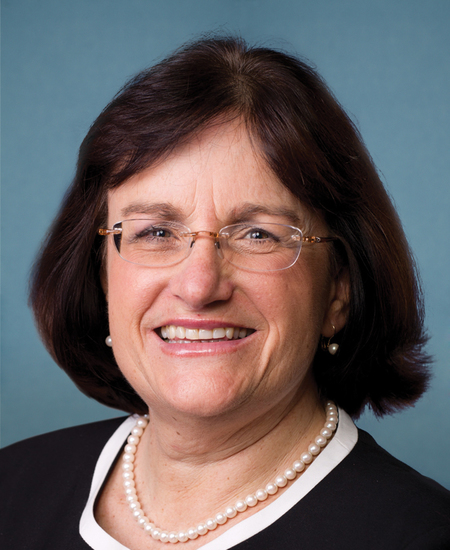
Rep. Ann M. Kuster
Sponsored bills
Maddy summaryThis bill amends existing law to expand substance abuse treatment services for children, adolescents, and young adults to explicitly include suicide prevention. It broadens eligibility for funding to include pediatric specialists, children’s hospitals, emergency departments, and Indian Health Service programs. The bill requires grantees to provide parents or guardians with counseling on preventing overdose/suicide and supplies to reduce access to lethal means (like medications or firearms). It mandates a minimum of $2 million annually in federal grants for these suicide and overdose prevention programs, effective 2024-2028.
Maddy summaryThe Clean Competition Act establishes a carbon intensity charge on covered primary goods produced domestically or imported into the United States, affecting companies in specific industries including petroleum refining, steel, cement, and chemical manufacturing. The charge is calculated based on a facility's carbon intensity (greenhouse gas emissions per unit of production) compared to industry averages, with the charge amount determined by how much a facility's carbon intensity exceeds a percentage of the industry average. Domestic producers and importers of covered primary goods will pay charges calculated using an annual carbon price that increases with inflation, with exemptions for goods from least developed countries that produce at least 3% of global exports of that good. The bill also includes a rebate program for exports of covered primary goods and establishes a grant program to help companies invest in technologies that reduce carbon intensity.
Maddy summaryHR 6600, "Tyler’s Law," requires the Secretary of Health and Human Services to study how often hospital emergency departments test for fentanyl during overdose cases, along with the costs, benefits, risks, and patient privacy impacts. The study must be completed within one year of the bill’s enactment, followed by guidance issued within six months on whether fentanyl testing should become routine. This guidance will address how hospitals can inform clinicians about testing protocols and how fentanyl testing might affect future overdose risks and patient health outcomes. The bill directly affects hospitals and emergency departments treating overdose patients, focusing on improving data-driven practices for fentanyl detection.
Maddy summaryThis bill creates a 30% tax credit for owners of hydroelectric dams who make specific upgrades to their facilities. It directly affects dam operators who install qualifying improvements like fish passage systems, water quality enhancements, dam safety upgrades, or removal of obsolete river obstructions. The credit applies to property placed in service after December 2022, requires prior approval from FERC or state officials (before 2032), and covers items such as new turbines, sediment management systems, and small remote dams serving isolated communities. The tax code is amended to include this credit as a new provision under section 48F.
Maddy summaryThis bill authorizes the posthumous presentation of a Congressional Gold Medal to honor Marshall "Major" Taylor, a pioneering Black cyclist who broke racial barriers in the late 19th and early 20th centuries. It recognizes his athletic achievements, including world records and international championship wins, as well as his advocacy for equality in sports. The medal, designed by the Treasury Secretary, will be presented to Taylor's great-granddaughter, Karen Donovan, following the congressional authorization. As a commemorative act with no policy changes, it serves solely to honor Taylor's legacy as a trailblazer and role model.
Maddy summaryThe Elizabeth Dole Home Care Act of 2023 increases the expenditure cap for home- and community-based care for veterans from 65% to 100% of costs, with exceptions for certain cases based on clinical need and geographic factors. It establishes new programs including Veteran-Directed Care, which allows veterans to select and manage their own in-home care services, and Home-Based Primary Care, which provides in-home health care overseen by VA providers. The bill requires improved coordination with existing programs like the Program of All-Inclusive Care for the Elderly (PACE) and mandates a centralized website with information about available services. It specifically targets veterans who would otherwise require nursing home care or face increased risk of hospitalization, and includes provisions to address home health aide shortages through pilot programs.
Maddy summaryThe Nuclear Fuel Security Act of 2023 establishes three key programs to increase domestic production of nuclear fuel, specifically high-assay, low-enriched uranium (HALEU) and low-enriched uranium (LEU), to support advanced nuclear reactor development. The Department of Energy must establish a Nuclear Fuel Security Program to boost domestic production, expand the American Assured Fuel Supply Program to maintain uranium reserves for supply disruptions, and create a dedicated HALEU for Advanced Nuclear Reactor Demonstration Projects Program. This program requires the Department to make specific quantities of HALEU available to reactor developers by set deadlines (3 metric tons by 2024, 8 more by 2025, and 10 more by 2026). The bill directs the Department to prioritize domestic uranium production where possible or partner with allied countries when domestic options aren't available, while ensuring reasonable compensation for fuel provided and avoiding market disruption.
Maddy summaryHR 5677, the 5G SALE Act, requires the Federal Communications Commission (FCC) to process pending applications for spectrum licenses in the 2496-2690 MHz frequency band within 90 days of the bill's enactment. It directly affects companies that won competitive auctions for this specific spectrum but had not received license approvals by March 9, 2023. The bill's key mechanism is a mandatory 90-day processing window for the FCC on these specific applications, streamlining a backlog without altering auction rules or licensing criteria. This is a procedural change focused on expediting existing applications, not creating new spectrum allocations.
Maddy summaryHRES 907 is a non-binding House resolution condemning rising antisemitism in the U.S., citing increased hate crimes (25% rise in 2022 per FBI data) and campus incidents (41% increase from 2021-2022 per ADL). It calls on all Americans, including campus leaders and government agencies, to combat antisemitism and urges implementation of the U.S. National Strategy to Counter Antisemitism. The resolution specifically requests increased funding for the Nonprofit Security Grant Program to strengthen safety protections for Jewish communities. It directly affects Jewish Americans, campus communities, and government agencies responsible for hate crime prevention and community safety.