

Maddy summary# Summary of Legislative Text This is a comprehensive legislative proposal focused on addressing substance use disorder through public health approaches, with significant funding and program requirements. Key elements include: 1. **Major Funding Programs:** - **Subtitle A (Local Grants):** $3.0 billion annually (2024-2033) for local entities to provide prevention, treatment, and recovery services - **Subtitle B (State/Regional Grants):** $4.6 billion annually (2024-2033) for state-level programs - **Subtitle C (Other Grants):** $1.0 billion annually (2024-2033) for specific entities and underserved populations - **Subtitle D (Innovation/Training):** $1.5 billion annually (2024-2033) for training, research, and capacity building 2. **Key Program Requirements:** - Mandates for evidence-based treatment services across multiple levels of care - Requirements for cultural competency, particularly for Native American communities - Specific focus on harm reduction, prevention, and recovery support - Provisions for naloxone distribution and overdose reversal programs 3. **Regulatory Changes:** - New certification requirements for covered manufacturers, distributors, and dispensers of Schedule II controlled substances - Penalties for failure to submit certifications or submitting false certifications - Creation of a "Comprehensive Addiction Resources Fund" for penalty revenues 4. **Focus Areas:** - Prevention services (including trauma-informed approaches) - Early intervention services - Recovery support services - Harm reduction programs - Workforce development for treatment providers - Special attention to underserved populations (rural communities, racial minorities, formerly incarcerated individuals) 5. **Funding Priorities:** - 10% of funds for Native American communities - Specific requirements for cultural competency and language access - Mandated data collection and reporting systems This legislation represents a significant shift toward public health approaches to substance use disorder, emphasizing prevention, treatment, and recovery support rather than punitive measures, with substantial funding commitments over a decade.
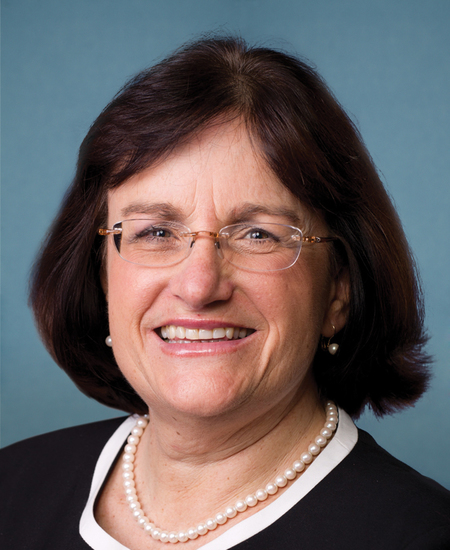
Rep. Ann M. Kuster
Sponsored bills
Maddy summaryHR 3246, the Sanction Russian Nuclear Safety Violators Act of 2023, imposes U.S. sanctions on Russian individuals or entities that endangered the Zaporizhzhia Nuclear Power Plant’s safety or Ukrainian operational control since Russia’s 2022 invasion of Ukraine. Key provisions require the President to block assets and deny visas to targeted foreign persons, with exceptions for humanitarian aid and efforts to restore Ukrainian control of the plant. The bill directly affects Russian officials and Rosatom personnel involved in the plant’s operations, aiming to address safety risks highlighted by the IAEA.
Maddy summaryThis bill requires Medicare to pay separately for certain high-cost diagnostic drugs used in nuclear imaging (like those for cancer detection) starting in 2024. It applies to drugs with a daily cost of $500 or more (adjusted annually), ensuring they are not bundled with other services. Payments will be based on either the drug's average sales price or wholesale cost, with adjustments to keep overall Medicare spending unchanged. This directly affects Medicare Part B providers (hospitals, clinics) and beneficiaries receiving these specific diagnostic treatments.
Maddy summaryHR 5390, the Critical Infrastructure Manufacturing Feasibility Act, directs the Secretary of Commerce to study U.S. manufacturing gaps in critical infrastructure sectors (like energy, water, and transportation). The study must identify imported products due to domestic supply chain constraints, analyze the job and cost impacts of manufacturing them domestically, and assess feasibility in rural areas or industrial parks. The Secretary must submit a public report with findings and recommendations to Congress within 18 months of the bill's enactment. This is a procedural study bill with no funding or mandates; it solely gathers data to inform future policy decisions.
Maddy summaryHRES 1226 is a non-binding resolution honoring 282 law enforcement officers killed in the line of duty during 2023, listed by name in the resolution. It formally acknowledges their sacrifice, expresses unwavering support for current officers, and recognizes the need for adequate resources to protect them. The resolution does not create new laws or policies but serves as a ceremonial tribute to memorialize fallen officers and support their families, aligning with existing National Police Week observances established since 1962.
Maddy summaryHRES 1206 is a symbolic House resolution supporting the designation of May 2024 as "Mental Health Awareness Month." It does not create new laws or funding but aims to raise public awareness about mental health challenges, emphasizing the need to reduce stigma and treat mental well-being as equally important as physical health. The resolution cites statistics on rising mental health crises - including increased anxiety, depression, and suicide rates among youth, LGBTQ+ individuals, veterans, and communities of color - to underscore the urgency of the issue. It encourages nationwide efforts to promote mental health awareness and access to care during this designated month.
Maddy summaryThe Captive Primate Safety Act prohibits the import, export, sale, transport, breeding, or possession of certain nonhuman primates - including chimpanzees, gorillas, monkeys, and their hybrids - in interstate or foreign commerce. It directly affects private owners, breeders, and commercial traders of these animals, with limited exceptions for pre-enactment animals (requiring registration with the U.S. Fish and Wildlife Service and restrictions on breeding/sale) and registered research facilities. The law amends the Lacey Act to add these primates to prohibited species lists, effective upon enactment, with regulations to be issued within 180 days. Enforcement remains active even if regulations are delayed, ensuring immediate prohibitions on commercial trade and possession.
Maddy summaryHR 1803, the CURD Act, defines "natural cheese" in federal law to clarify labeling standards for consumers. It specifies that natural cheese must be made by curdling milk (or milk derivatives) through traditional methods without certain processed additives, while explicitly excluding pasteurized process cheeses, cheese spreads, and similar products. The bill requires that products labeled as "natural cheese" meet this new definition, updating FDA labeling rules under the Federal Food, Drug, and Cosmetic Act. This directly affects cheese manufacturers (who must comply with the definition) and consumers (who gain clearer product distinctions on labels). The change replaces vague industry terms with a consistent, science-based standard to improve transparency.
Maddy summaryThe Safe Stay Act requires hotels, motels, restaurants, and other places of public accommodation to install compliant carbon monoxide alarms in every sleeping or dwelling unit. It defines "compliant" alarms as those meeting the latest NFPA 72 or International Fire Code standards, and mandates that owners provide written notice to guests at check-in confirming compliance. Violations would be treated as unfair or deceptive practices under the Federal Trade Commission Act, subjecting businesses to FTC enforcement. The bill does not override stricter state or local safety standards.
Maddy summaryThis bill creates the Community Economic Development Transmission Fund, which uses a portion of interest from specific federal loans (like those for major electric transmission projects under the Infrastructure Investment and Jobs Act or Inflation Reduction Act) to provide payments to host communities. Host communities - defined as local governments or tribes where transmission projects are built - receive funds within 18 months of project construction start. Communities must use 80% of the funds for local services like schools, broadband, or public infrastructure, and at least 20% for conservation, recreation, or climate resilience projects. The fund aims to support communities hosting large-scale transmission projects by directing resources toward local priorities.