

Maddy summaryThis bill modifies federal highway funding rules to prioritize safety for cyclists and pedestrians. It allows states and local governments to receive 100% federal funding for projects that connect existing bike/pedestrian infrastructure or reduce safety risks for these users, instead of the usual lower federal share. The bill also requires projects to align with state safety plans focusing on vulnerable road users and includes specific "Proven Safety Countermeasures" for cyclists/pedestrians. These changes directly affect states administering federal highway funds and local governments seeking to improve non-motorized transportation infrastructure.
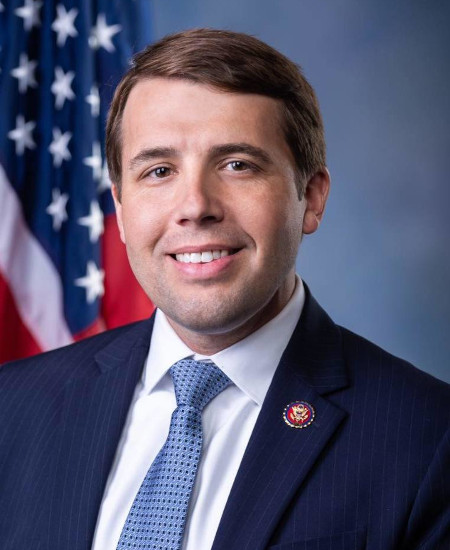
Rep. Chris Pappas
Sponsored bills
Maddy summaryHR 502 requires the Veterans Affairs (VA) Secretary to repay members of the Armed Forces for contributions they made toward Post-9/11 Educational Assistance benefits. This directly affects service members who paid into the program but did not receive full benefits due to service time or other factors. The bill amends existing law to mandate this repayment, effective August 1, 2023. It also slightly adjusts a housing loan fee deadline from January 14, 2031, to January 28, 2031, in the same law. The bill does not change eligibility for benefits but ensures repayment for prior contributions.
Correcting Guam's History in the PACT Act This bill expands eligibility for a presumption of service-connection for specified diseases associated with exposure to certain herbicide agents. Under a presumption of service-connection, specific conditions diagnosed in certain veterans are presumed to have been caused by the circumstances of their military service. Health care benefits and disability compensation may then be awarded. Under the bill, service performed in Guam or its territorial waters between August 15, 1958, and July 31, 1980, provides a veteran who has a specified disease that is associated with exposure to certain herbicide agents with eligibility for a presumption of service-connection. (Under current law, the eligible time frame for service in Guam is between January 9, 1962, and July 31, 1980.)
Establishing Accreditation Grants for Law Enforcement Act of 2023 or the EAGLE Act of 2023 This bill requires the Department of Justice to provide grants to eligible local law enforcement agencies for activities related to obtaining qualified accreditation or recertification. Such accreditation or recertification shall be provided by a professional law enforcement organization involved in developing standards for law enforcement at the national, state, regional, or tribal level, such as the Commission on Accreditation for Law Enforcement Agencies.
Maddy summaryThis bill expands the U.S. Postal Service's (USPS) subpoena authority for investigations into specific violations. It allows the Postmaster General to issue subpoenas requiring production of records and testimony related to "covered offenses," including postal law violations, mail-related crimes under Title 18, certain federal laws, and mail-related drug offenses under the Controlled Substances Act. Subpoenas can demand records (like documents or evidence) and testimony from custodians about those records' authenticity, though they cannot require testimony in investigations under section 3005(a). The bill also restricts approval of subpoenas to the General Counsel, a Deputy General Counsel, or the Chief Postal Inspector.
Maddy summaryThe DAIRY PRIDE Act would require food products using dairy-related terms (like "milk," "yogurt," or "cheese") to meet the FDA's definition of dairy - derived from animal milk - to prevent misleading labeling of plant-based alternatives. It directly affects producers of plant-based products currently marketed with dairy terms, such as almond or oat milk, which often lack comparable nutrition. The bill mandates the FDA issue enforcement guidance within 180 days and report to Congress on actions taken after two years. This policy change aims to align product names with the FDA's existing definition of dairy products under federal law.
Maddy summaryThe Dental and Optometric Care Access Act of 2023 (DOC Access Act) requires health insurance plans covering dental and vision care to allow providers (like dentists and optometrists) to charge patients the usual and customary rate for uncovered services, with a specific rule limiting dental cleanings to the network fee even if it exceeds annual coverage limits. It prohibits plans from restricting providers' choices of laboratories or suppliers for patient care. This law directly affects dental and vision care providers and the health insurance plans that offer these services. The bill establishes concrete billing and coverage standards to improve access to necessary dental and vision care.
Maddy summaryHRES 228 is a non-binding resolution recognizing the Kingdom of Bhutan's responsibility for the oppression and forced eviction of over 100,000 Nepali-speaking Bhutanese citizens (Lhotshampas) during the 1980s and 1990s due to their identity, culture, and language. It directly urges Bhutan to release political prisoners, restore citizenship to those stripped of it, accept the return of refugees from Nepal, and establish a Truth Commission to investigate past human rights abuses. The resolution also notes that over 250,000 Lhotshampas inside Bhutan continue to face discrimination and loss of citizenship. As a statement of congressional position, it does not impose legal requirements but calls for specific reconciliation actions.
Maddy summaryThis bill authorizes a Congressional Gold Medal to honor the "Hello Girls" - female telephone operators who served in the Army Signal Corps during World War I. They provided critical battlefield communications in France (connecting 26 million calls), wore military uniforms, and faced combat risks, but were denied veteran benefits for 60 years due to being classified as civilian contractors. The medal recognizes their pioneering service, devotion, and the decades-long struggle to gain military recognition. The award follows similar recognition for other WWII women veterans and aims to correct the historical injustice they faced.
Prostate Cancer Community Assistance, Research and Education Act of 2023 or the PC-CARE Act This bill establishes a committee to develop, implement, and periodically revise a plan to coordinate federal activities and programs concerning prostate cancer, including those related to research, screening, diagnosis, and treatment. Committee members must include representatives from specified federal agencies, as well as researchers, clinicians, individuals living with prostate cancer (or their caregivers), and other stakeholders. In addition, at least half of the members must be physicians.