

Maddy summaryHR 1818, the Aviation Workforce Development Act, expands tax-advantaged savings plans (529 plans) to cover costs for specific aviation training programs. It allows funds from these plans to pay for tuition, fees, and required materials at FAA-certified aviation maintenance technician schools (Part 147) or commercial pilot training programs (Part 61 or 141). This directly affects students pursuing careers as aircraft maintenance technicians or commercial pilots by making these training costs more affordable through existing tax-advantaged savings. The bill amends the tax code to include these programs under "qualified higher education expenses" for 529 plan distributions.
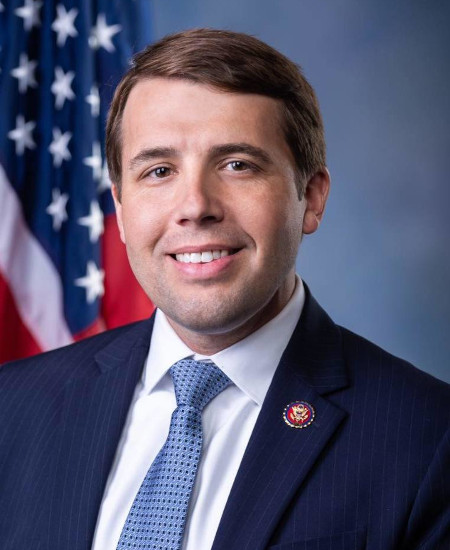
Rep. Chris Pappas
Sponsored bills
Maddy summaryHR 1831 would award Billie Jean King a Congressional Gold Medal to honor her lifelong advocacy for equal rights in sports and society. The bill directs the Secretary of the Treasury to strike the medal and have it presented by congressional leaders, recognizing her pivotal role in advancing women's equality through tennis (including founding the Women’s Tennis Association and securing equal prize money) and her broader impact on society through initiatives like Title IX advocacy.
Maddy summaryThis bill changes how U.S. foreign aid is provided to international health organizations. It prevents U.S. agencies from denying aid to foreign non-governmental organizations (NGOs) solely because they offer health services (like counseling or referrals) using their own funds, as long as those services follow local laws. It also stops applying stricter rules about how foreign NGOs can use their own funds for advocacy compared to U.S. NGOs receiving similar aid. The bill directly affects foreign health-focused NGOs that rely on U.S. foreign assistance funding.
Maddy summaryHR 1814, the FIRE STATION Act, creates a federal grant program to help fire departments and emergency medical services (EMS) organizations upgrade or build facilities. It directly affects career, volunteer, and combination fire departments, as well as fire training facilities and nonaffiliated EMS organizations (non-hospital-based EMS groups). The program allocates $750 million for fiscal year 2024, with grants covering facility construction/renovation, safety upgrades (like HVAC or mold remediation), and requiring compliance with current safety codes. Grants are capped at $7.5 million per recipient, must follow Davis-Bacon wage standards, and require annual reporting on fund usage and program effectiveness.
Maddy summaryThis bill establishes a special "Ski Area Fee Retention Account" to manage fees collected from ski areas operating on National Forest System land. It requires 80% of these fees to stay at the specific forest unit where the ski area is located (75% for program administration and visitor services, 25% for facility maintenance), with 20% available for broader Forest Service recreation projects. Funds can be used for activities like trail maintenance, visitor signage, avalanche education, and facility repairs but cannot cover wildfire suppression or land acquisition. The bill ensures these fees supplement, not replace, existing funding for forest units.
This resolution congratulates the people of Greece as they celebrate the 202nd anniversary of the War of Greek Independence. The resolution also expresses support for the principles of democracy, human rights, and the rule of law to which the people of the United States and Greece are committed.
Maddy summaryHR 1777 establishes a $50 million annual fund (2024-2028) for collaborative defense research between the U.S. and Israel in emerging technologies like artificial intelligence, cybersecurity, directed energy, and automation. The bill directly supports U.S. and Israeli military forces by enabling joint development of new warfare capabilities to address current and future defense challenges. Key provisions include authorizing $50 million per year for collaborative projects, building on existing U.S.-Israel defense partnerships like counter-tunnel and counter-drone systems. This funding aims to strengthen bilateral defense innovation without altering existing military aid structures.
Maddy summaryHCONRES 28 is a symbolic resolution expressing Congress's view that tax-exempt fraternal benefit societies - organizations providing life, health, and accident benefits to members - have long delivered critical community support. It states these societies, with about 7 million members nationwide, generate significant annual value through charitable work and volunteer activities (estimated at over $3.8 billion yearly). The resolution affirms that their tax-exempt status under Section 501(c)(8) of the tax code is essential for sustaining their volunteer-driven model and relieving pressure on government safety programs. As a non-binding expression of congressional sentiment, it does not alter existing laws or create new obligations.
Maddy summaryHR 1748, the Quantum in Practice Act, amends the National Quantum Initiative Act to explicitly include "quantum molecular modeling or simulation" as a priority research area. This change directs federal funding and research efforts toward advancing quantum computing applications for molecular-level simulations. The bill directly affects scientists and researchers working under the National Quantum Initiative Act by expanding their program focus to include modeling chemical processes, materials, and reactions. Key provisions add this specific research category to existing funding priorities, aiming to accelerate breakthroughs in fields like sustainable fertilizers, drug development, and advanced materials. The policy change is purely procedural, redirecting existing program resources without creating new funding.
Maddy summaryHR 1716, the Global Aircraft Maintenance Safety Improvement Act, requires U.S. airlines to annually report detailed information about heavy maintenance work performed outside the U.S. on their aircraft, including locations, work descriptions, and any safety issues identified after maintenance. It prohibits U.S. airlines from entering new contracts for such maintenance with repair stations in countries classified by the FAA as "Category 2" due to safety deficiencies. The bill also mandates that mechanics and supervisors at foreign repair stations performing heavy maintenance on U.S. aircraft must hold appropriate FAA certifications. Additionally, it establishes a working group with international aviation authorities to review and recommend improvements for overseeing foreign repair stations.