

Maddy summaryHJRES 76 proposes renaming the Robert E. Lee Memorial in Arlington National Cemetery to the "Arlington House National Historic Site." This procedural bill would replace all official references to the memorial with the new name and repeal two prior resolutions (1955 and 1972) that established the memorial. The change affects how the site is identified in federal laws, documents, and records but does not alter its management or historical significance. The bill focuses solely on the official designation, not on policy changes or historical interpretation.
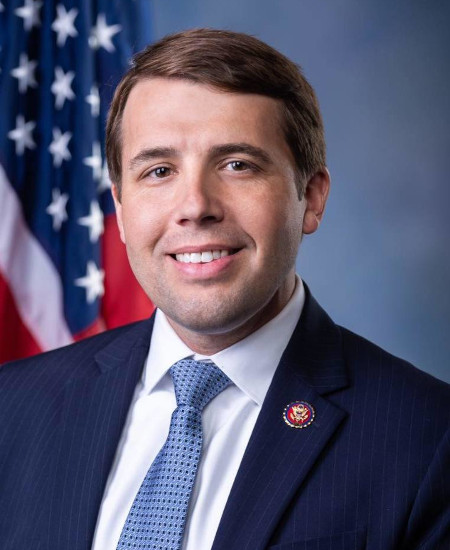
Rep. Chris Pappas
Sponsored bills
Maddy summaryThe Equality Act (HR 15) would amend federal civil rights laws to explicitly prohibit discrimination based on sexual orientation and gender identity in public accommodations, housing, employment, credit, and jury service. It amends the Civil Rights Act of 1964 to include sexual orientation and gender identity as protected characteristics under existing sex discrimination provisions. The bill would require businesses, housing providers, employers, and government entities to provide equal access and services without regard to a person's sexual orientation or gender identity. It includes specific definitions for gender identity and sexual orientation to clarify protections across all covered areas. The law would apply to all entities covered by the Civil Rights Act of 1964, including those receiving federal funding.
Maddy summaryHR 4220, the Dental Care for Our Troops Act, creates a dedicated dental benefits plan for members of the Selected Reserve of the Ready Reserve within the military. The bill amends TRICARE law to establish a "no premium" dental plan, meaning Selected Reserve members enrolled in this plan pay no monthly fees or copayments for covered dental care. Key provisions include removing all cost-sharing requirements for dental services under this specific plan and adding a new subsection ensuring members receive care without charges. This directly affects military reservists who serve in the Selected Reserve, providing them with free dental coverage under TRICARE.
Maddy summaryThe Healthcare for Our Troops Act eliminates premiums for individual TRICARE Reserve Select healthcare coverage for members of the Selected Reserve (part-time military members) while establishing a no-premium dental plan for these service members. It also adjusts eligibility for retirees under 60 who receive retired pay for non-regular service. The bill requires new forms for healthcare providers to track medical and dental readiness of Selected Reserve members, and mandates a study on replacing mass medical events with the new coverage model. These changes apply to TRICARE healthcare beginning one year after the bill's enactment.
Secure E-Waste Export and Recycling Act This bill prohibits the export or reexport of electronic waste, such as computers, televisions, and consumer electronics, subject to certain exemptions (e.g., items that meet specific criteria designed to ensure they do not become the source of counterfeit products).
Maddy summaryThe Safer Response Act of 2023 increases federal funding for first responder training. It amends the Public Health Service Act to raise annual funding from $36 million (fiscal years 2019-2023) to $56 million (fiscal years 2024-2028). This funding directly supports state and local first responder programs, including police, fire, and emergency medical services. The key mechanism is a specific, multi-year budget adjustment for training initiatives under the Public Health Service Act. The bill focuses solely on increasing financial resources for training, with no additional policy changes described.
Maddy summaryThis bill amends a federal grant program to fund addiction recovery and workforce initiatives, targeting states with high overdose deaths, unemployment, and low labor force participation compared to national averages. It establishes specific metrics - such as overdose death rates exceeding the national average, unemployment rates above the national average, and labor force participation below the national average - to determine grant funding levels. The bill also allows grant funds to cover transportation for individuals accessing job training, treatment, or recovery services. Annual funding increases from $5 million to $12 million per year for fiscal years 2024-2028.
Maddy summaryHR 4121, the Right to Contraception Act, establishes a federal statutory right for individuals to access contraceptives and contraception services without government restriction or coercion, directly affecting all people seeking reproductive care and health care providers. The bill prohibits state or federal laws that limit access to contraceptives (defined broadly to include devices, drugs, and fertility methods), prevent individuals from obtaining or using them, or allow providers to refuse services based on personal beliefs. It preempts conflicting state laws, requires any restrictions to be justified by "clear and convincing evidence" of advancing access with no less restrictive alternative, and allows private lawsuits to challenge violations. The Act applies nationwide to all health care providers and individuals, protecting access regardless of factors like race, income, or location.
Maddy summaryHR 4076 establishes a joint U.S.-Israel program to fund health technology development, authorizing $4 million annually (2024-2026) through the U.S. Health and Human Services Department. It requires Israel to match U.S. funding and focuses on collaborative projects in artificial intelligence, vaccines, telemedicine, diagnostic tests, and data-driven personalized medicine for emerging infectious diseases. The program can either build on an existing U.S.-Israel agreement or create a new one under a 2008 science cooperation framework. This bill directly affects U.S. federal health agencies and the Israeli government, with funds restricted to joint projects meeting specific technological and health priorities.
Maddy summaryThis bill increases annual funding for the Substance Use Disorder Treatment Workforce Loan Repayment Program from $25 million to $40 million per year, covering fiscal years 2024 through 2028. It directly affects healthcare professionals working in substance use disorder treatment who have federal student loans, helping them repay those loans through federal reimbursement. The key provision is the funding increase, extending the program's support for this workforce without altering eligibility or new requirements. This change provides more consistent financial support for treatment providers, aiming to address staffing needs in a critical healthcare area.