

Maddy summary# Summary of the Government Surveillance Reform Act of 2023 This comprehensive legislative proposal aims to reform government surveillance practices in the United States with a strong emphasis on privacy protections, judicial oversight, and government transparency. The key components include: 1. **Cell Site Simulator Restrictions**: - Comprehensive ban on cell-site simulators (stingrays) except under specific circumstances requiring warrants - Requires judicial approval for most uses, with strict limitations on scope, duration, and minimization of incidental collection - Mandates disclosures about potential disruptions to emergency services - Includes detailed reporting requirements for government agencies 2. **Vehicle Data Protections**: - Prohibits warrantless access to vehicle data (including telematics and onboard sensors) - Requires warrants for most access, with specific exceptions for consent and emergencies - Creates detailed definitions and procedures for consent requirements 3. **Enhanced Foreign Intelligence Surveillance Oversight**: - Requires more detailed reporting by the Foreign Intelligence Surveillance Court - Mandates annual reports on accuracy and completeness of applications - Increases transparency around Section 702 collection - Requires reporting on queries targeting U.S. persons 4. **Data Broker and Service Provider Protections**: - Strengthens privacy protections for data held by data brokers - Requires court orders for government access to certain data - Includes minimization requirements for handling collected data - Prohibits warrantless use of data obtained through cell site simulators 5. **Transparency Requirements**: - Mandates detailed public reporting on surveillance activities - Requires annual reports on accuracy of applications - Increases granular reporting on targets and queries - Requires public disclosure of statistics on surveillance use The legislation represents a significant shift toward greater privacy protections and government accountability in surveillance practices, with detailed technical requirements for compliance and enhanced reporting obligations for government agencies. It would significantly impact how law enforcement and intelligence agencies conduct surveillance operations while attempting to balance public safety needs with constitutional privacy rights.
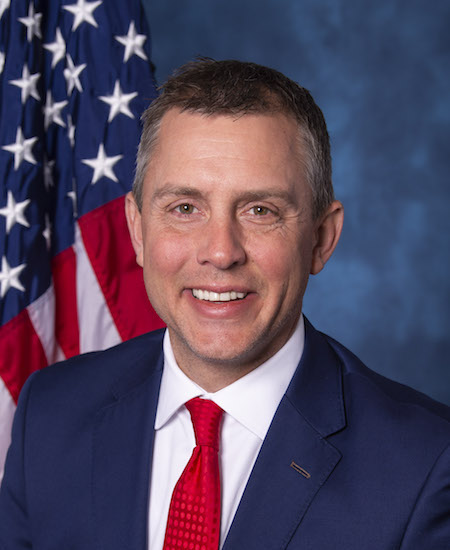
Rep. Kelly Armstrong
Sponsored bills
Adding Coccidioidomycosis to the FDA Priority Review Voucher Program Act of 2023 This bill expands the priority-review voucher program for tropical diseases to include coccidioidomycosis (also known as Valley fever). A voucher entitles the holder to have a future new drug or biological product application acted upon by the Food and Drug Administration within six months.
Maddy summaryThe SHIP Act imposes sanctions on foreign entities that knowingly handle Iranian petroleum, targeting those involved in port operations, transportation, refining, or ship-to-ship transfers of Iranian oil. Starting 90 days after enactment, the President must block assets, deny visas, and impose penalties on individuals or companies engaging in these activities, including family members or owners of sanctioned entities. It requires annual reports tracking Iran's oil exports, revenues, and key players like shipping companies and ports. The sanctions terminate if the President certifies Iran has stopped supporting terrorism and dismantled weapons programs.
Maddy summaryThis bill prohibits federal courts from considering acquitted conduct when sentencing defendants. It amends sentencing guidelines to prevent judges from using conduct for which a person was found not guilty (or had charges dismissed) as a basis for punishment, except to potentially reduce a sentence. The law defines "acquitted conduct" as acts where a defendant was acquitted at trial, received a favorable disposition (like dismissal), or was found not responsible in juvenile proceedings. The change applies only to cases where sentencing occurs after the bill's enactment.
Maddy summaryHR 2601, the National Human Trafficking Hotline Enhancement Act, requires organizations applying for federal grants under the Trafficking Victims Protection Act to certify they will share hotline information with state or local law enforcement upon request, while following disclosure laws. This directly affects grant applicants, such as anti-trafficking organizations operating the National Human Trafficking Hotline. The key mechanism adds a new certification requirement to grant eligibility, ensuring potential data sharing with law enforcement when appropriate. The bill also mandates a joint report from the Attorney General and DHS Secretary to Congress on how this requirement is implemented. The bill does not change the hotline's operations or victim services.
Maddy summaryHRES 774 is a symbolic resolution recognizing the influx of known or suspected terrorists along the U.S. northern border as a national security threat. It cites statistics showing 432 such encounters in fiscal year 2023 (up 38% from 2022), with a 1,889% increase in monthly encounters since President Biden took office in 2021. The resolution specifically demands Secretary of Homeland Security Mayorkas implement a plan to better secure the northern border. As a non-binding resolution, it does not create new law or policy but expresses congressional concern based on the cited data.
This resolution urges the President to demand the release of all hostages in Gaza. The resolution also urges the President to maintain all applicable sanctions on Iran and to use all other coercive and diplomatic resources to secure the release of Americans wrongfully detained in Gaza.
Maddy summaryHRES 771 is a non-binding resolution expressing the U.S. House of Representatives' support for Israel following Hamas' October 7, 2023, attack. It condemns Hamas' actions, affirms Israel's right to self-defense, and calls for the immediate release of hostages. The resolution also urges enforcement of existing laws restricting aid to terrorists and sanctions against Iran for supporting Hamas. It does not create new policies or allocate funds, as it is a symbolic statement of congressional support.
Maddy summaryHRES 768 is a symbolic House Resolution expressing congressional support for Israel following Hamas' October 7, 2023 attacks. It condemns Hamas' actions, reaffirms Israel's right to self-defense, and calls for the immediate release of hostages. The resolution references the U.S. commitment to Israel's security through existing military aid programs, including the 2016 U.S.-Israel Memorandum of Understanding, and emphasizes enforcement of laws like the Taylor Force Act to prevent U.S. aid from reaching terrorist groups. As a symbolic resolution, it does not create new policy but serves as a statement of congressional support for Israel.
Health Care Practitioner Disaster Protection Act This bill extends certain liability protections available for health care practitioners who provide voluntary health care services in declared emergencies through a community health center other than the one that initially sponsored them. Current law makes the liability protections available to volunteer practitioners that are sponsored by a particular community health center. This bill maintains the liability protections for a volunteer practitioner who provides services through a different community health center if the center (1) seeks the assistance of the volunteer practitioner to respond to a declared emergency, and (2) promptly notifies the Department of Health and Human Services that the volunteer practitioner will be providing services.