

Maddy summaryThe STATES 2.0 Act would allow states to regulate cannabis according to their own laws without federal interference, while establishing a federal framework for interstate commerce. It would create a federal excise tax on marijuana to support regulation without adding excessive costs to consumers, and would require the FDA to regulate marijuana products as drugs, food, or cosmetics. The bill would exempt state-legal cannabis activities from federal prohibition, including removing cannabis from the federal controlled substances schedule when sold in compliance with state law. It would also allow federally recognized tribes to regulate cannabis within their jurisdictions under tribal law, and would require a study on how cannabis legalization affects traffic safety.
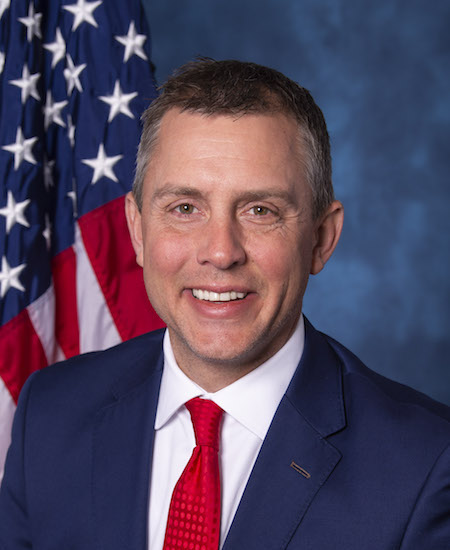
Rep. Kelly Armstrong
Sponsored bills
Maddy summaryThe Innovative FEED Act of 2023 defines and regulates "zootechnical animal food substances" - substances added to animal feed to affect digestion, reduce foodborne pathogens, or alter gut microbiome without providing nutrition. It requires these substances to be approved as food additives by the FDA under existing rules, with specific data on intended effects and mandatory labeling stating "Not for use in the diagnosis, cure, mitigation, treatment, or prevention of disease in animals." The bill excludes drugs, hormones, ionophores, and other substances from this category. This directly affects animal feed manufacturers, the FDA’s regulatory process, and the labeling requirements for these products.
Maddy summaryHR 6688, the Cold Case Modernization Act, allows states and local governments to use federal grants for identifying unidentified human remains without first determining if the death was a homicide. It amends existing laws (specifically the Child Abuse Prevention Act and Department of Justice grants) to remove the requirement that a death must be classified as a homicide to qualify for funding. This change directly affects states and local agencies receiving DOJ forensic grants, enabling them to apply these funds toward unidentified remains cases regardless of the cause of death determination. The bill focuses on expanding access to forensic DNA analysis for identification purposes, streamlining efforts to resolve cold cases involving unidentified remains.
Maddy summaryThe BOP Direct-Hire Authority Act (HR 6628) allows the Bureau of Prisons to hire qualified candidates for positions that would normally require competitive hiring without following standard federal hiring procedures, such as public announcements or competitive exams. This directly affects the Bureau of Prisons' ability to fill vacancies at its facilities more quickly. The authority expires once 96% of competitive service positions across all Bureau of Prisons facilities are filled. The bill changes the hiring process for existing positions but does not alter the total number of positions available.
Maddy summaryHR 6568, the STOP Act of 2023, prohibits secondary ticket sellers from advertising or selling event tickets they do not physically possess (e.g., "speculative ticketing"). It requires these sellers to clearly separate ticket services from actual tickets, provide full refunds if events are canceled (except for unforeseeable events like natural disasters), and disclose refund policies upfront. The bill also bans deceptive website practices, such as falsely claiming affiliation with venues or using misleading domain names. These rules directly affect secondary market platforms like StubHub and Ticketmaster resale services, aiming to protect consumers from scams and unclear fees.
Maddy summaryThe Immigration Visa Efficiency and Security Act of 2023 caps family-based immigrant visas for any single country at 15% (2% for dependent areas) of total visas annually, addressing longstanding visa backlogs for certain nations. It establishes new requirements for H-1B employers, including posting job openings on a Department of Labor website, meeting specific wage requirements (minimum $90,000 or prevailing wage), and preventing discrimination against workers. The bill also creates enhanced procedures for investigating H-1B violations, increases penalties for noncompliance, prohibits certain visas for nationals of "foreign adversary countries," and establishes a new pathway for employment-based immigrants to adjust their status with specific job requirements during the process.
Maddy summaryHRES 870 is a symbolic House resolution supporting National Rural Health Day, observed annually on the third Thursday of November. It recognizes rural health care providers and the 60+ million people living in rural communities who face challenges like hospital closures, limited access to care, and health disparities. The resolution expresses commitment to improving rural health care accessibility and affordability but includes no new funding, programs, or policy changes - only a formal acknowledgment of existing efforts. It directly affects rural communities by honoring their health care contributions through a non-binding statement.
Maddy summaryH.J.Res. 66 disapproves a specific rule issued by the Consumer Financial Protection Bureau (CFPB) regarding small business lending under the Equal Credit Opportunity Act (Regulation B). The resolution, if passed, would prevent this CFPB rule from taking effect by declaring it "have no force or effect." The rule in question (88 Fed. Reg. 35150) aimed to clarify how lenders must evaluate small business loan applications under existing equal credit laws. This disapproval directly affects the CFPB's regulatory authority and would block the rule's implementation for small business lenders and financial institutions.
Maddy summaryHRES 793 is a resolution passed by the U.S. House of Representatives calling on Hamas to immediately release all 199 hostages taken during Hamas' October 7, 2023 attack on Israel. The resolution condemns Hamas for the attack, the taking of hostages, and threats against hostages, while stating that holding hostages violates international humanitarian law under the Geneva Conventions. It demands the immediate release of all hostages and expresses sympathy for victims and their families. As a symbolic resolution, it does not create legal obligations but formally expresses the House's position.
Maddy summaryHJRES 99 would exempt "premium cigars" from federal tobacco regulations under the Federal Food, Drug, and Cosmetic Act. It defines premium cigars by eight specific criteria, including being handmade, containing only tobacco/water/gum, having no filters, and meeting weight requirements. This exemption directly affects manufacturers of cigars meeting this definition, primarily small family-owned businesses. The bill cites a 2022 National Academies report finding premium cigars are used by only 1% of U.S. adults, mainly by non-daily adult users with lower health risks than other tobacco products. If enacted, it would remove federal FDA oversight for these cigars, shifting regulation to states.