

Maddy summaryHR 6619, the PATROL Act, prevents the federal government from suing states for building border barriers. It specifically blocks the Attorney General from filing civil lawsuits under the 1899 Act against states that construct physical barriers (like walls, fences, or buoys) along the border to stop illegal entry or protect state territory. The law directly affects states building such barriers and the federal government’s legal authority to challenge those actions. This is a procedural change that removes a legal obstacle for states pursuing border security measures.
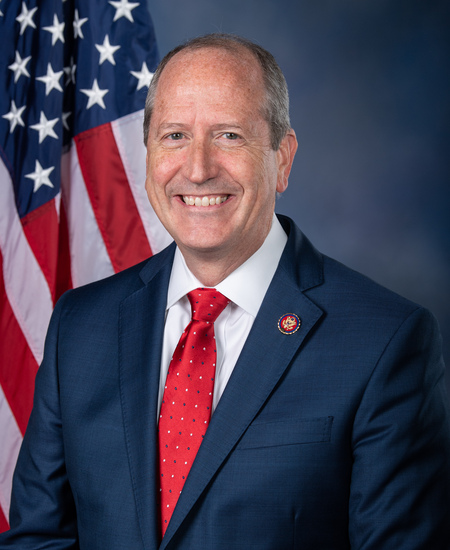
Rep. Dan Bishop
Sponsored bills
Maddy summaryThis bill restricts warrantless surveillance of U.S. persons by amending the Foreign Intelligence Surveillance Act. It limits who can conduct queries of U.S. person data (capping at five personnel per FBI field office), prohibits using such queries for law enforcement without proper authorization, and requires documentation of all queries. The bill creates exceptions for emergencies, consent, and cybersecurity, but prohibits using metadata results to access protected communications. It also limits how information acquired under Section 702 can be used in criminal proceedings, requiring specific approvals for such use.
Maddy summaryThis bill prohibits federal funding for two specific initiatives: the Justice40 Initiative (focused on delivering 40% of climate benefits to disadvantaged communities) and the American Climate Corps (a program announced in a September 2023 White House fact sheet to create climate jobs for young people). It blocks all federal budget allocations for these programs, directly affecting their implementation. The bill does not create new programs or alter existing laws, but prevents the use of taxpayer funds to support these two named initiatives.
Maddy summaryThis bill requires the Committee on Foreign Investment in the United States (CFIUS) to review certain new investments by China in U.S. real estate intended for manufacturing facilities. It specifically targets transactions where the Chinese government or entities it controls could gain control of a U.S. business operating on that property, such as through ownership stakes, board appointments, or ties to the Chinese Communist Party. The bill mandates that these investments must be reported to CFIUS before completion, affecting Chinese investors planning to build factories or similar facilities in the U.S. with government connections.
Maddy summaryThis bill denies U.S. green energy tax credits to companies connected to specific countries. It targets companies created in, controlled by, or owned by entities linked to China, Russia, Iran, or North Korea. The law amends the tax code to exclude these "disqualified companies" from claiming credits under sections covering solar, wind, and other clean energy investments. This directly affects U.S. businesses with ties to those nations seeking federal tax benefits for green energy projects.
Maddy summaryHR 6096, the Allied Burden Sharing Report Act of 2023, requires the Secretary of Defense to submit an annual report by March 1st to Congress detailing allied contributions to common defense. The report must include each country's annual defense spending (as a percentage of GDP), their participation in U.S.-led military operations, any restrictions on how their contributions are used, and U.S. or allied efforts to address such restrictions. This applies specifically to NATO members, Gulf Cooperation Council states, Rio Treaty signatories, Australia, Japan, New Zealand, the Philippines, South Korea, and Thailand. The bill mandates these reports be submitted in unclassified form, with a potential classified annex, to the relevant congressional committees.
Maddy summaryHR 6074, the State Border Defense Act, authorizes state and local law enforcement officers in California, Arizona, New Mexico, and Texas to enforce federal immigration laws prohibiting unlawful entry into the U.S., directly affecting these states' officers and prosecutors. The bill allows state prosecutors to initiate federal immigration prosecutions in U.S. District Court and directly overturns the Supreme Court's 2012 Arizona v. United States ruling. It also permits these states to construct barriers on federal lands or waters to prevent unlawful border crossings, provided the barriers do not hinder border patrol operations or impede lawful travel. The bill explicitly states such barriers cannot be used as a defense against claims of unlawful conduct beyond their stated border security purpose.
Maddy summaryHRES 771 is a non-binding resolution expressing the U.S. House of Representatives' support for Israel following Hamas' October 7, 2023, attack. It condemns Hamas' actions, affirms Israel's right to self-defense, and calls for the immediate release of hostages. The resolution also urges enforcement of existing laws restricting aid to terrorists and sanctions against Iran for supporting Hamas. It does not create new policies or allocate funds, as it is a symbolic statement of congressional support.
Maddy summaryHRES 768 is a symbolic House Resolution expressing congressional support for Israel following Hamas' October 7, 2023 attacks. It condemns Hamas' actions, reaffirms Israel's right to self-defense, and calls for the immediate release of hostages. The resolution references the U.S. commitment to Israel's security through existing military aid programs, including the 2016 U.S.-Israel Memorandum of Understanding, and emphasizes enforcement of laws like the Taylor Force Act to prevent U.S. aid from reaching terrorist groups. As a symbolic resolution, it does not create new policy but serves as a statement of congressional support for Israel.
Maddy summaryThe Student Empowerment Act expands tax-advantaged 529 college savings accounts to cover K-12 education expenses. It allows families to use 529 funds for tuition, curriculum materials, books, online learning resources, licensed tutoring (with specific teacher qualifications), standardized test fees, dual enrollment programs, and licensed educational therapies for students with disabilities. This directly affects students attending public, private, religious schools, or homeschools (treated as private schools under state law) and their families. The change applies to 529 distributions made after the bill's enactment date.