

Maddy summaryHR 5959, the GAZA Act, would bar individuals holding passports issued by the Palestinian Authority from entering the United States. Specifically, it makes such individuals inadmissible, ineligible for visas or parole, and unable to receive immigration benefits under U.S. law. The bill directly affects Palestinian Authority passport holders seeking U.S. entry or immigration status. It creates a specific visa restriction based solely on the passport authority issuing the document.
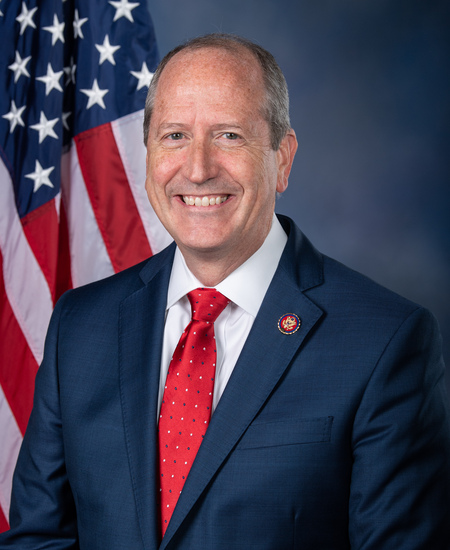
Rep. Dan Bishop
Sponsored bills
Maddy summaryHJRES 11 proposes a constitutional amendment that would limit Members of Congress to serving a maximum of three terms in the House of Representatives and two terms in the Senate. If passed and ratified, it would prevent any member who has already served the maximum terms from running for re-election, including time spent filling vacancies (for more than one year in the House or three years in the Senate). This amendment directly affects current and future members of Congress by changing eligibility rules for re-election. The proposal is currently a joint resolution in the House, requiring ratification by three-fourths of state legislatures to become part of the Constitution.
Maddy summaryHRES 739 is a House resolution disapproving of a September 11, 2023, sanctions waiver that would release $6 billion in Iranian assets held in South Korea. The resolution states this waiver weakens U.S. policy by allowing Iran access to funds that could support its nuclear program and terrorism, and criticizes the delayed notification to Congress. It specifically condemns the administration's nonenforcement of mandatory sanctions and the release of assets without proper congressional review. The resolution demands the administration submit any Iran nuclear agreement to Congress before further sanctions relief. This is a procedural disapproval, not a law altering sanctions.
Maddy summaryHR 5791, the "Define the Mission Act," requires the President to submit a comprehensive strategy report to Congress within 30 days of the bill's enactment, detailing U.S. involvement in the Ukraine conflict. The report must define U.S. national interests in the conflict, set specific objectives with timelines, benchmarks, and resource estimates (including personnel and funding), list expected European NATO security contributions, and assess Russia’s natural gas market impact on resolving the conflict. It mandates the strategy must aim for a Russia-Ukraine cease-fire agreement and explicitly cannot depend on U.S. funding for Ukrainian reconstruction. The report must be unclassified but may include a classified annex for full transparency. This bill establishes a formal process for Congress to review and oversee U.S. policy toward Ukraine.
Maddy summaryHR 5561, the Protecting the Right to Keep and Bear Arms Act of 2023, prevents federal agencies from using emergency declarations to implement gun control measures. It specifically prohibits the President from declaring a national emergency under the National Emergencies Act or the Robert T. Stafford Act for gun control purposes, and stops the Health and Human Services Secretary from declaring a public health emergency under the Public Health Service Act for the same reason. The bill also amends the Stafford Act to explicitly prohibit any emergency-related restrictions on possessing, manufacturing, selling, or transferring firearms, ammunition, ammunition feeding devices, or firearm accessories. This directly affects how federal agencies can respond during emergencies without violating the Second Amendment. The law aims to limit executive actions during emergencies that could restrict gun rights.
Maddy summaryThis bill prohibits federal funding for colleges and universities that require students or staff to get a COVID-19 vaccine to enroll, work, or access services. It directly affects institutions of higher education receiving federal funds, such as those participating in student aid programs. The key provision blocks all federal financial support if an institution enforces such vaccine requirements as a condition of enrollment, employment, or benefits. The law does not ban vaccine mandates outright but ties federal funding to compliance with this prohibition.
Maddy summaryHR 5106 requires the Secretary of Agriculture to publish food safety criteria for meat and poultry processing plants seeking to operate under alternative inspection rates (above standard rates) within 90 days of enactment. It mandates that the Secretary review and respond to such requests within 90 days, automatically approving requests if they miss the deadline. Existing plants already using alternative rates can continue operating while their requests are reviewed, provided they maintain food safety standards, and must be given a 180-day grace period to address any noncompliance before potential revocation. The bill also requires the Secretary to minimize disruptions during rate adjustments by consulting affected plants and considering impacts on animal producers and contractual obligations.
Maddy summaryHR 5531, the "End U.N. Censorship Act," prohibits U.S. federal funds from supporting specific United Nations initiatives related to information labeling. It bans funding for the UN's iVerify tool, any effort to label speech as "mal-, mis-, or disinformation," and voluntary contributions to the UN or other international groups supporting such labeling efforts. The bill applies directly to federal agencies like the Department of State, restricting how they use taxpayer money for these purposes. Any funds withheld under this law must be deposited into the Treasury general fund and not repaid to the UN. The bill focuses solely on restricting federal spending, not on regulating speech or censorship.
Maddy summaryThe Freedom to Breathe Act (HR 5368) prohibits the use of federal funds to enforce mask mandates for passengers traveling on air carriers, public transit, or in elementary, secondary, and higher education institutions from enactment until December 31, 2024. It bans federal agencies from requiring masks in these settings and prevents transportation providers or schools from denying service to individuals who refuse to wear masks. The law also overrides conflicting state or local rules during the applicable period. This applies specifically to settings receiving federal funding, such as public schools and federally supported transit systems.
Maddy summaryHCONRES 18 sets strict 30-day deadlines for the Joint Committee on the Library to review and act on North Carolina's submission for a statue of Reverend Billy Graham in the National Statuary Hall. It requires the Committee to approve or deny the clay model design within 30 days of receiving detailed submissions (including photos, dimensions, and engineering data), then approve the final statue within another 30 days of receiving final documentation. If approved, the Committee must also select a Capitol location within 30 days. This procedural bill directly affects North Carolina (as the submitting state) and the Joint Committee, streamlining an existing approval process without altering substantive policy.