Maddy summaryThis bill would establish 18-year fixed terms for all Supreme Court justices, replacing lifetime appointments. It requires the President to nominate one justice every two years (during first and third years after presidential elections), with Senate confirmation within 90 days, and prohibits reappointments after a single term. Current justices would be phased out in order of seniority as new justices are appointed under this schedule. The bill directly affects all sitting and future Supreme Court justices by mandating term limits and a structured appointment process.
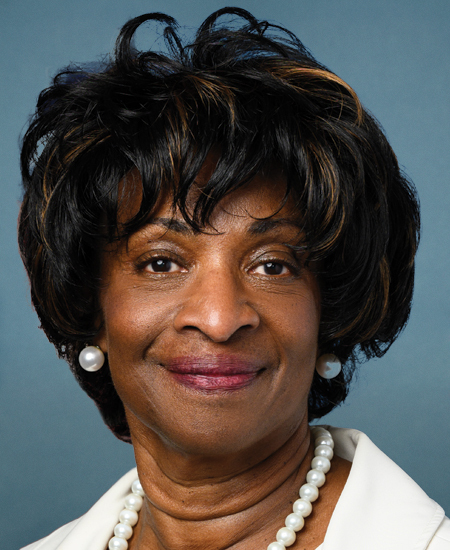
Rep. Valerie P. Foushee
Sponsored bills
Maddy summaryThis bill would allocate $200 million annually from 2026 through 2029 to expand access to diapers and incontinence supplies for low-income families. It specifically targets infants, toddlers, medically complex children, and low-income adults with disabilities who require diapers or incontinence products. The funding would be distributed through state social services programs to support free distribution of diapers, diapering supplies, and adult incontinence materials, while requiring states to track how funds are used through detailed reporting. The bill also makes medically necessary diapers and diapering supplies eligible for reimbursement through health savings accounts and flexible spending arrangements. This legislation aims to address what is termed "diaper need" by directly providing essential supplies to vulnerable populations.
Maddy summaryHR 3498, the Henrietta Lacks Congressional Gold Medal Act, authorizes a commemorative gold medal to honor Henrietta Lacks for her contribution to science through her immortal HeLa cells. The bill directs the Treasury Secretary to strike the medal, which will be presented posthumously by Congress and displayed at the Smithsonian Institution. It also permits the sale of bronze duplicates to cover costs, with proceeds going to the U.S. Mint fund. This is a ceremonial recognition of Lacks' legacy, not a policy change affecting any group or requiring new regulations.
Stronger Communities through Better Transit Act This bill requires the Department of Transportation (DOT) to establish a grant program to support operating projects for public transportation and related service improvements, particularly in underserved communities and areas of persistent poverty. Specifically, the bill requires DOT to allocate funding under the program for urbanized areas, states, and Indian tribes that are recipients of funds under either the Federal Transit Administration's (FTA's) Urbanized Area Formula Funding program or Formula Grants for Rural Areas program. Eligible recipients may use funding for operating costs associated with projects that improve public transportation service for transit-dependent populations and support increased transit ridership (e.g., service expansion, information technology enhancements, and workforce development). DOT must apportion the funding so that recipients receive funds that are proportional to their share of operating costs. The bill also provides for an increased federal cost share for operating assistance for projects or programs carried out in areas of persistent poverty or underserved communities. DOT must set up a multimodal access measurement interface for public agencies to aid transit agencies in determining and reporting on access to jobs and essential services. A grant recipient must (1) report specific information to the FTA for inclusion in the National Transit Database, and (2) survey transit riders and non-riding residents regarding transit service improvements. Further, the bill expands the purposes of the public transportation programs to include supporting public transportation's role in combating climate change through growing/retaining transit ridership.

Maddy summaryHRES 414 is a symbolic resolution recognizing the U.S. government's moral and legal obligation to provide reparations for the harms of slavery and its lasting impacts on Black Americans. It acknowledges the historical and ongoing effects of chattel slavery, systemic racism, and discriminatory policies on Black communities, including economic disparities, environmental racism, and the criminal justice system. The resolution encourages support for H.R. 40, which would establish a commission to study reparations proposals, and calls for formal acknowledgment of slavery's legacy through congressional apologies. This resolution does not create new legal obligations or provide reparations itself, but serves as a statement of recognition and a call to action for further policy development.
Maddy summaryHR 3460, the AI Whistleblower Protection Act, prohibits employers from retaliating against employees or independent contractors who report AI security vulnerabilities or AI violations to regulators, Congress, or internal supervisors. It directly affects workers in AI development, deployment, or use - such as software engineers or safety auditors - who identify risks like stolen AI technology or failures to address safety dangers. Key provisions include banning termination, demotion, or harassment for lawful reporting, requiring employers to reinstate affected workers with double back pay, and blocking contracts that force arbitration to resolve retaliation claims. The bill establishes a 180-day window to file complaints with the Labor Department or sue in court, with remedies covering legal fees and compensatory damages. It applies broadly to any employer in commerce, ensuring protections cannot be waived by employment agreements.
Maddy summaryHR 3368, the "Born in the USA Act of 2025," prohibits federal funding for Executive Order 14160 (which aimed to restrict birthright citizenship for children born in the U.S.). The bill directly affects federal agencies that might implement the executive order by blocking their use of funds for that purpose. Its key provision is a funding ban targeting the executive order and any similar future policies, without changing citizenship law. The bill does not alter birthright citizenship rights but prevents federal resources from being used to enforce the controversial executive order. It is a procedural measure focused on funding, not a substantive policy change to citizenship rules.
Maddy summaryHR 3373, the GHOST Act of 2025, requires entities shipping certain firearm parts (barrels, slides, or bolts) across state lines to register shipments with the Attorney General within 5 business days. This includes providing sender/recipient details, shipping method, and proof of delivery via certified mail or recipient signature. The bill creates a confidential database for law enforcement access but prohibits public disclosure under the Freedom of Information Act. Violations carry fines or up to 1 year in prison for single shipments, and up to 10 years for shipping 50+ parts in one transaction.
Maddy summaryThis bill amends the Fair Labor Standards Act to prohibit children under 18 from having direct contact with tobacco plants or dried tobacco leaves on farms. It directly affects minors who might work on tobacco farms and tobacco farm employers who currently allow such employment. The key change adds tobacco farming to the list of occupations where children under 18 cannot work, closing a loophole that previously permitted this activity. This update explicitly excludes tobacco-related agriculture from exceptions allowing minors in certain farm jobs under federal law.
Maddy summaryHRES 400 is a ceremonial resolution recognizing May as Asian American, Native Hawaiian, and Pacific Islander Heritage Month. It formally celebrates the historical contributions of these communities to U.S. history and society, as documented in the resolution’s preamble. The resolution does not create new laws, allocate funding, or change policies - it serves solely as a symbolic acknowledgment by the House of Representatives. It highlights the diversity of these communities and their ongoing impact, referencing their growth, cultural milestones, and historical challenges. This recognition aligns with the existing statutory designation of May for Heritage Month under U.S. Code.