

Maddy summaryHR 3277, the Ensuring Lasting Smiles Act, requires group health plans and health insurance issuers to cover medically necessary outpatient and inpatient treatments for congenital anomalies or birth defects primarily affecting the eyes, ears, teeth, mouth, or jaw. This includes reconstructive procedures, dental/orthodontic support during treatment, and follow-up care, but excludes purely cosmetic surgery not tied to a medical diagnosis. Cost-sharing (like copays) for these services must not be stricter than for other medical benefits. The law takes effect for plan years beginning January 1, 2026, and mandates insurers to provide notice about this coverage to beneficiaries.
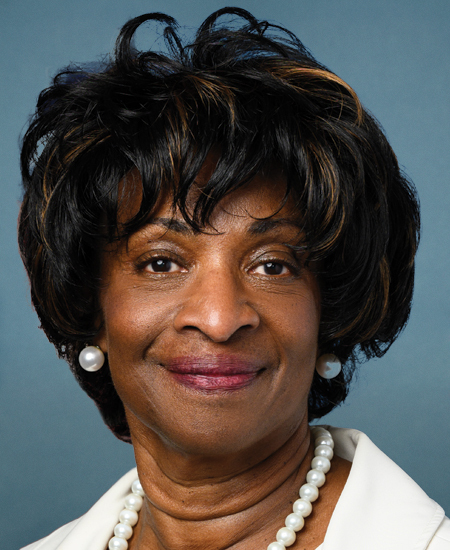
Rep. Valerie P. Foushee
Sponsored bills
Maddy summaryThis bill prohibits federal officials from reducing, eliminating, or suspending funding for land-grant colleges and universities without specific authorization from Congress. It directly affects public institutions designated as land-grant colleges under the 1977 National Agricultural Research, Extension, and Teaching Policy Act. The key provision requires that any change to their funding must be explicitly approved by an Act of Congress, preventing unilateral federal action. This creates a clear legal barrier against unexpected funding cuts to these institutions. The bill focuses on preserving existing funding streams rather than creating new programs.
Maddy summaryHR 3295, the Federal Animal Research Accountability Act of 2025, requires research institutions receiving National Institutes of Health (NIH) funding to submit detailed annual reports on animal use. These reports must categorize animals by species and specify: (1) animals used with no pain/distress, (2) animals with pain/distress using pain relief, (3) animals with pain/distress where pain relief would interfere with research, and (4) animals bred but not yet used. The NIH must make these reports publicly accessible online within three months of submission through a searchable database. The bill applies to all NIH-funded research entities and takes effect two years after enactment.
Maddy summaryHR 3243, the Therapeutic Fraud Prevention Act of 2025, bans the provision of paid conversion therapy aimed at changing a person's sexual orientation or gender identity, and prohibits advertising such therapy as effective, safe, or without risk. It directly affects LGBTQ+ individuals and their families who might be targeted by these practices, as professionals have determined conversion therapy is ineffective and harmful. The law treats violations as deceptive acts under consumer protection laws, empowering the Federal Trade Commission and state attorneys general to enforce it through civil actions. It explicitly excludes legitimate gender transition support and non-discriminatory counseling from the ban.
Maddy summaryThis bill requires U.S. Customs and Border Protection (CBP), U.S. Immigration and Customs Enforcement (ICE), and other deputized immigration officers to visibly identify themselves during enforcement actions. Specifically, it mandates that officers display a 12-inch by 6-inch agency identifier on their uniform front or back, ensuring it remains unobscured by armor or accessories. The requirement applies during all "time of action" activities, such as patrols, raids, arrests, or warrant service. The bill directly affects immigration enforcement personnel by standardizing their visible identification during interactions with the public.
Maddy summaryThis bill expands OSHA safety protections to cover public employees, including teachers, police, and sanitation workers, who were previously excluded from federal workplace safety regulations. It directly affects state and local government workers by amending the Occupational Safety and Health Act to explicitly include "the United States, a State, or a political subdivision of a State" under OSHA coverage. The key mechanism is a technical amendment to the law’s definition of covered employees, ensuring public service workers fall under the same safety standards as private-sector employees. The bill takes effect 90 days after enactment for most workplaces, with a 36-month delay for state/local governments without existing OSHA plans.
Maddy summaryThe TRUST Act prevents complaints against federal judges from being dismissed due to the judge's resignation, retirement, or death. It directly affects judges under investigation and the complaint process by ensuring investigations continue regardless of the judge's status. Key provisions amend Title 28 to require chief judges to maintain complaints (Section 352) and mandate special committees to complete investigations and file reports without interruption (Section 353), even if the judge involved leaves office. These changes apply specifically to complaints filed under Section 351 of the Judicial Code. The bill focuses on procedural continuity, not substantive judicial standards.
Maddy summaryHR 3112, the Better CARE for Animals Act of 2025, strengthens enforcement of the federal Animal Welfare Act by requiring dealers and exhibitors to hold valid licenses for animal sales or transport (Section 4). It expands enforcement authority by allowing the Attorney General to sue violators for up to $10,000 per day, seize animals, and seek injunctions (Section 20), while clarifying that courts can address violations of related rules and regulations. The bill directly affects animal dealers, exhibitors, the USDA, and the Department of Justice, creating clearer pathways for holding violators accountable. Key provisions include updating definitions, broadening inspection powers to cover all regulations, and directing penalty funds toward temporary animal care costs during legal proceedings.
Maddy summaryHR 3128, the Improving Diaper Affordability Act of 2025, makes diapers eligible as qualified medical expenses under tax-advantaged health accounts (like HSAs and health flexible spending arrangements) and prohibits states or localities from imposing sales taxes on diaper purchases. This directly affects families with young children - particularly low-income households, where 46% report struggling to afford diapers - who currently spend hundreds annually on diapers. The bill changes existing tax rules so families can use pre-tax dollars from health savings accounts to cover diaper costs, and bans sales taxes on diaper purchases starting in 2025. It does not create new government assistance programs but adjusts tax treatment to reduce out-of-pocket costs for diapers.
Assault Weapons Ban of 2025 This bill makes it a crime to knowingly import, sell, manufacture, transfer, or possess a semiautomatic assault weapon (SAW) or large capacity ammunition feeding device (LCAFD). The prohibition does not apply to a firearm that is (1) manually operated by bolt, pump, lever, or slide action, except for certain shotguns; (2) permanently inoperable; (3) an antique; (4) only capable of firing rimfire ammunition; or (5) a rifle or shotgun specifically identified by make and model. The bill also exempts from the prohibition the following, with respect to a SAW or LCAFD: importation, sale, manufacture, transfer, or possession related to certain law enforcement efforts, or authorized tests or experiments; importation, sale, transfer, or possession related to securing nuclear materials; and possession by a retired law enforcement officer. The bill permits continued possession, sale, or transfer of a grandfathered SAW, which must be securely stored. A licensed gun dealer must conduct a background check prior to the sale or transfer of a grandfathered SAW between private parties. The bill permits continued possession of, but prohibits sale or transfer of, a grandfathered LCAFD. Newly manufactured LCAFDs must display serial number identification. Newly manufactured SAWs and LCAFDs must display the date of manufacture. The bill also allows a state or local government to use Edward Byrne Memorial Justice Assistance Grant Program funds to compensate individuals who surrender a SAW or LCAFD under a buy-back program.