

Maddy summaryThis bill extends funding for the existing Public Health Service Act program focused on raising public awareness about Alzheimer's disease and related dementias. It authorizes $33 million annually for fiscal years 2025 through 2029 to support public health education and outreach initiatives. The program directly affects public health organizations and community groups that develop and distribute educational materials about Alzheimer's prevention, diagnosis, and care. The key provision is the multi-year funding extension, ensuring continued support for nationwide awareness efforts without altering the program's core structure.
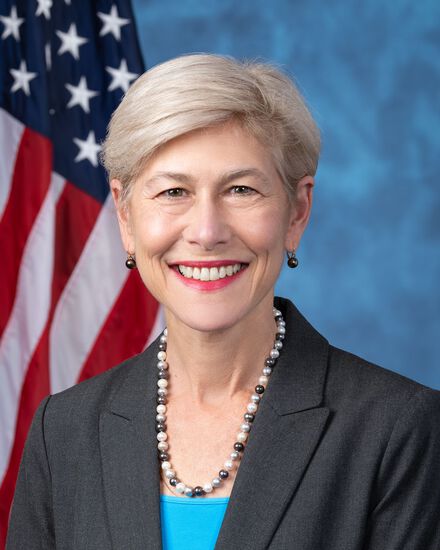
Rep. Deborah K. Ross
Sponsored bills
Maddy summaryThe Trafficking Survivors Relief Act of 2024 enables victims of human trafficking to seek to vacate certain convictions or expunge arrests related to offenses they committed as a direct result of being trafficked. It establishes a court process where victims can file motions showing their criminal activity was trafficking-related, with courts required to find by preponderance of evidence that the offense was directly tied to trafficking. If granted, the court must expunge all related records, return any fines paid, and treat the individual as if the offense never occurred. The bill also adds a "human trafficking defense" that creates a presumption of duress for trafficking victims in prosecutions. It requires reports on implementation and training for U.S. attorneys on trafficking indicators.
Maddy summaryHRES 1613 is a non-binding resolution recognizing the U.S. House of Representatives' support for continued U.S. leadership in ending pediatric HIV/AIDS globally. It highlights that 57% of children with HIV were on treatment in 2023 (compared to 77% of adults) and calls for scaling up prevention of mother-to-child transmission and expanding pediatric HIV treatment access. The resolution specifically encourages the PEPFAR program to develop a dedicated pediatric HIV strategy aligned with global goals. As a formal expression of congressional support, it does not create new law but reaffirms the U.S. commitment to reducing new pediatric HIV infections.
Maddy summaryHR 10337, the Expanding the Health Care Workforce Act, creates a federal grant program to develop health care career pathways for high school students. It provides grants to hospitals partnering with secondary schools to establish structured work-based learning programs, requiring students to complete 20-100 hours of hands-on training in hospitals over five years, with specific hour requirements per grade. Priority is given to projects serving medically underserved communities, and grants must expand existing programs in 25% of cases. The program mandates annual reporting on student outcomes, including graduation rates, health care workforce entry, and post-secondary enrollment, with a final evaluation report to Congress after five years. This initiative directly affects secondary school students in underserved areas and participating hospitals through new educational partnerships.
Maddy summaryThis bill strengthens protections for amateur athletes by requiring the SafeSport Center to implement trauma-informed abuse prevention training, allocate 20% of annual funding for prevention efforts, and improve complaint resolution processes with victim advocates and transparent protocols. It mandates annual public reporting on activities, regular audits of policies, and engagement with athlete survivors in developing prevention materials. These changes directly affect all amateur sports organizations under SafeSport's jurisdiction - including national governing bodies and the U.S. Olympic & Paralympic Committee - and athletes participating in amateur sports programs.
Maddy summaryHR 6751 authorizes the U.S. Mint to produce commemorative coins honoring Roberto Clemente, a Hall of Fame baseball player and humanitarian, including 50,000 $5 gold coins, 400,000 $1 silver coins, and 750,000 half-dollar coins. The coins must feature Clemente's image and inscriptions like "Roberto Clemente" and "2027," with all sales including a surcharge ($5-$35 per coin) paid to the Roberto Clemente Foundation. The foundation, which supports youth sports, education, and disaster relief programs, will use these funds for its mission, while the U.S. Treasury must recover all production costs. The coins will be sold exclusively in 2027, with no net cost to the government.
Maddy summaryThe Jeanette Acosta Invest in Women’s Health Act of 2024 would expand access to preventive cancer screenings (including breast, cervical, ovarian, and uterine cancer screenings) for women, with a focus on low-income women, women of color, rural communities, and underserved populations. It authorizes $20 million annually for grants to health care providers - such as family planning centers - to increase screenings and establishes a training program for health care providers on best practices and cultural competency to address racial disparities. The bill also mandates a study analyzing cancer screening rates and disparities by race, income, geography, and insurance status, with reports to Congress every five years. These provisions aim to improve early detection, reduce mortality, and address systemic barriers in women’s cancer care.
Maddy summaryHR 9151 establishes a new Department of Justice task force within 120 days to investigate and prosecute international trade crimes like tariff evasion, smuggling, and trade-based money laundering. The task force will hire specialized prosecutors, coordinate with U.S. Customs and Border Protection and Homeland Security, and focus on violations under specific U.S. Code sections including smuggling (18 U.S.C. 545) and fraud (18 U.S.C. 1001). It authorizes $20 million for fiscal year 2025, with 80% dedicated to criminal prosecutions, and requires annual congressional reports detailing case statistics, funding use, and future needs. The bill directly affects importers/exporters engaging in trade violations and DOJ agencies handling cross-border enforcement.
Maddy summary# Summary of NASA Legislative Draft This document appears to be a comprehensive draft of a U.S. law that would reorganize and update NASA's legal framework under Title 51 of the U.S. Code. It includes: 1. **Major structural changes** to NASA's legal authority, creating new chapters 715 ("Advancing Human Space Exploration") and 717 ("Advancing Human Space Exploration") with detailed provisions for: - Human exploration programs (including the Moon and Mars) - Space science missions - Technology development - Information technology governance - Collaboration across mission directorates 2. **Technical amendments** to numerous sections of the U.S. Code (Titles 5, 28, 31, 36, 42, and 51) that update references to NASA programs and provisions, particularly changing references from "Committee on Science and Technology" to "Committee on Science, Space, and Technology" across multiple sections. 3. **Transitional provisions** explaining how the new provisions would interact with existing law, including: - A "cutoff date" for when the new provisions would replace older provisions - How references to old provisions would be treated - Continuation of existing regulations and administrative actions 4. **Repeals** of numerous older NASA authorizing acts and provisions, including: - National Aeronautics and Space Administration Authorization Acts from 1989 through 2017 - Various sections of the America COMPETES Reauthorization Act of 2010 - Several other NASA-related acts This document represents a significant overhaul of NASA's legal framework, modernizing references, reorganizing program structures, and setting the foundation for future human space exploration goals including missions to the Moon and Mars.
Maddy summaryThe Working Dog Commemorative Coin Act (HR 807) directs the U.S. Treasury to mint three types of commemorative coins honoring working dogs' service: $5 gold coins, $1 silver coins, and half-dollar coins with specific weight and composition requirements. Each coin will carry a surcharge ($35 for $5 coins, $10 for $1 coins, $5 for half-dollars) that will be paid directly to America's VetDogs to support their programs providing service dogs for veterans, the disabled, and others. The coins will be issued in 2027 with designs reflecting working dogs' roles in military, detection, therapy, and assistance work. The legislation specifies that all surcharge revenue must fund America's VetDogs' operations without creating new government programs. This is a commemorative measure focused on honoring working dogs' contributions through coin sales, with all surcharge funds going to a specific nonprofit organization.