

Maddy summaryThis resolution urges Ukraine to reverse its 2022 suspension of adoptions by foreign nationals, including U.S. citizens. It specifically asks Ukraine to review its decision and resume such adoptions, prioritizing cases where U.S. prospective parents had already completed Ukrainian adoption requirements before the suspension or where children were part of pre-existing Ukrainian hosting programs. The resolution does not change U.S. law but formally requests Ukraine address mutual concerns to protect children's best interests. It directly affects U.S. families seeking to adopt Ukrainian children and Ukraine's adoption policies.
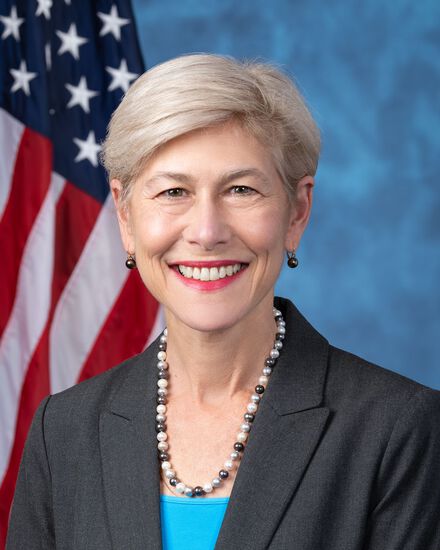
Rep. Deborah K. Ross
Sponsored bills
Maddy summaryThis resolution (HRES 1575) symbolically designates the week of November 4-10, 2024, as "Forensic Nursing Week" to recognize forensic nurses who provide specialized medical care to victims of violence, including sexual assault, abuse, and trauma. It highlights that only about 25% of U.S. hospitals have Sexual Assault Nurse Examiners (SANEs) on staff, emphasizing the need for better access to these specialists. The resolution acknowledges forensic nurses’ critical role in trauma-informed care and coordination with law enforcement, while encouraging policies that support victims and improve healthcare responses. It does not create new laws or funding but formally expresses congressional support for the profession.
Maddy summaryThe Veteran Benefits Enhancement Act amends the Railroad Unemployment Insurance Act to clarify that military retirement pay is not counted as a social insurance payment. This ensures veterans receiving military retirement pay while eligible for railroad unemployment benefits will not have their benefits reduced due to their military pay. The bill specifically excludes "qualified military benefits" (as defined under IRS rules) from being considered when calculating railroad unemployment benefits. This directly affects veterans working in the railroad industry who receive both military retirement pay and railroad unemployment benefits.
Maddy summaryHR 10095, the Insurance Fraud Accountability Act, targets health insurance agents and brokers who provide false or negligent information during enrollment in federally regulated health plans. It adds civil penalties of $10,000-$50,000 per violation for negligence and up to $200,000 for knowing fraud, plus criminal penalties of up to 10 years in prison for willful fraud. The bill requires new verification steps for enrollments, including written consent from consumers, delayed commission payments until issues are resolved, and clear notifications about coverage changes. It also mandates annual audits of agents/brokers, a public list of suspended professionals, and standardized marketing rules, all to be implemented by January 1, 2028.
Maddy summaryHR 10090, the "Keeping Guns from High-Risk Individuals Act," expands existing federal firearm prohibitions. It bars individuals convicted of a crime of violence (as defined in Section 16 of Title 18) within the last five years, or convicted of stalking, from purchasing or possessing firearms. This directly affects people with these specific recent convictions, adding them to the list of those prohibited under Section 922(d) (sales) and Section 922(g) (possession) of the U.S. Code. The bill makes concrete policy changes by broadening the categories of individuals barred from gun access based on certain criminal histories.
Maddy summaryThis bill modifies how disability benefits are treated for homeless disabled veterans seeking housing assistance. It excludes certain disability payments (under Chapter 11 or 15 of Title 38, U.S. Code) from income calculations when determining eligibility for HUD-assisted housing programs, including the supported housing program under Section 8(o)(19) and housing on Department property. Specifically, it ensures these benefits are not counted toward income for housing eligibility, though they still count for "adjusted income" definitions. The bill directly affects disabled veterans applying for HUD housing assistance who receive these specific disability benefits. It makes a concrete change to income calculation rules without altering benefit amounts or creating new funding.
Maddy summaryHRES 1529 is a non-binding resolution expressing congressional support for designating October 1 as "National Science Day." It aims to recognize the vital role of scientific research and the science workforce across government agencies (like NASA, CDC, and NIH) and industries that impact daily life, including health, technology, and safety. The resolution highlights that over 24 million Americans work in science, engineering, or technical fields and seeks to celebrate scientific achievements while inspiring future generations. As a symbolic resolution, it does not create new laws, funding, or obligations.
Maddy summaryThis bill eliminates out-of-pocket costs for all FDA-approved contraceptives under TRICARE for military dependents (spouses and children) and extends full coverage to include counseling, insertion, removal, and follow-up care. It requires TRICARE Select, Prime, and pharmacy benefits to cover all contraceptive methods without cost-sharing, addressing current gaps where dependents face copays. The law also mandates family planning education for all service members and ensures sexual assault survivors can access emergency contraception without barriers at military medical facilities. This applies to all individuals with reproductive capacity, including transgender and non-binary dependents.
Maddy summaryThe Child Safety and Well-Being Act of 2024 (HR 9875) establishes a Children's Commission to represent children's interests in federal policymaking. The Commission, composed of 15 diverse members including experts, youth with lived experience, and representatives from various backgrounds, will advise Congress and federal agencies on policies affecting children, particularly marginalized youth defined as those experiencing systemic barriers. The Commission will review agency actions, receive complaints about how children are treated, and publish annual reports with recommendations to improve child well-being policies. It is authorized $5 million annually for operations and must study the feasibility of requiring agencies to create "child impact statements" assessing how policies affect children.
Maddy summaryHRES 1516 is a resolution passed by the U.S. House of Representatives to commend Big Brothers-Big Sisters of America on its 120th anniversary. It recognizes the organization’s work in providing youth mentorship that helps young people graduate from school and plan for their future. The resolution highlights how the organization, operating in over 5,000 communities nationwide, has supported millions of young people through long-term mentor relationships. As a symbolic gesture, it does not create new laws or policies but expresses congressional support for the organization’s mission.