

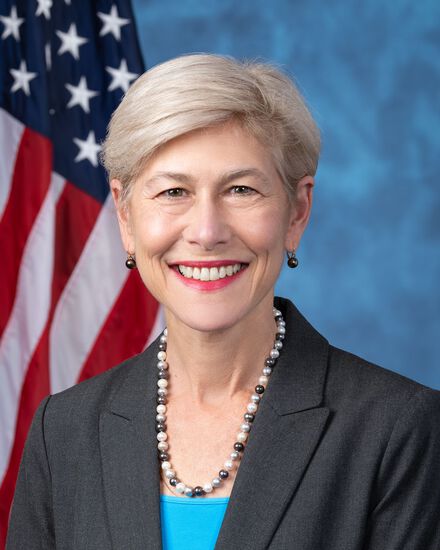
Photo of Deborah K. Ross
D United States House · District 2 · North Carolina On the 2026 ballot

Rep. Deborah K. Ross

Compare
Total votes
2,837
all sessions
Attendance
99%
22 missed
Higher than 96% of chamber peers
With party
98%
of cast votes
Higher than 94% of chamber peers
Bipartisan score
1%
crosses aisle rarely
Lower than 95% of chamber peers
Sponsored
1,961
bills & resolutions
Higher than 93% of chamber peers
Committees
7
assignments
1,961 bills and resolutions

Sponsored bills

Total
1,961
Primary
86
Co-sponsor
1,875
This page
1,961
matching current filters
Co-sponsor HR 955
In committee · United States House · Co-sponsor
SOS: Sustaining Outpatient Services Act

Maddy summaryThis bill changes how Medicare pays for certain outpatient services provided by off-campus hospital departments. It allows these services to be paid under the hospital outpatient payment system (instead of physician fees) if the previous year's total Medicare payments for that physician specialty were under $2 million. It directly affects hospitals with off-campus outpatient departments offering services in specialties with low physician payment volumes. The change applies to services furnished starting in 2024, aiming to stabilize payments for these specific outpatient services.

In committee Dec 17, 2024 1 co-sponsor
Co-sponsor HR 11
In committee · United States House · Co-sponsor
Freedom to Vote Act

Maddy summary# Summary of Proposed Election Reform Legislation This document outlines a comprehensive federal election reform bill with multiple titles addressing various aspects of voting rights, election administration, and election integrity. ## Key Provisions: ### 1. Democracy Restoration (Title I) - Restores voting rights to citizens with felony convictions who are not serving a felony sentence in a correctional institution - Requires states to notify individuals of restored voting rights upon release from prison, completion of probation, or sentencing - Prohibits states from conditioning voting rights on payment of fines or fees - Requires states to provide notification of voting rights to citizens with criminal convictions ### 2. Voter Identification Requirements (Title II) - Establishes a broad definition of acceptable identification documents (including utility bills, bank statements, student IDs, etc.) - Requires states to provide free identification to voters who lack one - Authorizes $5 million annually for 5 years to cover costs of providing identification - Sets procedures for provisional voting when identification is not presented ### 3. Voter List Maintenance (Title III) - Prohibits "voter caging" (using undeliverable mail to challenge voter registration) - Bans use of unverified match lists to remove voters from registration lists - Sets strict conditions for removing voters from registration lists - Requires states to provide notice to voters removed from registration lists ### 4. Election Integrity Measures (Title V) - Prohibits hindering or interfering with voter registration (Section 2001) - Restricts removal of local election administrators (Section 3001) - Prohibits harassment of election workers (Section 3101) - Bans deceptive practices in elections (Section 3201), including false statements about voting locations, eligibility, or endorsements ### 5. Additional Provisions - Requires states to provide notice of voting rights restoration to citizens - Establishes private rights of action for violations of the law - Sets criminal penalties for violations (up to $100,000 fines and 5 years imprisonment) - Includes provisions for federal funding to be contingent on compliance with voting rights restoration This legislation represents a significant overhaul of voting rights and election administration procedures across the United States, with a focus on expanding voting access, protecting voter rights, and ensuring fair election administration.

In committee Dec 17, 2024 1 co-sponsor
Co-sponsor HR 704
In committee · United States House · Co-sponsor
Promoting Access to Diabetic Shoes Act

Maddy summaryThis bill amends Medicare rules to allow nurse practitioners and physician assistants to document medical necessity for diabetic shoes, a requirement currently limited to physicians. It directly affects Medicare beneficiaries with diabetes who need these shoes and expands the pool of providers (nurse practitioners and physician assistants) who can fulfill the documentation requirement. The key change inserts "nurse practitioner, or physician assistant" into Medicare's documentation standards for diabetic shoe coverage. This simplifies access for patients by enabling more healthcare providers to support coverage approval without requiring a physician's signature. The bill does not change coverage eligibility or costs, only the documentation process.

In committee Dec 17, 2024 1 co-sponsor
Co-sponsor HR 716
In committee · United States House · Co-sponsor
Fair COLA for Seniors Act of 2023

Maddy summaryHR 716, the Fair COLA for Seniors Act of 2023, changes how cost-of-living adjustments (COLAs) are calculated for Social Security and related benefits by using the Consumer Price Index for Elderly Consumers (CPI-E) instead of the standard Consumer Price Index. This affects Social Security beneficiaries, veterans receiving disability compensation or survivor benefits, and federal retirees under the Civil Service and Military Retirement Systems. The bill requires that any COLA increase for Social Security also applies to these other benefits using the CPI-E, which better reflects inflation experienced by seniors. The change takes effect for benefit determinations starting September 2023.

In committee Dec 17, 2024 1 co-sponsor
Co-sponsor HR 549
In committee · United States House · Co-sponsor
Metastatic Breast Cancer Access to Care Act

Maddy summaryHR 549, the Metastatic Breast Cancer Access to Care Act, removes waiting periods for disability and Medicare coverage for people diagnosed with metastatic breast cancer. Specifically, it amends Social Security Act sections to allow immediate eligibility for disability insurance benefits (eliminating the standard waiting period) and immediate Medicare coverage (waiving the 24-month waiting period) for these patients. The bill directly affects individuals with metastatic breast cancer who would otherwise face delays in accessing critical benefits. These changes apply to applications filed or benefits beginning after the bill's enactment date. The law makes no other policy changes beyond these specific eligibility adjustments.

In committee Dec 17, 2024 1 co-sponsor
Co-sponsor HR 561
In committee · United States House · Co-sponsor
EACH Act of 2023

Maddy summaryThe EACH Act of 2023 would require federal health programs - including Medicaid, Medicare, the Indian Health Service, and TRICARE - to cover abortion services without restrictions. It repeals a provision in the Affordable Care Act that allowed states to limit abortion coverage in health insurance plans sold through state marketplaces. The bill also prohibits the federal government from restricting abortion coverage in private health insurance plans. This would directly affect millions of people, particularly low-income individuals and people of color, who are disproportionately enrolled in Medicaid and currently face barriers to abortion care due to coverage restrictions.

In committee Dec 17, 2024 1 co-sponsor
Co-sponsor HR 468
In committee · United States House · Co-sponsor
Building America’s Health Care Workforce Act

Maddy summaryThis bill extends a temporary COVID-19 emergency waiver that allows nurse aides in training to count hours worked during the pandemic toward their certification requirements at nursing facilities. It specifically permits these hours to satisfy the 75-hour minimum training requirement and allows facilities to conduct competency evaluations on-site if states don’t offer them weekly. The waiver remains in effect for at least 24 months after enactment, with a requirement for the Secretary to study its continued appropriateness within one year. The policy directly affects nurse aides working in skilled nursing facilities and nursing facilities under federal Medicare/Medicaid rules. It does not create new training programs but maintains pandemic-era flexibility for staffing.

In committee Dec 17, 2024 1 co-sponsor
Co-sponsor HR 33
In committee · United States House · Co-sponsor
Medicare Dental, Vision, and Hearing Benefit Act of 2023

Maddy summaryHR 33 would expand Medicare to cover dental, vision, and hearing services for beneficiaries, which are currently not covered under Medicare. The bill provides 100% coverage for preventive dental services in 2024, with basic dental services gradually increasing to 80% coverage by 2027. Vision coverage would include routine eye exams and corrective lenses at 80% coverage, while hearing services would cover hearing exams and hearing aids at 80% coverage. The bill includes specific limitations, such as two dental cleanings per year and one pair of glasses every 24 months, with the Secretary of Health and Human Services having authority to apply additional limitations or modify coverage based on medical recommendations. The changes would take effect on January 1, 2024.

In committee Dec 17, 2024 1 co-sponsor
Co-sponsor HR 10416
In committee · United States House · Co-sponsor
Leadership in CET Act

Maddy summaryHR 10416, the Leadership in CET Act, establishes a pilot program at the U.S. Patent and Trademark Office (USPTO) to fast-track patent examinations for new applications in artificial intelligence, microelectronics, and quantum information science. It directly affects U.S. inventors and companies developing these critical technologies by allowing them to move their patent applications to the front of the queue, provided they are filing original, non-provisional applications. The program limits participation to 10,000 applications total (with possible 5-year renewals) and requires the USPTO to publicly track participation and patent issuances. The USPTO must also report to Congress on the program's effectiveness within 180 days of its conclusion.

In committee Dec 16, 2024 1 co-sponsor
Co-sponsor HR 7438
Signed into law · United States House · Co-sponsor
FIFA World Cup 2026 Commemorative Coin Act

Maddy summaryHR 7438 directs the U.S. Treasury to mint commemorative coins for the 2026 FIFA World Cup, including 100,000 $5 gold coins, 500,000 $1 silver coins, and 750,000 half-dollar coins. The coins will be sold to the public at face value plus surcharges ($35, $10, and $5 per coin, respectively), with all surcharge revenue paid to FWC2026 US, Inc. for U.S. soccer programs. These funds must support soccer initiatives, particularly in underserved communities and youth development, as specified in the bill. The coins are legal tender but will only be issued during 2026, with no net cost to the U.S. government.

Signed into law Dec 11, 2024 1 co-sponsor
Showing 741 to 750 of 1,961 bills
Previous 1 … 74 75 76 … 197 Next