

VOCA Fix to Sustain the Crime Victims Fund Act of 2021 This bill adds a new source of revenue for the Crime Victims Fund and makes changes to formula grants supported by the fund. Specifically, the bill directs revenues collected from deferred prosecution and non-prosecution agreements to be deposited into the Crime Victims Fund. Currently, such revenues are deposited into the general fund of the Treasury. Additionally, the bill increases the percentage—from 60% to 75%—of state compensation payments to crime victims in the prior fiscal year used to calculate formula grants for state victim compensation programs. Finally, the bill directs states to waive the matching requirement for recipients of state victim assistance formula grants during and for one year after a pandemic-related national emergency. It also allows states to waive the matching requirement pursuant to a policy established by the state.
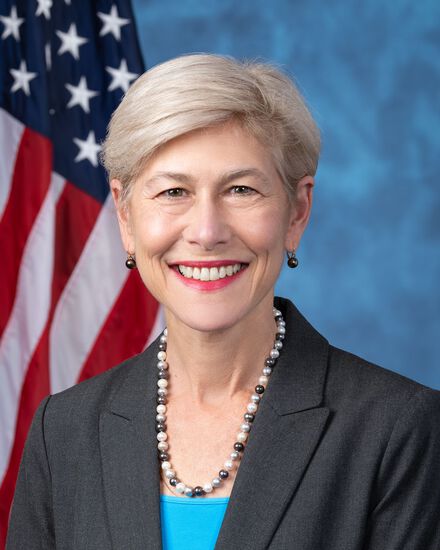
Rep. Deborah K. Ross
Sponsored bills
Consumer Protection and Recovery Act This bill authorizes the Federal Trade Commission (FTC) to seek monetary relief in federal court from businesses that engage in unlawful commercial practices such as false advertising, consumer fraud, and anticompetitive conduct. Specifically, the FTC may seek restitution in these cases for losses, rescission or reformation of contracts, refund of money, return of property, or disgorgement of unjust enrichment. On April 22, 2021, the Supreme Court held in AMG Capital Management, LLC v. Federal Trade Commission that the Federal Trade Commission Act does not authorize the FTC to seek, or a court to award, such relief.
Strengthening the Vaccines for Children Program Act of 2021 This bill modifies vaccination programs and coverage for children under Medicaid and the Children's Health Insurance Program (CHIP). Specifically, the bill expands and otherwise modifies the Vaccines for Children Program, which provides free vaccinations to individuals 18 years of age or younger who are uninsured or underinsured (i.e., with limited or no insurance for vaccines), are eligible for Medicaid, or are American Indians or Alaskan Natives. The bill expands the program to include children enrolled in CHIP and temporarily provides for additional payments to incentivize provider participation. The Government Accountability Office must report on the related effects of the bill's changes. The bill also expands coverage under Medicaid and CHIP to include vaccine counseling and educational services for children and temporarily requires payments to be made at a rate that is no less than the rate under Medicare for equivalent services. It also temporarily increases the Federal Medical Assistance Percentage (i.e., federal matching rate) for states that conduct culturally appropriate outreach regarding the benefits of vaccinations for children.
This resolution sets forth rules for consideration of H.R. 2467 to require the Administrator of the Environmental Protection Agency to designate per- and polyfluoroalkyl substances as hazardous substances; H.R. 2668 to amend the Federal Trade Commission Act to confirm the authority of the Federal Trade Commission to seek permanent injunctions and other equitable relief for violations of any provision of law enforced by the commission; and H.R. 3985 to amend the Afghan Allies Protection Act of 2009 to expedite the special immigrant visa process for certain Afghan allies.
Turkey Human Rights Promotion Act of 2021 This bill directs the Department of State to provide assistance to civil society organizations in Turkey that (1) work to secure the release of prisoners of conscience and political prisoners in Turkey, or (2) provide support and post-incarceration assistance for such prisoners.
Helping Ensure Access to Local TeleHealth Act of 2021 or the HEALTH Act of 2021 This bill modifies requirements relating to Medicare coverage of telehealth services, including services that are furnished by federally qualified health centers (FQHCs) and rural health clinics (RHCs). Specifically, the bill expands coverage to include audio-only telehealth services. It also permanently allows FQHCs and RHCs to serve as the distant site (i.e., the location of the health care practitioner) for telehealth services and excludes such services from certain geographic restrictions. Payment must be made in the same manner as for non-telehealth services, rather than in accordance with a separate methodology determined by the Centers for Medicare & Medicaid Services.
End Double Taxation of Successful Consumer Claims Act This bill allows a deduction from gross income (above-the-line deduction) for attorney fees and court costs in connection with a claim of a consumer protection violation.
Military Sexual Trauma Retirement Equity Act This bill extends certain special compensation to specified retired survivors of military sexual trauma.
Access to Assistive Technology and Devices for Americans Study Act or the Triple A Study Act This bill directs the Government Accountability Office (GAO) to study issues related to health insurance and other coverage for assistive technologies, such as prosthetic devices and custom orthoses, for those who experience amputations or live with a limb difference. In conducting this study, the GAO must include comparisons of claims and other data from Medicare, the Department of Veterans Affairs, and commercial health insurers.
Veterans Burn Pits Exposure Recognition Act of 2021 This bill requires the Department of Veterans Affairs (VA) to concede, for the purposes of health care benefits and wartime disability compensation, that a veteran was exposed to certain toxic substances, chemicals, and hazards from burn pits if such veteran served on active duty in a covered location during a specified time frame (unless there is affirmative evidence to establish that the veteran was not exposed during such service). A burn pit is an area used for burning solid waste in open air without equipment. Specifically, the bill covers the following locations and corresponding time periods: Iraq between August 2, 1990, and February 28, 1991, as well as from March 19, 2003, until burn pits are no longer used in this location; Somalia and Southwest Asia (including Kuwait, Saudi Arabia, Oman, and Qatar) from August 2, 1990, until burn pits are no longer used in these locations; and Afghanistan, Syria, Jordan, Egypt, Lebanon, Yemen, Uzbekistan, the Philippines, and Djibouti from September 11, 2001, until burn pits are no longer used in these locations. Under the bill, if an exposed veteran submits insufficient evidence to establish a service-connection for purposes of disability compensation, the VA shall provide a medical examination and request a medical opinion regarding a causal link between the disability and a toxin, chemical, or hazard.