

Department of Energy Science for the Future Act This bill supports specified research and development activities of the Department of Energy (DOE) Office of Science. The bill establishes various programs, including a basic energy sciences research and development program; a program of research and development for the application of advanced computing practices to foundational and emerging research problems in chemistry and materials science; a web-based platform to develop and provide access to a database of computed information on known and predicted materials properties and computational tools to accelerate breakthroughs in materials discovery and design; a biological systems science and climate and environmental science research and development program; research and development activities in biomolecular characterization and imaging science; earth and environmental systems science research; a coastal zone research initiative; an initiative focused on the development of engineered ecosystems; a program to implement a strategy for achieving computing systems with capabilities beyond exascale computing systems; a program of fundamental research and development of energy efficient computing and data center technologies relevant to advanced computing applications; a Quantum User Expansion for Science and Technology program or QUEST program; a collaborative research and development program of fusion energy technologies; a research program in elementary particle physics and advanced technology research and development to improve the understanding of the fundamental properties of the universe, including constituents of matter and energy and the nature of space and time; research activities on the nature of the primary contents of the universe, including the nature of dark energy and dark matter; a research program to discover and understand various forms of nuclear matter; a program across the DOE for the production of isotopes, including the development of techniques to produce isotopes, that the DOE determines are needed for research, medical, industrial, or related purposes; a midscale instrumentation program to enable the development and acquisition of novel, state-of-the-art instruments ranging in cost from $1 million to $20 million each that would significantly accelerate scientific breakthroughs at user facilities; and a high intensity laser research initiative. The DOE Office of Science shall continue to leverage U.S. participation in the Large Hadron Collider and prioritize expanding international partnerships and investments in the Long-Baseline Neutrino Facility and Deep Underground Neutrino Experiment. DOE shall support construction of a Facility for Rare Isotope Beams to advance the understanding of rare nuclear isotopes and the evolution of the cosmos. DOE shall expand opportunities to increase the number, diversity, equity, and inclusion of highly skilled science, technology, engineering, and mathematics (STEM) professionals working in DOE mission-relevant disciplines and broaden the recruitment pool to increase diversity, including expanded partnerships with Historically Black Colleges, Tribal Colleges, Minority Serving Institutions, emerging research institutions, and scientific societies. DOE shall establish within the DOE Office of Science, a cross-cutting research initiative to leverage the federal government's innovative analytical resources and tools, user facilities, and advanced computational and networking capabilities in order to prevent, prepare for, and respond to emerging infectious diseases, including COVID-19. DOE may not carry out gain-of-function research of concern.
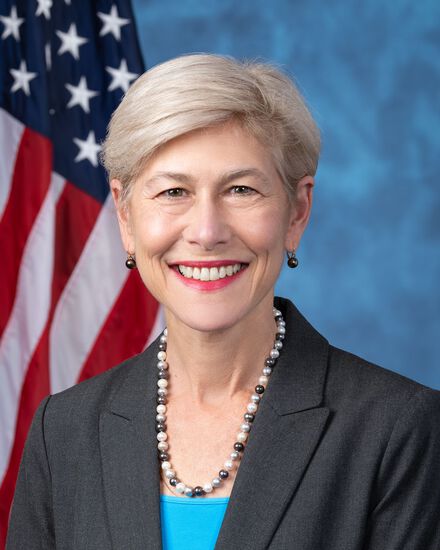
Rep. Deborah K. Ross
Sponsored bills
National Science Foundation for the Future Act This bill reauthorizes the National Science Foundation (NSF) through FY2026 and authorizes programs and activities at the NSF. The bill establishes requirements for the NSF, including to enter into a contract with the National Academies of Science, Engineering, and Medicine to assess the status and opportunities for Pre-K through 12 science, technology, engineering, and mathematics, including computer science, (STEM) education research; award grants to establish no fewer than three multidisciplinary Centers for Transformative Education Research and Translation to support research and development of STEM education innovations; provide grants for research on programming that engages students in grades Pre-K through 8, including underrepresented and rural students, in STEM in order to prepare such students to pursue degrees or careers in STEM; award grants to support research and development activities to encourage greater collaboration and coordination between institutions of higher education and industry to enhance education, foster hands-on learning experiences, and improve alignment with workforce needs; award grants to establish a network of centers for science and technical education; award grants to advance research on the nature of learning and teaching at community colleges; award grants to establish traineeship programs for graduate students who pursue artificial intelligence-related research leading to a masters or doctorate degree; award grants to carry out research on the cyber workforce; establish a cybersecurity workforce data initiative; carry out a national initiative to facilitate the development of networks and partnerships to broaden participation in STEM studies and careers of groups historically underrepresented in such studies and careers; maintain a Research Security and Policy office to coordinate all research security policy issues across the NSF; award grants to support research to improve our understanding of the climate system and related human and environmental systems; support research to significantly advance our understanding of the food-energy-water system; award grants to advance knowledge of risk assessment and predictability to improve our ability to predict extreme events and natural hazards, including pandemics; and award grants to support basic research that will accelerate innovation to advance critical minerals mining strategies and technologies. The bill also establishes within the NSF a Directorate for Science and Engineering Solutions to advance research and development solutions to address societal and national challenges.
Opening Doors for Youth Act of 2021 This bill requires the Department of Labor to provide funding to states for the development or expansion of summer and year-round youth employment programs that (1) match youth participants with appropriate employers for high-quality employment opportunities; and (2) provide work-readiness training and educational programs, coaching and mentoring, career and postsecondary education planning services, financial literacy education, and supportive services.
Safe Schools Improvement Act of 2021 This bill requires states to direct their local educational agencies (LEAs) to establish policies that prevent and prohibit bullying and harassment of elementary and secondary school students. In particular, these policies must prohibit bullying and harassment based on race, color, national origin, sex, sexual orientation, gender identity, disability, or religion. Further, LEAs must provide (1) students, parents, and educational professionals with annual notice of the conduct prohibited in their disciplinary policies; (2) students and parents with grievance procedures that target such conduct; and (3) the public with annual data on the incidence and frequency of that conduct at the school and LEA level. The Department of Education must conduct and report on an independent biennial evaluation of programs and policies to combat bullying and harassment in elementary and secondary schools. The National Center for Education Statistics must collect state data to determine the incidence and frequency of the conduct prohibited by LEA disciplinary policies.
Women and Minorities in STEM Booster Act of 2021 This bill requires the National Science Foundation to award competitive grants to enable eligible entities to carry out the activities specified below in order to increase the participation of women and underrepresented minorities in the fields of science, technology, engineering, and mathematics (STEM). An eligible entity that receives a grant shall use grant funds to carry out one or more of the following activities designed to increase the participation of women or minorities underrepresented in science and engineering, or both: online workshops, mentoring programs that partner STEM professionals with students, internships for undergraduate and graduate students in STEM fields, outreach programs providing elementary and secondary school students with opportunities to increase their exposure to STEM fields, and programs to increase the recruitment and retention of underrepresented faculty.
Safe Schools Improvement Act of 2021 This bill requires states to direct their local educational agencies (LEAs) to establish policies that prevent and prohibit bullying and harassment of elementary and secondary school students. In particular, these policies must prohibit bullying and harassment based on race, color, national origin, sex, sexual orientation, gender identity, disability, or religion. Further, LEAs must provide (1) students, parents, and educational professionals with annual notice of the conduct prohibited in their disciplinary policies; (2) students and parents with grievance procedures that target such conduct; and (3) the public with annual data on the incidence and frequency of that conduct at the school and LEA level. The Department of Education must conduct and report on an independent biennial evaluation of programs and policies to combat bullying and harassment in elementary and secondary schools. The National Center for Education Statistics must collect state data to determine the incidence and frequency of the conduct prohibited by LEA disciplinary policies.
COVID-19 and Pandemic Response Centers of Excellence Act This bill establishes and provides funding for the COVID-19 and Pandemic Response Centers of Excellence Program Fund. The Department of Health and Human Services (HHS) must use the funds to set up at least 10 centers of excellence at academic medical centers to address issues associated with COVID-19 and future pandemic preparedness and response efforts. In addition, HHS must establish an advisory committee comprised of representatives from relevant federal agencies, each center of excellence, and national organizations that work with populations disproportionately impacted by COVID-19 and other health disparities. The committee must facilitate collaboration, information-sharing, and dissemination of best practices relating to COVID-19 and future pandemic responses.
Making Essentials Available and Lawful (MEAL) Act of 2021 This bill repeals a lifetime ban that prohibits individuals convicted of certain offenses related to the possession, use, or distribution of a controlled substance from receiving Supplemental Nutrition Assistance Program (SNAP) benefits or assistance under programs funded by Temporary Assistance for Needy Families (TANF) block grants. Any state law that imposes conditions on eligibility for SNAP benefits or TANF assistance based on an individual's conviction of such an offense shall have no force or effect. In addition, individuals who are incarcerated and scheduled to be released within 30 days shall qualify as individual households for purposes of SNAP eligibility. Under current law, unless specifically excepted, individuals residing in institutions do not constitute a household.
Federal Retirement Fairness Act This bill modifies the federal civilian service that is creditable service under the Federal Employees Retirement System (FERS). Specifically, it expands the nondeduction service that may be creditable under FERS. Nondeduction service is federal service where an employee's pay is not subject to retirement deductions (e.g., service under a temporary appointment). Currently, nondeduction service performed before January 1, 1989, is creditable under FERS so long as a deposit is made into the retirement fund to cover the period of nondeduction service. This bill allows nondeduction service performed on or after January 1, 1989, to be creditable under FERS so long as a deposit is made into the retirement fund.
Food and Nutrition Education in Schools Act of 202 1 This bill directs the Department of Agriculture (USDA) to establish a Food and Nutrition Education in Schools Pilot Program to award grants to local educational agencies for (1) projects that hire qualified, full-time food and nutrition educators to carry out programs in schools that have the goal of improving student health and nutrition; and (2) projects that fund school gardens or other evidence-based interventions relating to student health and nutrition, aligned with the latest school nutrition standards, to create hands-on learning opportunities for students. In awarding grants under the program, USDA must prioritize projects that serve schools or districts (1) in which not less than 40% of students qualify for free or reduced-price meals, or (2) that include neighborhoods with high rates of childhood obesity or other diet-related diseases. Additionally, it must give priority to projects that provide programming in summer months and those that are joint partnership projects.