

Manufactured Housing Community Preservation Act of 2021 This bill requires the Department of Housing and Urban Development to award grants to nonprofit organizations, public housing agencies, and other entities for the preservation of manufactured housing communities. Such funds may be used to (1) acquire and preserve manufactured housing communities; (2) make improvements to common areas and community property in such communities; and (3) demolish, remove, and replace dilapidated homes in such communities. A grantee that uses funds to acquire a manufactured housing community must agree to maintain the community for at least 20 years.
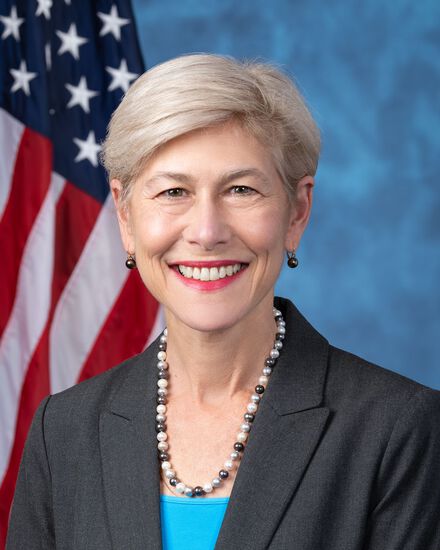
Rep. Deborah K. Ross
Sponsored bills
Performing Artist Tax Parity Act of 2021 This bill modifies the tax deduction for the expenses of performing artists (including commissions paid to managers or agents) to provide for a phaseout of such deduction for taxpayers whose adjusted gross income exceeds $100,000 ($200,000 for joint return filers). The $100,000 phaseout threshold is adjusted for inflation annually for taxable years beginning after 2021.
Recognizing the Role of Direct Support Professionals Act This bill requires the Office of Management and Budget to establish a separate category within the Standard Occupational Classification system for direct support professionals (i.e., individuals who provide services to promote independence in individuals with a disability) for data reporting purposes.
Healthy Dog Importation Act This bill imposes requirements on the importation of live dogs. Specifically, the bill prohibits the importation of a live dog into the United States unless the Department of Agriculture (USDA) determines the dog (1) is in good health, (2) has received all necessary vaccinations and demonstrated negative test results as evidenced by a certificate from a licensed veterinarian, and (3) is officially identified by a permanent method approved by USDA. Additionally, dogs entering the United States for transfer must be at least six months of age and accompanied by a USDA permit. Transfer is defined as a change of ownership or control of an imported dog to another person, including by sale, adoption, exchange, or donation. USDA must provide an exception to any requirements under the bill for dogs that are transferred for (1) research purposes; (2) veterinary treatment under certain conditions, including appropriate quarantining; or (3) lawful importation into the state of Hawaii if the dog is not transported out of Hawaii for resale at less than six months of age. USDA also has enforcement authority under the bill.
Closing the Meal Gap Act of 202 1 This bill revises the requirements for calculating Supplemental Nutrition Assistance Program (SNAP) benefits. The bill increases the minimum SNAP benefit and requires benefits to be calculated using the value of a low-cost food plan. The Department of Agriculture (USDA) must determine the requirements for the low-cost food plan, which is the diet required to feed a family of four, consisting of a man and a woman 19-50 years of age, a child 6-8 years of age, and a child 9-11 years of age. USDA must (1) reevaluate and publish the market baskets of the plan by January 1, 2027, and every five years thereafter, based on current food prices, food composition data, consumption patterns, and dietary guidance; and (2) make adjustments to the plan to account for household size, changes in the cost of the diet, and the costs of food in specified areas. The bill modifies the requirements for calculating household income to determine SNAP eligibility by (1) authorizing a standard medical expense deduction for households containing an elderly or disabled member, and (2) eliminating the cap on the excess shelter expense deduction. The bill eliminates certain work requirements for SNAP. The requirements apply to able-bodied adults who are ages 18-49 and have no dependent children. The bill allows Puerto Rico, American Samoa, and the Northern Mariana Islands to participate in SNAP. Currently, the three territories receive block grants instead of participating in SNAP.
Transition for Success Act This bill allows members of the reserve components of the Armed Forces to participate in the Department of Defense's Skillbridge program, which provides job training to service members who are transitioning into civilian life.
Empowering Parents' Healthcare Choices Act of 2021 This bill provides a 60-day time frame within which parents with separate health insurance plans may choose which plan provides primary coverage for their newborn child. The bill limits the application of certain standard health insurance provisions that determine which plan becomes the primary coverage of a dependent child based on the order of the parents' birthdays.
Securing Universal Communications Connectivity to Ensure Students Succeed Act or the SUCCESS Act This bill provides additional funding for the Emergency Connectivity Fund, which supports remote learning during the COVID-19 emergency period by covering reasonable costs of laptop and tablet computers, Wi-Fi hotspots, modems, routers, and broadband connectivity purchases for off-campus use by students, school staff, and library patrons.
Medicaid Saves Lives Act This bill requires and provides funds for the Department of Health and Human Services to establish a program that provides health benefits to the Medicaid expansion population in states that have not expanded Medicaid. Specifically, the program must provide coverage for individuals who are newly eligible for Medicaid under the Patient Protection and Affordable Care Act (i.e., the Medicaid expansion population) without premiums and in accordance with Medicaid cost-sharing and other requirements. The bill also extends and increases the temporarily enhanced Federal Medical Assistance Percentage (i.e., federal matching rate) for states that elect to participate in Medicaid expansion if they have not already done so.
PFAS Action Act of 2021 This bill establishes requirements and incentives to limit the use of perfluoroalkyl and polyfluoroalkyl substances, commonly referred to as PFAS, and remediate PFAS in the environment. PFAS are man-made and may have adverse human health effects. A variety of products contain PFAS, such as nonstick cookware or weatherproof clothing. The bill directs the Environmental Protection Agency (EPA) to designate the PFAS perfluorooctanoic acid (PFOA) and perfluorooctanesulfonic acid (PFOS) as a hazardous substances under the Comprehensive Environmental Response, Compensation, and Liability Act of 1980, thereby requiring remediation of releases of those PFAS into the environment. Within five years, the EPA must determine whether the remaining PFAS should be designated as hazardous substances. The EPA must publish human health water quality criteria under the Clean Water Act for each measurable PFAS and class of such substances and establish standards to limit discharges of PFAS from industrial sources into waters of the United States. In addition, the EPA must issue a national primary drinking water regulation for PFAS that, at a minimum, includes standards for PFOA and PFOS. Among other requirements, the EPA must also issue a final rule adding PFOA and PFOS to the list of hazardous air pollutants, test all PFAS for toxicity to human health, and regulate the disposal of materials containing PFAS. The EPA must also require PFAS manufacturers to submit analytical reference standards for PFAS. The EPA and states may use those standards for (1) the development of information, protocols, and methodologies, and (2) activities relating to the implementation of enforcement of requirements. Finally, the bill provides incentives to address PFAS, such as grants to help community water systems treat water contaminated by PFAS and grants to schools for testing and filtrating PFAS from drinking water.