

Maddy summaryThe LOAN Act (HR 1731) makes significant changes to federal student financial aid programs. It doubles the maximum Federal Pell Grant amount for eligible students, expands Pell Grant eligibility to graduate students and "Dreamer" students (undocumented individuals who came to the U.S. as children), and restores the total semesters of Pell Grant eligibility from 12 to 18. The bill also eliminates interest capitalization on federal student loans, repeals origination fees, and creates automatic enrollment in income-driven repayment plans for borrowers who are delinquent or rehabilitating defaulted loans. Additionally, it establishes new refinancing programs for both federal and private student loans with interest rates capped at 5.0% for new loans.
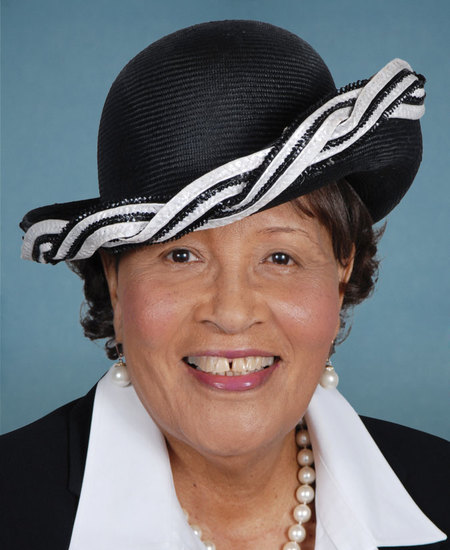
Rep. Alma S. Adams
Sponsored bills
Maddy summaryHR 1723, the Abortion is Health Care Everywhere Act of 2023, amends the Foreign Assistance Act to remove restrictions on using U.S. foreign aid funds for abortion services. It explicitly allows U.S. foreign assistance programs to fund comprehensive reproductive health care, including abortion services, training, and equipment. This change directly affects U.S. international health programs and recipient countries, enabling them to integrate safe abortion care into broader reproductive health services. The bill aims to align U.S. policy with global health guidelines by making abortion services a standard part of reproductive health care funded through foreign assistance.
Defend our Coast Act This bill prohibits the Department of the Interior from issuing a lease for the exploration, development, or production of oil or gas in the Mid-Atlantic planning area of the Outer Continental Shelf.
Maddy summaryThe Food Deserts Act creates a federal grant program to help establish grocery stores in underserved communities by funding state revolving funds. States receive capitalization grants (up to $150 million for FY2022) to provide low-interest loans to grocery stores that meet specific criteria, such as selling unprocessed, affordable healthy foods and matching 20% of the loan with non-federal funds. Priority is given to stores hiring local workers, offering nutrition education, sourcing from local farms, and having established supply chains. The program directly supports grocery store operators in areas with limited access to fresh food, aiming to improve community health outcomes through increased access to nutritious options.
Maddy summaryThis bill authorizes a Congressional Gold Medal to honor the "Hello Girls" - female telephone operators who served in the Army Signal Corps during World War I. They provided critical battlefield communications in France (connecting 26 million calls), wore military uniforms, and faced combat risks, but were denied veteran benefits for 60 years due to being classified as civilian contractors. The medal recognizes their pioneering service, devotion, and the decades-long struggle to gain military recognition. The award follows similar recognition for other WWII women veterans and aims to correct the historical injustice they faced.
Maddy summaryHRES 219 is a symbolic resolution (not a binding bill) expressing the House’s support for inclusive public schools. It urges schools to adopt historically accurate, diverse educational materials that reflect the nation’s diversity, foster parent-educator partnerships, and eliminate discrimination based on race, disability, LGBTQ+ identity, or other factors. The resolution emphasizes creating safe, well-rounded learning environments that prepare all students for success while protecting students’ civil rights. It directly affects public school districts, educators, families, and students by encouraging practices that promote equity and inclusion.
Maddy summaryThis bill requires Medicaid to cover dental and oral health services for adults beginning in 2025, directly affecting low-income adults enrolled in Medicaid. It defines covered services to include preventive care, restorative treatments, dentures, implants, and emergency dental care. The bill increases federal funding for these services (100% FMAP for a 12-quarter period starting in 2025) and requires states to implement new quality measures tracking oral health outcomes and disparities. It also mandates reports on access barriers and creates outreach programs to improve culturally competent dental care for underserved populations.
Maddy summaryThe Paycheck Fairness Act (HR 17) strengthens equal pay protections by amending the Fair Labor Standards Act. It prohibits pay discrimination based on sex, pregnancy, childbirth, sexual orientation, gender identity, and sex characteristics. The bill modifies employer defenses for pay differences to require demonstration that any disparity is job-related, consistent with business necessity, and accounts for the entire pay differential. It also prohibits employers from relying on wage history when making hiring decisions or setting pay, enhances penalties for violations, and requires the EEOC to collect compensation data disaggregated by sex, race, and national origin.
Maddy summaryHCONRES 22 is a symbolic resolution recognizing the persistent gender pay gap in the U.S., documenting that women earn significantly less than men across racial groups (e.g., Black women earn 67 cents for every dollar earned by White men). It highlights the economic impact of this disparity, noting women lose over $958 billion annually in wages and face barriers like occupational segregation and workplace harassment. The resolution does not create new laws or policies but formally acknowledges the issue and reaffirms Congress’s commitment to addressing the gap. It references specific Equal Pay Days (e.g., March 14 for all women) to underscore the time women must work to earn what men did the previous year.
Maddy summaryHR 1510, the Improving Access to Nutrition Act of 2023, removes work requirements for Supplemental Nutrition Assistance Program (SNAP) recipients. It directly affects approximately 6.1 million people, including many Black, Hispanic, and Native American households disproportionately impacted by food insecurity (with rates 2-4x higher than White households), as well as families with children and individuals with health barriers to employment. The bill amends the Food and Nutrition Act by striking provisions requiring work for SNAP eligibility and related administrative requirements. This change aims to prevent vulnerable households from losing critical food assistance during the pandemic and beyond.