

Supporting Our First Responders Act This bill establishes a competitive grant program to support medical transport and emergency medical services (EMS). The Department of Health and Human Services (HHS) must award the grants to EMS organizations (including for-profit organizations) or state, tribal, territorial, or local governments. Grant-funded activities include (1) providing salaries and stipends for EMS workers; (2) purchasing vehicles, personal protective equipment, and other resources; and (3) establishing community paramedicine or mobile integrated health care initiatives. HHS must also report to Congress about health insurance reimbursement for medical transport and EMS and the feasibility of establishing a federal EMS office.
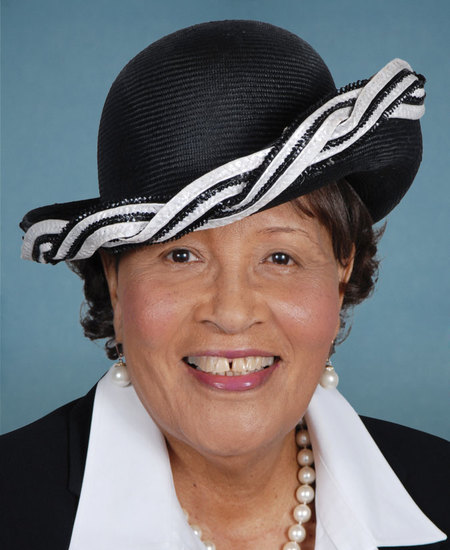
Rep. Alma S. Adams
Sponsored bills
Maddy summaryThe International Human Rights Defense Act of 2023 creates a permanent Special Envoy at the State Department to coordinate U.S. efforts against discrimination and violence targeting LGBTQI+ people globally. The bill requires the development of an annual global strategy to address criminalization, discrimination, and violence based on sexual orientation, gender identity, or sex characteristics. It also mandates that U.S. country reports on human rights practices include detailed information about laws and practices affecting LGBTQI+ communities. The legislation authorizes U.S. foreign assistance programs to support LGBTQI+ rights through health services, legal protections, and community capacity building. This bill aims to strengthen U.S. diplomatic engagement on LGBTQI+ rights as part of broader human rights policy.
Maddy summaryThis bill establishes new salary thresholds for white-collar workers to qualify for overtime pay, starting at $45,000 annually in 2023 and increasing to $75,000 by 2026. It requires automatic annual adjustments based on the 55th percentile of full-time salaried workers' earnings, as tracked by the Bureau of Labor Statistics. The bill also limits non-exempt duties to no more than 20% of a worker's time. These changes would make more salaried employees eligible for overtime pay, reversing a long-term decline in coverage.
Maddy summaryHR 1831 would award Billie Jean King a Congressional Gold Medal to honor her lifelong advocacy for equal rights in sports and society. The bill directs the Secretary of the Treasury to strike the medal and have it presented by congressional leaders, recognizing her pivotal role in advancing women's equality through tennis (including founding the Women’s Tennis Association and securing equal prize money) and her broader impact on society through initiatives like Title IX advocacy.
Maddy summaryThis bill changes how U.S. foreign aid is provided to international health organizations. It prevents U.S. agencies from denying aid to foreign non-governmental organizations (NGOs) solely because they offer health services (like counseling or referrals) using their own funds, as long as those services follow local laws. It also stops applying stricter rules about how foreign NGOs can use their own funds for advocacy compared to U.S. NGOs receiving similar aid. The bill directly affects foreign health-focused NGOs that rely on U.S. foreign assistance funding.
Maddy summaryHCONRES 28 is a symbolic resolution expressing Congress's view that tax-exempt fraternal benefit societies - organizations providing life, health, and accident benefits to members - have long delivered critical community support. It states these societies, with about 7 million members nationwide, generate significant annual value through charitable work and volunteer activities (estimated at over $3.8 billion yearly). The resolution affirms that their tax-exempt status under Section 501(c)(8) of the tax code is essential for sustaining their volunteer-driven model and relieving pressure on government safety programs. As a non-binding expression of congressional sentiment, it does not alter existing laws or create new obligations.
Maddy summaryThe Pell Grant Sustainability Act adjusts Federal Pell Grants to keep pace with rising college costs by indexing them annually to inflation. It directly affects low-income undergraduate students who receive Pell Grants, ensuring the maximum award amount increases each academic year based on the Consumer Price Index. The bill replaces previous fixed amounts with a new formula: starting in 2023-2024, grants will be set at $6,895 (or the prior year's amount if higher), then adjusted yearly by the inflation rate. This change aims to restore the grant's purchasing power, which covered 80% of costs in 1974-75 but only 30% by 2020-21.
Maddy summaryThe Loan Forgiveness for Educators Act would provide full student loan forgiveness to educators who work in high-need schools or early childhood education programs. After completing 5 years of qualifying service, educators would have 100% of their outstanding student loans forgiven, with the option for monthly loan forgiveness during their service period. The bill defines "high-need schools" as those with over 30% of students in poverty or identified for improvement, and includes special provisions for educators working in Native American, Tribal, and Bureau of Indian Education schools. Educators could count service completed before the law's enactment toward their 5-year requirement, and the program would cover both FFEL and Direct Loan programs.
Maddy summaryHR 1716, the Global Aircraft Maintenance Safety Improvement Act, requires U.S. airlines to annually report detailed information about heavy maintenance work performed outside the U.S. on their aircraft, including locations, work descriptions, and any safety issues identified after maintenance. It prohibits U.S. airlines from entering new contracts for such maintenance with repair stations in countries classified by the FAA as "Category 2" due to safety deficiencies. The bill also mandates that mechanics and supervisors at foreign repair stations performing heavy maintenance on U.S. aircraft must hold appropriate FAA certifications. Additionally, it establishes a working group with international aviation authorities to review and recommend improvements for overseeing foreign repair stations.
Maddy summaryThis bill restores access to VA housing loans and educational benefits for Black World War II veterans who were denied GI Bill benefits due to racial discrimination, as well as for their living spouses, children, grandchildren, or direct descendants. It defines eligibility by requiring applicants to certify that their veteran relative was denied GI Bill benefits on racial grounds, with a five-year application window starting from the bill's enactment date. The VA must process these applications within 90 days and report to Congress on the number of recipients and total benefit value within one year. This addresses historical discrimination by creating new pathways to benefits for affected individuals and their families.