

Cybersecurity Opportunity Act This bill requires the Department of Homeland Security to establish a grant program to promote cybersecurity training and education at institutions of higher education with an enrollment of needy students, historically Black colleges and universities, and minority-serving institutions.
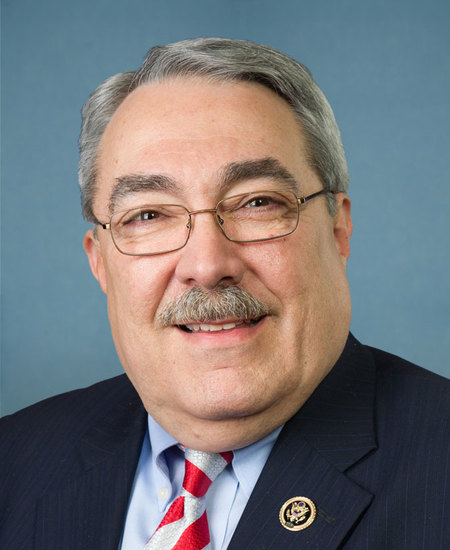
Rep. G. K. Butterfield
Sponsored bills
This resolution expresses support for the designation of National Vitiligo Awareness Day. (Vitiligo is a chronic condition that results in the loss of pigment in patches on the skin, hair, eyes, and inside of the mouth; the condition may lead to discomfort, itching, and pain.)
Choose Home Care Act of 2021 This bill provides for coverage of home-based extended care services under Medicare. Specifically, the bill provides for coverage of services that are furnished to Medicare beneficiaries in their homes by home health agencies, including nursing care, meals and nutritional support, home medical supplies, nonemergency medical transportation, and care coordination. Coverage includes 30 days of post-hospital care and other periods of extended illness, as determined by the Centers for Medicare & Medicaid Services (CMS). Home health agencies that provide such services may receive additional payments in accordance with a specified methodology. The CMS may make payments for covered services furnished before 2022 during any period in which there is a public health emergency.
Stabilizing Medicare Access to Rehabilitation and Therapy Act or the SMART Act This bill modifies the application of a certain Medicare payment methodology for outpatient physical therapy services and outpatient occupational therapy services that are furnished by a therapy assistant. Under current law, effective January 1, 2022, payment for such services is 85% of the otherwise applicable rate. The bill delays this effective date by one year and excludes services that are furnished in rural or medically underserved areas from this payment methodology. The bill also specifies that supervision requirements for outpatient physical therapy services that are furnished through private practice may not be more stringent for purposes of Medicare coverage than under state law.
Give Kids a Chance Act This bill authorizes the Food and Drug Administration (FDA) to take various actions regarding pediatric cancer treatments, such as requiring pediatric cancer trials involving a combination of drugs when an applicant seeks market approval for a new drug (or biological product). For an application for market approval for a new adult cancer treatment drug, if the FDA determines that the drug in question is substantially relevant to the growth or progression of a pediatric cancer, the FDA may require a pediatric cancer investigation into that drug's active ingredient in combination with another active ingredient that has received market approval or an exemption for investigational use. Currently, the FDA may only require a pediatric cancer trial for the drug in the application. Furthermore, when the FDA receives an application for an investigational use exemption for an adult cancer treatment drug, the FDA may require the applicant to conduct up to two preclinical studies to determine the relevance of the drug to pediatric cancer.
COBRA Subsidy Extension for Workers and Families Act This bill extends temporary health insurance premium assistance for enrollees in the COBRA (Consolidated Omnibus Budget Reconciliation Act) continuation coverage program. Currently, COBRA premiums are fully subsidized through September 30, 2021, and the bill extends the subsidy through September 30, 2022. The bill also provides for expedited review of denials of eligibility for such assistance.
Cancer Patient Equity Act of 2021 This bill provides for coverage of certain cancer diagnostic and laboratory tests under Medicare, Medicaid, and the Children's Health Insurance Program (CHIP). Specifically, the bill provides for coverage of microarray analysis, DNA and RNA sequencing, whole-exome sequencing, and other next-generation sequencing for individuals diagnosed with cancer. Additionally, the Department of Health and Human Services must establish an education and awareness program for physicians and the public about genomic testing and the role of genetic counselors.
This resolution condemns and denounces the actions of the Customs and Border Patrol agents who confronted Haitian migrants on horseback using their reins as lashes.
Streamlining Nutrition Assistance Paperwork Act of 2021 or the SNAP Act of 2021 This bill provides statutory authority for a Department of Agriculture (USDA) waiver that allows states to use a written record to document telephonic signatures for Supplemental Nutrition Assistance Program (SNAP) applications. Under current law, states may allow individuals to sign their SNAP applications over the telephone, but states must preserve audio recordings of those telephonic signatures. During the COVID-19 emergency, USDA waived the requirement to preserve the audio recording and allowed states to document the telephonic signatures through written records.
John R. Lewis Voting Rights Advancement Act of 2021 This bill establishes new criteria for determining which states and political subdivisions must obtain preclearance before changes to voting practices may take effect. Preclearance is the process of receiving preapproval from the Department of Justice (DOJ) or the U.S. District Court for the District of Columbia before making legal changes that would affect voting rights. A state and all of its political subdivisions shall be subject to preclearance of voting practice changes for a 10-year period if 15 or more voting rights violations occurred in the state during the previous 25 years; 10 or more violations occurred during the previous 25 years, at least 1 of which was committed by the state itself; or 3 or more violations occurred during the previous 25 years and the state administers the elections. A political subdivision as a separate unit shall also be subject to preclearance for a 10-year period if three or more voting rights violations occurred there during the previous 25 years. States and political subdivisions that meet certain thresholds regarding minority groups must preclear covered practices before implementation, such as changes to methods of election and redistricting. Further, states and political subdivisions must notify the public of changes to voting practices. Next, the bill authorizes DOJ to require states or political subdivisions to provide certain documents or answers to questions for enforcing voting rights. The bill also outlines factors courts must consider when hearing challenges to voting practices, such as the extent of any history of official voting discrimination in the state or political subdivision.