

Public Service Freedom to Negotiate Act of 20 21 This bill provides minimum collective bargaining rights and procedures for public employees and prohibits strikes by certain public safety workers. The Federal Labor Relations Authority (FLRA) shall determine for each state whether the laws of such state substantially provide for each of the minimum standard collective bargaining rights and procedures specified by this bill, including the right of public employees and supervisory employees to self-organize, form or join a labor organization, or collectively bargain. The FLRA must issue rules and take actions to establish and administer bargaining rights and procedures for those states that do not substantially provide for them. No employers, emergency services employees, or law enforcement officers may engage in a lockout, strike, or any other organized job action that is likely to result in a measurable disruption of the delivery of emergency or public safety services. Furthermore, no labor organization may be the cause of a violation of such prohibition.
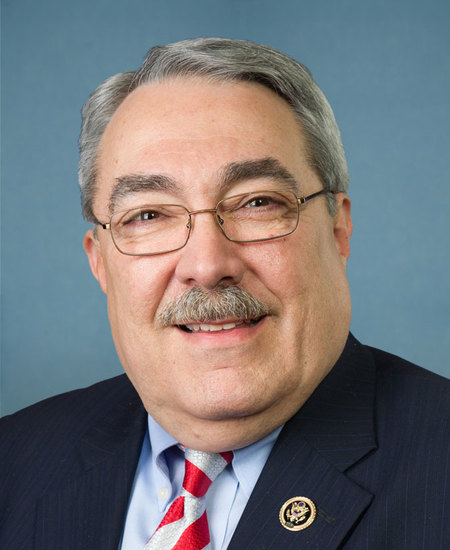
Rep. G. K. Butterfield
Sponsored bills
State, Local, Tribal, and Territorial Fiscal Recovery, Infrastructure, and Disaster Relief Flexibility Act This bill allows states, tribes, territories, and localities to use certain COVID-19 relief funds for new categories of spending, including for natural disasters and infrastructure projects. It also makes changes to expenditure deadlines and other aspects of this funding. Specifically, recipients may use funds for emergency relief from natural disasters and associated negative economic impacts of natural disasters. In addition, recipients may use a portion of their COVID-19 relief funds for designated infrastructure projects, such as nationally significant freight and highway projects. Furthermore, the bill allows recipients to expend COVID-19 relief funds on these types of infrastructure projects until September 30, 2026. Under current law, recipients must expend the funds by December 31, 2024. Other changes in the bill include (1) modifying eligibility and allocation requirements for funding set aside for counties and Indian tribes that are near public lands, (2) allowing Indian tribes an additional year to expend their COVID-19 relief funds, and (3) establishing a process for government entities to decline COVID-19 relief funds and requiring any declined funds to be used to reduce the federal deficit.
Strengthening America's Strategic National Stockpile Act of 2021 This bill makes changes to the administration and management of the Strategic National Stockpile. Among these changes, the bill authorizes through September 30, 2024, the Department of Health and Human Services (HHS) to transfer supplies from the stockpile to any federal departments or agencies under certain conditions. HHS must also ensure the contents of the stockpile remain in working order and may enter into maintenance service contracts to carry out this requirement. Furthermore, as part of its management of the stockpile, HHS must establish and maintain domestic reserves of certain supplies, including by entering into cooperative agreements or partnerships to access facilities and equipment to produce these supplies. The authority for such agreements and partnerships terminates on September 30, 2024. Additionally, the bill temporarily authorizes HHS to award grants to states for maintaining stockpiles of certain equipment and supplies for use during public health emergencies. HHS must also develop transparent processes for the use and distribution of supplies from the stockpile that address, for example, the prioritization of requests. Additionally, during the COVID-19 emergency, the Office of the Assistant Secretary for Preparedness and Response must report monthly on requests for supplies from states, tribes, and other jurisdictions. These reports must include the rationale for any partially fulfilled or denied requests. Lastly, the Government Accountability Office must study the feasibility of establishing user fees to offset costs for procuring single-source materials for, and distributing such materials from, the stockpile.
Long-Term Care Pharmacy Definition Act of 2021 This bill establishes a statutory definition for long-term care pharmacy under the Medicare prescription drug benefit. Currently, there is no statutory definition. Regulations from the Centers for Medicare & Medicaid Services (CMS) define a long-term care pharmacy as a pharmacy that is owned by or under contract with a long-term care facility to provide prescription drugs to the facility's residents. Additional requirements are set out in CMS guidance relating to the Medicare prescription drug benefit; pharmacies are also subject to regulations and guidance from other agencies (e.g., packaging requirements from the Food and Drug Administration). The bill defines a long-term care pharmacy as a state-licensed pharmacy that is able to provide enhanced pharmacy and clinical services to individuals who have certain comorbid and medically complex chronic conditions and who reside in skilled nursing facilities, nursing facilities, or any other applicable setting (as determined by the CMS). The term enhanced pharmacy and clinical services includes medication dispensed in special packaging, drug utilization review, and 24-7 availability of medication delivery and on-call pharmacists.
This resolution recognizes the opportunity for Black Maternal Health Week to raise national awareness of the state of Black maternal health in the United States.
Defending Each and Every Person from False Appearances by Keeping Exploitation Subject to Accountability Act of 2021 or the DEEP FAKES Accountability Act This bill establishes requirements for advanced technological false personation records (i.e., deep fakes) and establishes criminal penalties for related violations. Specifically, it requires producers of deep fakes to generally comply with certain digital watermark and disclosure requirements (e.g., verbal and written statements). It establishes new criminal offenses related to (1) the production of deep fakes which do not comply with related watermark or disclosure requirements, and (2) the alteration of deep fakes to remove or meaningfully obscure such required disclosures. A violator is subject to a fine, up to five years in prison, or both. It also establishes civil penalties and permits individuals to bring civil actions for damages. Additionally, it revises the criminal offense of fraud in connection with certain identification documents to include deep fakes. The bill also directs the Department of Justice to take certain actions, such as publishing a report related to deep fakes that includes a description of the efforts of Russia and China to use technology to impact elections. Software manufacturers who reasonably believe software will be used to produce deep fakes must ensure it has the technical capability to insert watermarks and disclosures. Finally, the bill directs the Department of Homeland Security to establish a task force to, among other things, advance efforts of the federal government to combat the national security implications of deep fakes.
Camp Lejeune Justice Act of 2021 This bill allows certain individuals to sue and recover damages for harm from exposure to contaminated water at Camp Lejeune in North Carolina between August 1, 1953, and December 31, 1987. This action is available only to individuals who were exposed to contaminated water for at least 30 days. The bill prohibits the U.S. government from asserting specified immunity from litigation in response to such a lawsuit. The bill also prohibits an individual who brings such an action from bringing a separate tort action against the United States based on the same harm.
Healthcare Workforce Resilience Act This bill makes previously unused immigrant visas available to nurses and physicians who petition for such a visa before the date that is 90 days after the end of the declared national emergency relating to the COVID-19 (i.e., coronavirus disease 2019) outbreak. The number of visas available shall be the total number of unused employment-based immigrant visas from FY1992-FY2020, up to 40,000. Of such visas, 25,000 shall be reserved for nurses and 15,000 for physicians. Certain family members may accompany the principal beneficiary of a visa provided under this bill, and visas for such family members shall (1) be made available from the unused visas from FY1992-FY2020, and (2) not be counted against the 40,000 cap. Visas provided under this bill shall be exempt from per-country limitations.
Equal Access to Abortion Coverage in Health Insurance Act of 2021 or the EACH Act of 2021 This bill requires federal health care programs to provide coverage for abortion services and requires federal facilities to provide access to those services. The bill also permits qualified health plans to use funds attributable to premium tax credits and reduced cost sharing assistance to pay for abortion services.
Bolstering Infectious Outbreaks Preparedness Workforce Act of 2021 or the BIO Preparedness Workforce Act of 2021 This bill establishes a student loan repayment program for health care and related professionals who are engaged in either bio-preparedness and response activities or infectious disease care in underserved communities. For each year that a professional meets the work requirements of the program, the Health Resources and Services Administration may pay up to $50,000 of the professional's student loan principal and interest, up to a maximum amount of $150,000.