

Maddy summaryThis bill gives the Office of National Drug Control Policy new authority to ensure the World Anti-Doping Agency (WADA) has fair U.S. representation, particularly for "independent athletes" (those not affiliated with Olympic committees, national teams, or WADA itself). It requires a 90-day review to assess WADA's governance reforms, including conflict-of-interest policies and athlete representation on its leadership boards. If WADA fails these standards, the U.S. may voluntarily withhold full membership dues and must issue a report detailing barriers to U.S. representation within 180 days. The policy aims to strengthen U.S. influence in global anti-doping efforts through accountability measures.
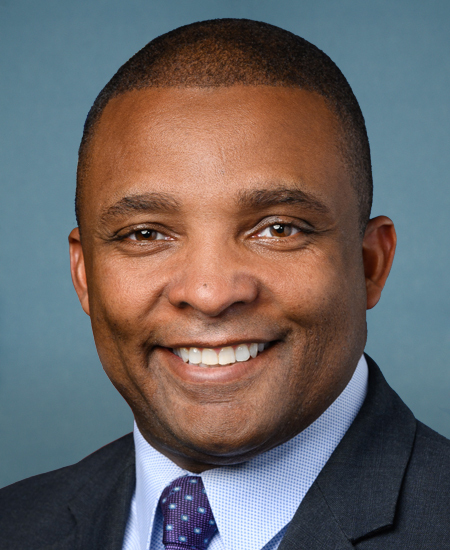
Rep. Donald G. Davis
Sponsored bills
Maddy summaryHR 9144, the Let America Vote Act, requires states to allow voters not registered with a political party (unaffiliated voters) to participate in any primary election for federal, state, or local office - though they cannot vote in primaries for more than one party. It also prohibits states from sharing unaffiliated voters' personal information with political parties or marking them as affiliated with a party solely based on their primary vote. Additionally, the bill bans noncitizens from voting in any taxpayer-funded election for public office and ties federal election administration funding to state compliance with these rules. States must certify adherence to these provisions to receive federal funds for election administration.
Maddy summaryThe Federal Prison Oversight Act establishes a new inspections regime for federal prisons, requiring the Justice Department's Inspector General to conduct regular assessments of Bureau of Prisons facilities. These inspections will evaluate conditions of confinement, medical care, staffing levels, safety protocols, and policies related to visitation and programming. The bill also creates a new Ombudsman position within the Department of Justice to receive and address complaints from incarcerated people, their families, and staff about health, safety, and rights concerns. The Inspector General must submit public reports with recommendations, and the Bureau must respond with corrective action plans within 60 days. The law includes protections against retaliation for those filing complaints and requires the Bureau to provide multiple confidential channels for submitting complaints.
Maddy summaryHRES 1385 designates the week of August 4-10, 2024, as "National Farmers Market Week" to recognize the economic and community role of farmers markets. The resolution highlights that farmers markets generated $1.7 billion in income for U.S. farmers in 2020, supported 8,771 markets nationwide by 2019, and connect urban and rural communities while promoting sustainable farming and nutrition access. It does not create new laws or funding but formally acknowledges these markets’ contributions to local economies, public health, and community engagement. The resolution aims to raise awareness of farmers markets’ importance, directly affecting farmers, vendors, and consumers who rely on these venues.
Maddy summaryHRES 1382 is a non-binding resolution expressing the House of Representatives' view that Americans should resolve political disagreements without threats or violence, citing recent incidents like the 2011 shooting of Rep. Giffords and increased threats against election officials. It calls on political leaders of all parties to consistently and often condemn political violence, including after the recent assassination attempt on former President Trump. The resolution does not create new laws but formally states the House's position on this issue.
Maddy summaryHR 9119, the Alzheimer's Law Enforcement Education Act of 2024, requires the Department of Justice to create an online training course for law enforcement officers on interacting with people with Alzheimer's disease or dementia. The course covers recognizing symptoms, effective communication techniques, avoiding physical restraints, and identifying abuse or neglect. It mandates that state departments count this training toward required certification hours for law enforcement, correctional, and probation officers. The bill directly affects these officers by requiring new training standards for handling encounters with individuals experiencing dementia. The training must be developed within one year of the bill's enactment.
Maddy summaryThe 9/11 Responder and Survivor Health Funding Correction Act of 2024 makes several key changes to the World Trade Center Health Program that serves 9/11 responders and survivors. It allows licensed mental health providers (not just physicians) to conduct mental health evaluations for program participants and extends the time period for adding new health conditions from 90 to 180 days. The bill also adjusts enrollment calculations by removing deceased individuals from program counts and provides $2.97 billion in new funding for fiscal year 2024 with a minimum annual funding level of $20 million for 2025. These changes aim to improve access to care while ensuring stable, long-term funding for the program that provides medical services to those affected by the 9/11 attacks.
Maddy summaryThe BRAIN Act (HR 9113) establishes new research networks and funding mechanisms to advance brain tumor treatment and care. It requires the NIH to create a searchable database of brain tumor biospecimens, authorizes $50 million annually for a Glioblastoma Therapeutics Network, and allocates $10 million yearly for CAR-T cell therapy research. The bill also mandates a national awareness campaign about clinical trials and biomarker testing, and funds pilot programs to improve long-term care for brain tumor survivors. These provisions directly affect researchers, patients, healthcare providers, and survivors, with funding allocated for fiscal years 2026 through 2030.
Maddy summaryThis bill allows non-VA doctors (contract physicians) to conduct disability exams for veterans, expanding access for rural veterans who face travel barriers to VA facilities. It requires these doctors to hold current state licenses, not be barred from practice, and perform exams under VA contracts. The VA would cover costs through existing benefit funding, and the bill terminates a 1996 pilot program on this approach. The law directly affects veterans seeking disability benefits and the VA’s examination process, making it more flexible for rural communities.
Maddy summaryHR 8880, the Simplifying Forms for Veterans Claims Act, requires the Department of Veterans Affairs (VA) to commission an independent assessment of its claim forms within 30 days of the bill's enactment. This assessment, conducted by a federally funded research center (FFRDC) in consultation with veterans' service organizations and legal experts, must identify how to make VA forms clearer and better organized for claimants. The VA must then implement the recommended changes within two years, submitting the assessment to Congress within 90 days of receiving it. The bill directly affects veterans filing claims by aiming to reduce confusion in the paperwork process, without altering benefit eligibility or amounts.