

Maddy summaryThis bill allows the VA to provide a single headstone or marker for groups of eligible veterans buried together in group interments, instead of individual markers. It sets a 7-year expiration for this provision, ending seven years after the bill's enactment. The bill also extends the deadline for burying spouses and dependent children of veterans or active-duty service members at national cemeteries from October 1, 2024, to October 1, 2031. These changes directly affect veterans buried in group interments and their families seeking burial benefits at VA national cemeteries.
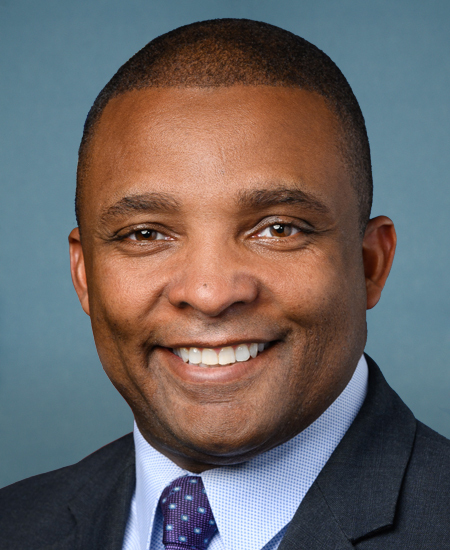
Rep. Donald G. Davis
Sponsored bills
Maddy summaryHR 8571, the Protecting America’s Working Dogs Act of 2024, creates a federal grant program to cover medical costs for retired working dogs. It provides grants of up to $575,000 annually to eligible nonprofits that primarily care for qualified working dogs, including retired military and law enforcement dogs, and service dogs for veterans or retired law enforcement officers. The grants fund covered medical expenses like vet visits, procedures, and medications, directly easing financial burdens on handlers who take in these dogs after retirement. Nonprofits must meet strict criteria, including spending at least 70% of funds on medical assistance for these dogs.
Maddy summaryThis bill requires the U.S. Postal Service (USPS) to meet specific on-time delivery performance standards for periodicals (newspapers and magazines) before the Postal Regulatory Commission can approve new rate increases for those services. It mandates annual public reports tracking USPS's on-time delivery performance for both in-county and out-of-county newspaper mail, with requirements for data collection if individual mail tracking isn't feasible. The bill also directs the Government Accountability Office (GAO) to study alternative pricing models for periodicals that don't cover their costs, with a report due within two years. These provisions directly affect USPS operations, newspaper publishers, and the postal rate-setting process, aiming to link service quality to financial decisions.
Maddy summaryHR 9071, the UAS Threat Disclosure Act, requires the Director of National Intelligence to declassify all pre-May 2024 security assessments about drones made by or controlled by Chinese entities within 90 days. It directs the declassified information - including security reports and agency actions - to be published online and submitted to Congress. The bill specifically targets "covered unmanned aircraft systems," defined as drones produced or influenced by China’s government or Communist Party. This makes security findings about Chinese-linked drone threats publicly accessible, while allowing national security exemptions. The law affects public transparency regarding Chinese drone security risks but does not alter drone regulations or impose new restrictions.
Maddy summaryThis bill expands the U.S. Secret Service's authority to investigate cybercrime-related money laundering by adding Section 1960 (money laundering) to its jurisdiction and updating definitions for financial institutions. It requires financial institutions to report suspicious activity for 10 years (up from 5) under FinCEN rules and increases the number of international financial institutions targeted for cooperation from 5 to 10. The law directly affects financial institutions, law enforcement agencies, and international financial bodies by modifying reporting timelines, investigative powers, and cross-border collaboration requirements. These changes aim to strengthen efforts against cybercrime money laundering through updated legal frameworks and extended oversight periods.
Maddy summaryThis bill extends the deadline for veterans to apply for authorization after receiving emergency care at non-VA facilities. It requires the VA to consider such care authorized if veterans (or their representatives) submit an application within a deadline set by the VA - but this deadline cannot be earlier than 72 hours after discharge. The change directly affects veterans needing emergency medical treatment outside VA facilities, simplifying the process for documenting care. The key provision modifies 38 U.S.C. §1703(a)(3)(B) to provide a minimum 72-hour window for submission, reducing administrative barriers. The bill applies to emergency admissions occurring on or after its enactment date.
Maddy summaryThis bill amends federal kidnapping and sexual abuse laws to strengthen protections for minors under 16. It adds a new provision making it unlawful to intentionally touch a minor's genitalia (not through clothing) for sexual purposes in federal prisons or facilities under federal contract. Crucially, it removes consent as a defense for offenders when the victim is under 16, requiring offenders to prove they reasonably believed the minor was 16. These changes apply retroactively to conduct occurring before, during, or after the law's enactment.
Maddy summaryThe HEALTH for MOM Act of 2024 gives states the option to create Medicaid programs that provide coordinated care for pregnant and postpartum women through "maternity health homes." These are teams of healthcare providers (like doctors, nurses, and social workers) that develop personalized care plans covering prenatal, delivery, postpartum, mental health, and social support services. States can design payment models for these programs, with a 15% federal funding boost for the first four years, and must track outcomes like reduced hospital stays and maternal health data. The program applies to Medicaid-eligible pregnant women (excluding those with limited pregnancy-only coverage) and requires states to collect data on care access and outcomes without mandating enrollment for women or participation for providers.
Maddy summaryHR 4581, the Maternal and Child Health Stillbirth Prevention Act of 2024, amends Title V of the Social Security Act to explicitly allow federal funds to support stillbirth prevention efforts. The bill directs states receiving Title V maternal and child health funds to use these resources for evidence-based programs and research aimed at reducing stillbirths, including tracking fetal movements, screening for growth issues, smoking cessation, and community support. It directly affects state maternal health programs by clarifying that existing funding can now cover specific stillbirth prevention activities previously not explicitly permitted. The law changes how Title V funds may be spent, adding clear provisions for research and programs targeting stillbirth reduction. This is a policy change that updates funding guidelines without creating new programs or mandates.
Maddy summaryThis bill requires chemical manufacturers and importers to provide safety data sheets in both English and Spanish to employers and make them accessible to employees exposed to chemical hazards. It directly affects businesses handling chemicals, employers who receive these materials, and workers who need to understand safety information. The key provision amends the Occupational Safety and Health Act to mandate bilingual labeling and safety information, applying to all relevant rules after a 60-day implementation period following enactment. The change aims to improve workplace safety communication for Spanish-speaking workers without altering existing safety standards.