

Maddy summaryHR 8995, the Baby Changing on Board Act, requires Amtrak to install baby changing tables in every accessible restroom on new passenger trains purchased after the law's enactment. The bill defines "baby changing tables" as elevated, freestanding structures supporting children up to 30 pounds and specifies they must be clearly marked with signage. This directly affects parents and caregivers traveling on Amtrak's newly acquired trains, ensuring accessible diaper-changing facilities in designated restrooms. The law applies only to Amtrak-owned trains solicited for purchase after the bill becomes law, not to existing trains.
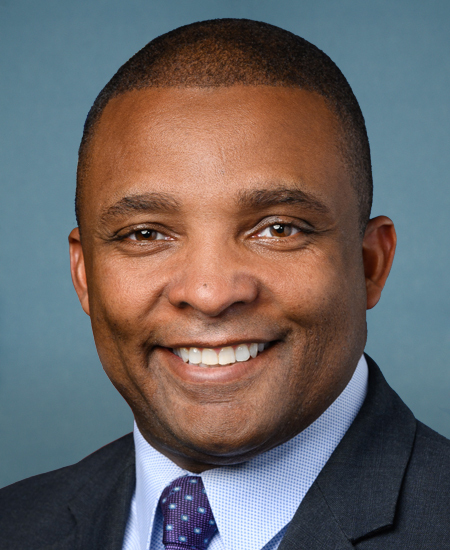
Rep. Donald G. Davis
Sponsored bills
Maddy summaryThis bill (HR 1432, the VETT Act) amends the tax code to allow members of the Armed Forces to deduct charitable contributions made to certain military service organizations. Specifically, it adds qualifying federally chartered military service organizations (under IRS section 501(c)(19)) as deductible charities for active duty and retired service members. The change applies to tax returns filed for taxable years beginning after the bill's enactment date (December 12, 2024). It directly affects military personnel who make donations to these designated organizations, expanding their eligible charitable deductions.
Maddy summaryThis bill establishes a commission to study whether the Weitzman National Museum of American Jewish History in Philadelphia should be transferred to the Smithsonian Institution. The commission, composed of 8 members appointed by congressional leaders with expertise in Jewish American history and museum administration, will examine the museum's collections, financial status, governance, and feasibility of transfer within two years. The commission must submit a report detailing findings, a fundraising plan, and legislative recommendations for any potential transfer. The bill does not transfer the museum but creates a process to evaluate the possibility.
Maddy summaryThis bill extends funding for the existing Public Health Service Act program focused on raising public awareness about Alzheimer's disease and related dementias. It authorizes $33 million annually for fiscal years 2025 through 2029 to support public health education and outreach initiatives. The program directly affects public health organizations and community groups that develop and distribute educational materials about Alzheimer's prevention, diagnosis, and care. The key provision is the multi-year funding extension, ensuring continued support for nationwide awareness efforts without altering the program's core structure.
Maddy summaryHRES 1613 is a non-binding resolution recognizing the U.S. House of Representatives' support for continued U.S. leadership in ending pediatric HIV/AIDS globally. It highlights that 57% of children with HIV were on treatment in 2023 (compared to 77% of adults) and calls for scaling up prevention of mother-to-child transmission and expanding pediatric HIV treatment access. The resolution specifically encourages the PEPFAR program to develop a dedicated pediatric HIV strategy aligned with global goals. As a formal expression of congressional support, it does not create new law but reaffirms the U.S. commitment to reducing new pediatric HIV infections.
Maddy summaryHR 8704 establishes a $10 million grant program administered by the National Fish and Wildlife Foundation to reduce harmful interactions between ocean users (like fishermen, tourism operators, and shipping companies) and North Atlantic right whales and other large cetaceans. The program funds research on avoidance technologies, awareness campaigns about existing whale protections, and infrastructure to share management information. Eligible recipients include states, nonprofits, businesses in maritime sectors, and tribal governments, with priority given to projects that reduce whale harm, involve collaboration among ocean users, and support U.S. small businesses. The bill also freezes existing vessel strike reduction rules until 2030 and requires biennial reports on grant effectiveness.
Maddy summaryThis bill amends the Foreign Agents Registration Act to require individuals who previously acted as agents for foreign governments or organizations to retroactively register with the U.S. government for any period they served in that role, even if they no longer work as agents. It directly affects past foreign agents who failed to register during their service under the 1938 law. The key provision allows the Attorney General to seek court orders mandating retroactive registration compliance for past periods, even if the person is no longer acting as an agent at the time the order is issued.
Maddy summaryHR 7525, the Special District Grant Accessibility Act, requires the Office of Management and Budget (OMB) to issue guidance within 180 days clarifying how federal agencies recognize "special districts" as eligible recipients of federal grants. Special districts - state-created local entities like water districts or fire protection authorities that perform specific government functions - would directly benefit by gaining clearer pathways to access federal funding. Agencies must implement this guidance within one year and report on compliance to Congress within two years. The bill focuses on standardizing agency procedures, not creating new programs or altering grant eligibility criteria.
Maddy summaryThis bill strengthens protections for amateur athletes by requiring the SafeSport Center to implement trauma-informed abuse prevention training, allocate 20% of annual funding for prevention efforts, and improve complaint resolution processes with victim advocates and transparent protocols. It mandates annual public reporting on activities, regular audits of policies, and engagement with athlete survivors in developing prevention materials. These changes directly affect all amateur sports organizations under SafeSport's jurisdiction - including national governing bodies and the U.S. Olympic & Paralympic Committee - and athletes participating in amateur sports programs.
Maddy summaryHR 10298 requires the federal government to pay salaries for Bureau of Prisons correctional staff who work during a government shutdown, specifically those not placed on furlough. It uses existing Treasury funds (not new appropriations) to cover these payments during any lapse in discretionary funding. This directly affects federal correctional officers employed by the Bureau of Prisons who remain on duty when a shutdown occurs. The bill ensures these workers receive pay without requiring new legislative action for funding during such periods.