Maddy summaryThis bill changes how Medicare pays for certain outpatient services provided by off-campus hospital departments. It allows these services to be paid under the hospital outpatient payment system (instead of physician fees) if the previous year's total Medicare payments for that physician specialty were under $2 million. It directly affects hospitals with off-campus outpatient departments offering services in specialties with low physician payment volumes. The change applies to services furnished starting in 2024, aiming to stabilize payments for these specific outpatient services.
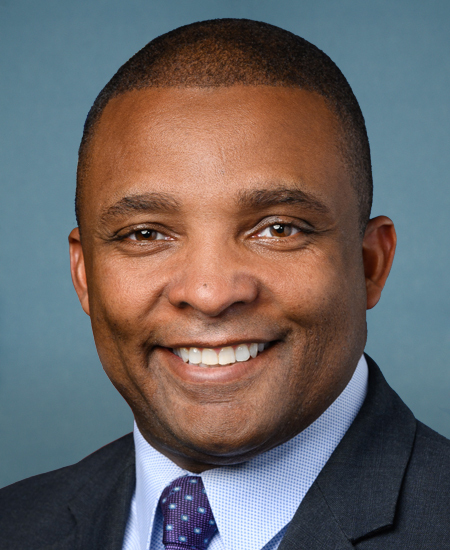
Rep. Donald G. Davis
Sponsored bills
Maddy summaryThe Rural Physician Workforce Production Act of 2023 creates a new payment system to support medical residency training in rural areas. It allows hospitals, critical access hospitals, and rural emergency hospitals to receive additional payments for residents who train at least 8 weeks in rural locations, with payments based on national medical training costs adjusted annually. The bill requires hospitals to pay residents' salaries during rural training and defines "rural training location" using census data (rural areas, rural-urban commuting area codes, or locations near sole community hospitals). This program is designed to increase rural physician training without affecting existing residency program limits or Medicare funding for medical education. Payments are budget-neutral, meaning they won't increase overall Medicare spending on medical education.
Maddy summary# Summary of Proposed Election Reform Legislation This document outlines a comprehensive federal election reform bill with multiple titles addressing various aspects of voting rights, election administration, and election integrity. ## Key Provisions: ### 1. Democracy Restoration (Title I) - Restores voting rights to citizens with felony convictions who are not serving a felony sentence in a correctional institution - Requires states to notify individuals of restored voting rights upon release from prison, completion of probation, or sentencing - Prohibits states from conditioning voting rights on payment of fines or fees - Requires states to provide notification of voting rights to citizens with criminal convictions ### 2. Voter Identification Requirements (Title II) - Establishes a broad definition of acceptable identification documents (including utility bills, bank statements, student IDs, etc.) - Requires states to provide free identification to voters who lack one - Authorizes $5 million annually for 5 years to cover costs of providing identification - Sets procedures for provisional voting when identification is not presented ### 3. Voter List Maintenance (Title III) - Prohibits "voter caging" (using undeliverable mail to challenge voter registration) - Bans use of unverified match lists to remove voters from registration lists - Sets strict conditions for removing voters from registration lists - Requires states to provide notice to voters removed from registration lists ### 4. Election Integrity Measures (Title V) - Prohibits hindering or interfering with voter registration (Section 2001) - Restricts removal of local election administrators (Section 3001) - Prohibits harassment of election workers (Section 3101) - Bans deceptive practices in elections (Section 3201), including false statements about voting locations, eligibility, or endorsements ### 5. Additional Provisions - Requires states to provide notice of voting rights restoration to citizens - Establishes private rights of action for violations of the law - Sets criminal penalties for violations (up to $100,000 fines and 5 years imprisonment) - Includes provisions for federal funding to be contingent on compliance with voting rights restoration This legislation represents a significant overhaul of voting rights and election administration procedures across the United States, with a focus on expanding voting access, protecting voter rights, and ensuring fair election administration.

Maddy summaryHR 751, the FAIR Act, requires hospitals running medical residency programs to report annual data on applicants and acceptances from both osteopathic (DO) and allopathic (MD) medical schools starting in 2024. Specifically, hospitals must submit the number of applicants and accepted candidates from each medical school type, confirm they accept both DO and MD applicants, and state that COMLEX and USMLE exam scores are equally accepted. The Health Secretary must then publish this data online for public transparency. The bill directly affects hospitals operating residency programs and aims to make their admissions processes more visible, without mandating specific acceptance rates or changing admission criteria.
Maddy summaryThis bill amends Medicare rules to allow nurse practitioners and physician assistants to document medical necessity for diabetic shoes, a requirement currently limited to physicians. It directly affects Medicare beneficiaries with diabetes who need these shoes and expands the pool of providers (nurse practitioners and physician assistants) who can fulfill the documentation requirement. The key change inserts "nurse practitioner, or physician assistant" into Medicare's documentation standards for diabetic shoe coverage. This simplifies access for patients by enabling more healthcare providers to support coverage approval without requiring a physician's signature. The bill does not change coverage eligibility or costs, only the documentation process.
Maddy summaryHR 549, the Metastatic Breast Cancer Access to Care Act, removes waiting periods for disability and Medicare coverage for people diagnosed with metastatic breast cancer. Specifically, it amends Social Security Act sections to allow immediate eligibility for disability insurance benefits (eliminating the standard waiting period) and immediate Medicare coverage (waiving the 24-month waiting period) for these patients. The bill directly affects individuals with metastatic breast cancer who would otherwise face delays in accessing critical benefits. These changes apply to applications filed or benefits beginning after the bill's enactment date. The law makes no other policy changes beyond these specific eligibility adjustments.
Maddy summaryThis bill extends a temporary COVID-19 emergency waiver that allows nurse aides in training to count hours worked during the pandemic toward their certification requirements at nursing facilities. It specifically permits these hours to satisfy the 75-hour minimum training requirement and allows facilities to conduct competency evaluations on-site if states don’t offer them weekly. The waiver remains in effect for at least 24 months after enactment, with a requirement for the Secretary to study its continued appropriateness within one year. The policy directly affects nurse aides working in skilled nursing facilities and nursing facilities under federal Medicare/Medicaid rules. It does not create new training programs but maintains pandemic-era flexibility for staffing.
Maddy summaryThe CONSTRUCTS Act of 2024 establishes a federal grant program to expand training for careers in residential construction, targeting rural communities and underserved populations - including veterans, low-income individuals, and groups underrepresented in the construction industry. Eligible entities like community colleges and career schools can apply for competitive grants to develop or expand training programs in specific trades (such as carpentry, plumbing, and electrical work), with requirements for flexible scheduling, partnerships with construction businesses, and outreach to secondary students. The program mandates grantees to report on outcomes like job placements and housing impacts, and it authorizes $20 million annually for fiscal years 2025-2029 to fund these initiatives. This directly affects training providers and workers in residential construction by creating pathways to credentials and jobs in a growing sector.
Maddy summaryHRES 1615 is a ceremonial resolution recognizing "Interscholastic Athletic Administrators' Day" on December 14, 2024. It formally supports annual recognition of secondary school athletic administrators who oversee student-athlete programs affecting over 8 million students nationwide. The resolution commends these administrators for their role in student development and acknowledges the National Interscholastic Athletic Administrators Association's support for the profession. It contains no new laws, funding, or policy changes - only symbolic acknowledgment of their contributions.
Maddy summaryHRES 152 is a non-binding House resolution supporting existing state "move over" laws, which require drivers to move over a lane or slow down near emergency responders on roadways. It directly affects all drivers by promoting awareness of these safety laws, which aim to protect emergency workers, tow operators, and stranded motorists. The resolution urges federal, state, and nonprofit groups to increase public education about these laws, citing that 50 traffic responders were killed in roadside collisions in 2022. It emphasizes that raising public awareness - identified as the top challenge by state officials - is critical to improving road safety.