

Maddy summaryHR 6751 authorizes the U.S. Mint to produce commemorative coins honoring Roberto Clemente, a Hall of Fame baseball player and humanitarian, including 50,000 $5 gold coins, 400,000 $1 silver coins, and 750,000 half-dollar coins. The coins must feature Clemente's image and inscriptions like "Roberto Clemente" and "2027," with all sales including a surcharge ($5-$35 per coin) paid to the Roberto Clemente Foundation. The foundation, which supports youth sports, education, and disaster relief programs, will use these funds for its mission, while the U.S. Treasury must recover all production costs. The coins will be sold exclusively in 2027, with no net cost to the government.
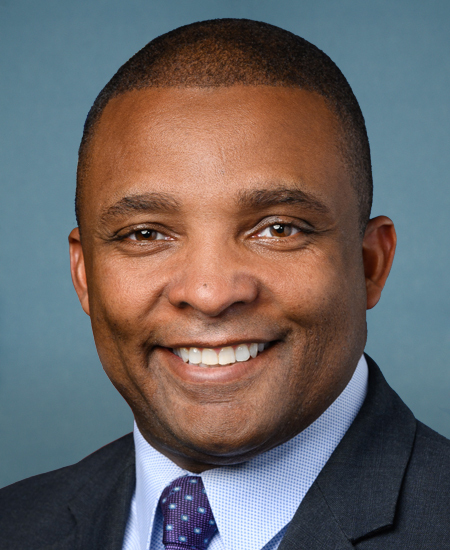
Rep. Donald G. Davis
Sponsored bills
Maddy summaryHR 9151 establishes a new Department of Justice task force within 120 days to investigate and prosecute international trade crimes like tariff evasion, smuggling, and trade-based money laundering. The task force will hire specialized prosecutors, coordinate with U.S. Customs and Border Protection and Homeland Security, and focus on violations under specific U.S. Code sections including smuggling (18 U.S.C. 545) and fraud (18 U.S.C. 1001). It authorizes $20 million for fiscal year 2025, with 80% dedicated to criminal prosecutions, and requires annual congressional reports detailing case statistics, funding use, and future needs. The bill directly affects importers/exporters engaging in trade violations and DOJ agencies handling cross-border enforcement.
Maddy summaryThis bill amends the Robert T. Stafford Disaster Relief Act to explicitly include substance use disorder and alcohol use disorder treatment in federal disaster relief funding. It expands access to addiction services for disaster survivors by requiring that mental health and counseling assistance programs funded under the Act cover these specific needs. Key provisions revise existing language to add "substance use disorder" and "alcohol use disorder" throughout the law, ensuring these services are directly eligible for disaster-related funding. The bill also mandates a federal report within 180 days to update application forms and guidance documents to reflect these changes, ensuring implementation aligns with the new provisions.
Maddy summaryThe Working Dog Commemorative Coin Act (HR 807) directs the U.S. Treasury to mint three types of commemorative coins honoring working dogs' service: $5 gold coins, $1 silver coins, and half-dollar coins with specific weight and composition requirements. Each coin will carry a surcharge ($35 for $5 coins, $10 for $1 coins, $5 for half-dollars) that will be paid directly to America's VetDogs to support their programs providing service dogs for veterans, the disabled, and others. The coins will be issued in 2027 with designs reflecting working dogs' roles in military, detection, therapy, and assistance work. The legislation specifies that all surcharge revenue must fund America's VetDogs' operations without creating new government programs. This is a commemorative measure focused on honoring working dogs' contributions through coin sales, with all surcharge funds going to a specific nonprofit organization.
Maddy summaryHR 10256, the DETERRENCE Act, adds sentencing enhancements for certain federal crimes when committed at the direction of or in coordination with a foreign government. It directly affects individuals convicted of offenses like kidnapping, murder-for-hire, stalking, attacks on officials, or threats against federal employees if foreign government involvement is proven. Key provisions increase sentences by up to 10 years for the primary crime, up to 5 years for attempts, and additional years if serious harm occurs (e.g., bodily injury, use of weapons, or victim age). The bill modifies existing law without creating new offenses, only increasing penalties under specific, defined circumstances involving foreign coordination.
Maddy summaryHRES 1594 is a symbolic House resolution supporting the designation of "National Rural Health Day," observed annually on the third Thursday of November. It recognizes rural health care providers and the communities they serve, highlighting challenges like hospital closures, workforce shortages, and access barriers in rural areas. The resolution expresses the House's commitment to improving rural health care accessibility and affordability but does not create new laws or allocate funding. It is a non-binding gesture aligning with an existing observance since 2011, organized by the National Rural Health Association.
Maddy summaryThis bill amends the tax code to specifically classify "waterpipe tobacco" (including shisha, maassel, and similar products) for taxation at the same rate as pipe tobacco - $2.8311 per pound - applying to manufacturers and importers. It defines "waterpipe tobacco" as any tobacco consumed in a hookah device and clarifies "hookah" as the waterpipe apparatus itself. The tax applies to products manufactured or imported after the bill's enactment, ensuring these items are treated consistently with pipe tobacco under federal tax law. This change directly affects businesses producing or importing hookah-specific tobacco products.
Maddy summaryThis bill enhances the existing American Battlefield Protection Program by expanding eligibility for grants to include Tribes, nonprofit organizations, and educational institutions, alongside States and local governments. It clarifies that eligible sites must be identified in the 1993 Civil War battlefield report or 2007 Revolutionary War/War of 1812 report, excluding sites already within National Park boundaries. The bill also requires the Secretary to submit updated battlefield condition reports to Congress every 10 years, starting two years after enactment, tracking preservation efforts and battlefield changes. These changes streamline program administration and ensure ongoing assessment of historic battlefield sites.
Maddy summaryThe Stop Secret Spending Act of 2024 requires federal agencies to assign unique identifiers to certain contracts (called "other transaction agreements") and post related data publicly within 90 days of the law's enactment. It mandates annual reports on unreported federal spending, detailing total amounts, spending categories (like national security work), and reasons for non-disclosure (e.g., classified projects or legislative branch contracts). These reports must be published on a public website, with the first report due one year after the law takes effect. The bill directly affects federal agencies responsible for managing these contracts, aiming to increase transparency around funding that currently lacks public visibility.
Maddy summaryThis bill amends Title 38 of the U.S. Code to update terminology from "employment handicap" to "employment barrier" wherever it appears. It does not change any actual policies, benefits, or requirements for veterans. The change is purely linguistic, reflecting current language standards used in employment and disability contexts. This procedural update affects how federal law references barriers to veteran employment but does not alter veterans' access to services or benefits.