

Maddy summaryHR 7770, the Rosie the Riveter Commemorative Coin Act, authorizes the U.S. Mint to produce and sell three commemorative coins honoring women who worked on the U.S. home front during World War II. It specifies $5 gold coins (max 50,000), $1 silver coins (max 400,000), and half-dollar coins (max 750,000), all to be issued between January 1, 2025, and December 31, 2025. Each coin sale includes a surcharge ($35 for gold, $10 for silver, $5 for half-dollar), with all surcharge funds directed to the Rosie the Riveter Trust for maintaining the Rosie the Riveter WWII Home Front National Historical Park and educational programs. The coins will feature designs reflecting the legacy of diverse women workers and must meet specific weight, diameter, and composition standards.
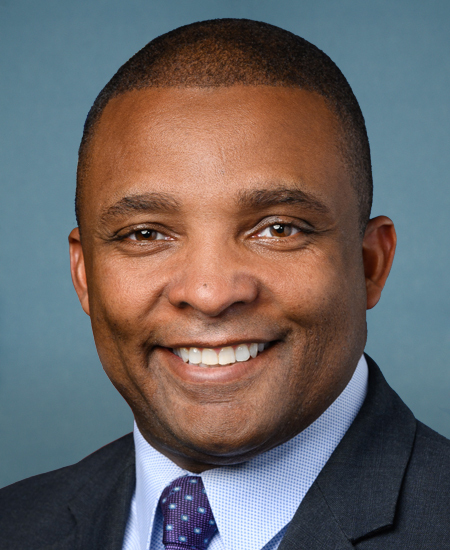
Rep. Donald G. Davis
Sponsored bills
Maddy summaryThis bill amends an existing commission under the 2018 Agriculture Act to study farm transitions by 2028. It requires the Secretary to establish the commission within 60 days of enactment and expands its study to cover heirs' property, barriers for women and historically underserved farmers, and foreign ownership trends in agricultural land. The bill modifies deadlines and study scope but does not create new programs or directly affect farmers.
Maddy summaryHR 6727 establishes the United States Foundation for International Conservation, a nonprofit organization that will provide grants to support long-term management of protected and conserved areas in eligible countries. The Foundation requires a 2:1 cost match from other sources, demands host country and community consent through binding agreements, and prioritizes areas with high biodiversity or species of significant importance. It will be governed by a Board of Directors including government officials and private sector experts, operate for 10 years with $1 million authorized for 2024 and $100 million annually from 2025-2035, and must follow international conservation standards while prohibiting funding for countries supporting terrorism or violating human rights.
Maddy summaryHRES 1096 is a non-binding resolution expressing support for the House of Representatives to collaborate with the Congressional Black Caucus in developing the "Black Wealth Agenda." It identifies key areas requiring policy action, including closing the racial wealth gap through improvements in homeownership access, education equity, fair employment practices, affordable housing, and tax reform. The resolution outlines priorities such as expanding support for Black entrepreneurship, addressing systemic housing discrimination, raising the federal minimum wage, and investing in historically Black colleges. It does not create new laws or mandate specific actions but commits the House to coordinating legislative efforts focused on these economic equity goals. The resolution was introduced by multiple representatives and referred to relevant committees for review.
Maddy summaryThis bill sets a $100,000 lifetime limit on VA educational benefits for flight training at public colleges or universities under the Post-9/11 GI Bill, adjusted annually for inflation based on the Consumer Price Index. It directly affects veterans pursuing flight training programs at public institutions of higher learning, capping their total benefit for such training at $100,000 (adjusted yearly). The annual adjustment calculates the increase using the previous year's inflation rate (CPI change between June 30 and the prior year's June 30). The limit applies only to flight training programs at public institutions and begins for veterans starting such programs on or after August 1, 2025.
Maddy summaryThis bill amends budget scoring rules to require the Congressional Budget Office to account for long-term savings from preventive health programs when evaluating legislation. It directs the CBO to assess if a bill reduces future government costs through evidence-based preventive health services (like screenings or vaccinations) and include those savings in budget projections. The change affects how Congress scores the fiscal impact of health-related bills, requiring them to consider savings over 20 years (not just the current budget cycle). It does not create new programs but changes the budget analysis process for preventive health measures.
Maddy summaryThis resolution (HRES 1086) is a symbolic gesture expressing the House's support for designating March 19, 2024, as "National Agriculture Day." It does not create new laws or policies, but instead formally recognizes agriculture as a vital industry in the U.S. economy. The resolution celebrates agriculture's broad economic impact without imposing any requirements or changes on farmers, consumers, or government programs. It is a commemorative statement, not a substantive legislative action.
Maddy summaryThe Coast Guard Protection and Accountability Act of 2024 establishes new accountability measures to address sexual assault and harassment within the Coast Guard. It requires the Commandant to submit annual reports on implementing reforms from a 2023 Accountability and Transparency Review, mandates a Government Accountability Office review of Coast Guard efforts to address sexual assault, and creates a safe-to-report policy to protect victims who report sexual assault. The bill also requires maintaining work product related to misconduct investigations for 7+ years, provides for timely transfer of cadets who are victims of sexual assault, and establishes mechanisms for higher-level review of sexual assault cases and discharges related to such offenses. These provisions aim to improve transparency, victim support, and accountability within the Coast Guard.
Maddy summaryThis concurrent resolution expresses Congress's support for U.S. military actions to protect maritime security in the Red Sea and Gulf of Aden. It urges the President to take necessary steps to restore deterrence against Houthi attacks, consult Congress before authorizing military responses, and provide timely reports on incidents involving U.S. forces. The resolution also supports designating the Iran-backed Houthi group as a terrorist organization and emphasizes protecting freedom of navigation through international cooperation. It directly affects U.S. military operations and diplomatic coordination in the region, aiming to safeguard global trade routes that handle nearly 15% of the world's maritime traffic.
Maddy summaryThis bill prohibits the interstate transport, sale, breeding, or possession of captive American mink raised for fur production (including parts or offspring), directly affecting mink fur farmers and the fur industry. It includes a limited exception for entities covered under the Lacey Act and establishes a buy-out program where the government may purchase mink farms. The buy-out amount is based on the farmer's average mink count over three years and the farm's infrastructure value. Funding for the buy-out depends on available appropriations. The bill does not apply to mink not raised for fur or to certain wildlife management activities.