

Maddy summaryHR 7892, the Student Loan Contract Act of 2024, requires that master promissory notes for federal student loans under Part D of the Higher Education Act be officially called "student loan contracts" starting after the bill's enactment. It clarifies that these contracts apply only to loans within the same award year as the initial loans covered by the contract. The bill makes this terminology change and updates related references in the Higher Education Act, but does not alter loan terms, repayment conditions, or borrower obligations. This is a procedural adjustment to standardize document naming and administrative references.
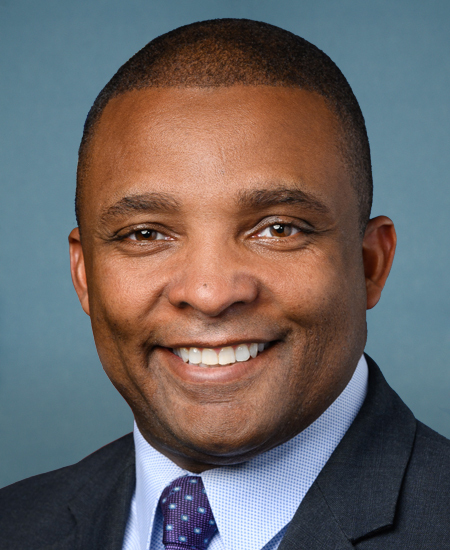
Rep. Donald G. Davis
Sponsored bills
Maddy summaryHR 7874 would require the U.S. to terminate its 1984 tax treaty with China if China's military attacks Taiwan. The bill mandates that the President notify the Treasury Secretary within 30 days of such an attack, triggering formal treaty termination through diplomatic channels. It also requires the President to inform specific congressional committees about the termination. This bill directly affects U.S.-China tax relations but does not change current tax laws or rates.
Maddy summaryHR 7654, the Rural Veterans Transportation to Care Act, expands transportation grants for veterans in rural areas by modifying an existing VA program. It allows county veterans service organizations and tribal organizations to apply for grants, increases the maximum grant amount to $80,000 for organizations needing ADA-compliant vehicles, and defines "rural" using the USDA's RUCA system. The bill directly affects rural veterans needing transportation to VA medical facilities and the organizations that provide these services. It removes fixed annual funding limits, directing the VA to provide "such sums as may be necessary" for these grants. This is a procedural policy change to improve access to care for veterans in underserved rural communities.
Maddy summaryHCONRES 101 is a symbolic resolution introduced in the U.S. House of Representatives on March 22, 2024, by multiple cosponsors. It recognizes that people with disabilities face daily barriers accessing federally funded facilities and reaffirms support for the existing Americans with Disabilities Act (ADA) and Architectural Barriers Act of 1968. The resolution pledges to prioritize "universal and inclusive design" in future federal infrastructure projects but does not create new legal requirements or alter current accessibility standards. As a concurrent resolution, it has no binding effect and serves only to express congressional support for accessibility goals.
Maddy summaryHR 7808, the EARLY Minds Act, amends the Public Health Service Act to require states receiving federal mental health funds to include evidence-based prevention and early intervention strategies for children and adolescents in their state plans. It allows states to use up to 5% of their annual mental health allotment to support these programs, which aim to prevent, delay, or reduce the severity of mental health issues before they become serious. States must report biennially to Congress by 2025 on the programs they implement, including demographics served, outcomes like reduced care access delays, and how programs lessen the onset of serious mental illness. The bill directly affects states administering federal mental health funds and targets youth populations aged 0-18.
Maddy summaryHRES 1109 is a symbolic resolution commemorating the 1913 Woman Suffrage Procession in Washington, DC, where suffragists led by Alice Paul and Inez Milholland marched to demand voting rights for women. It honors the participants' courage during a protest that drew 500,000 spectators despite violent opposition, highlighting how this event advanced the national push for the 19th Amendment. The resolution does not create new laws but reaffirms support for voting rights equality, connecting the 1913 march to ongoing efforts to protect democratic access. It specifically acknowledges the intersectional struggles of women of color in the suffrage movement. As a commemorative resolution, it has no binding policy effect.
Maddy summaryHR 7824, the Preventing Child Trafficking Act of 2024, requires the Justice Department’s Office for Victims of Crime and the Administration for Children and Families to implement specific anti-trafficking recommendations from a December 2023 GAO report within 180 days of the bill’s enactment. The law mandates that these agencies coordinate to address gaps in public awareness and survivor support for child trafficking victims. It also requires the Office for Victims of Crime to submit a detailed implementation report to Congress 60 days after completing the program changes. The bill directly affects federal agencies responsible for child trafficking prevention and survivor services, without creating new funding or altering existing legal standards.
Maddy summaryHRES 1105 designates March 21, 2024, as "National Women in Agriculture Day" to recognize the contributions of women in the agricultural sector. It specifically highlights women as producers, educators, mentors, and leaders who drive economic impact (accounting for 36% of U.S. agricultural sales in 2022) and support workforce development. The resolution encourages all citizens to acknowledge these women’s roles in food production, agricultural innovation, and mentoring through programs like 4-H and FFA. As a symbolic resolution, it does not create new laws or funding but formally celebrates their ongoing contributions to U.S. agriculture.
Maddy summaryHRES 1101 is a non-binding resolution expressing the House of Representatives' support for collaborating with the Congressional Black Caucus to develop a "Black Wealth Agenda." It commits the House to outlining legislative priorities focused on closing the racial wealth gap through key areas like expanding Black entrepreneurship, reforming housing policies, building workforce development programs, and updating the federal minimum wage. The resolution emphasizes addressing systemic barriers in homeownership, education access, employment discrimination, and tax policy to advance economic equity for Black communities. It does not create new laws but directs the House to coordinate with the CBC on policy solutions targeting wealth-building opportunities.
Maddy summaryThis is a commemorative resolution (HRES 1100) passed by the U.S. House of Representatives to mark Duke University's 100th anniversary. It formally celebrates Duke's founding in 1924, recognizes its historical milestones (including medical advancements, desegregation, and athletic achievements), and encourages North Carolina residents to participate in anniversary events. The resolution directs the House Clerk to provide five copies to Duke University President Vincent E. Price. As a symbolic gesture with no policy impact, it directly affects Duke University and its community through recognition, not legislative action.