

Science-Based Grizzly Bear Management Act of 2021 This bill directs the Department of the Interior to reissue the final rule relating to removing the Greater Yellowstone Ecosystem population of grizzly bears from the Federal List of Endangered and Threatened Wildlife, published on June 30, 2017 (82 Fed. Reg. 30502), without regard to any other provision of statute or regulation that applies to issuance of such rule. Such reissuance shall not be subject to judicial review. Interior shall issue a final rule removing the Northern Continental Divide Ecosystem population of grizzly bears from the Federal List of Endangered and Threatened Wildlife without regard to any other provision of statute or regulation that applies to the issuance of such rule. Such issuance shall also not be subject to judicial review.
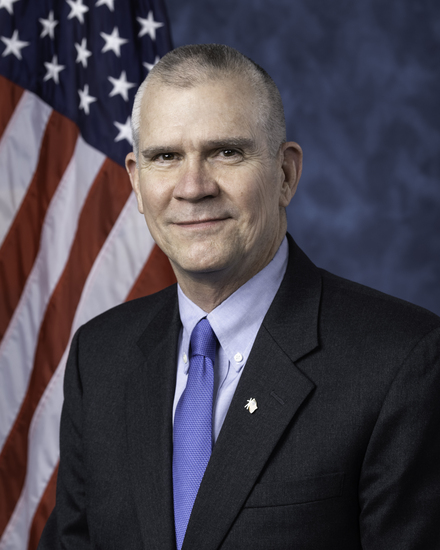
Rep. Matthew M. Rosendale, Sr.
Sponsored bills
Protecting Our Democracy by Preventing Foreign Citizens from Voting Act This bill prohibits federal funds from being made available to state or local governments that allow noncitizens to vote in federal, state, or local elections.
This bill posthumously provides for the award of a Congressional Gold Medal in commemoration of the 13 service members who died on August 26, 2021, while stationed at Hamid Karzai International Airport in Afghanistan.
Fixing Announcements for Intermittent Remapping and Notification Expectations to Stop Surprises in Flood Insurance Act of 2021 or the FAIRNESS in Flood Insurance Act of 2021 This bill requires the Federal Emergency Management Agency to provide notice through the mail to property owners of any revision or update to any floodplain areas and flood risk zones identified, delineated, or established under the National Flood Insurance Program for coverage and rate purposes. Specifically, such notice must be provided not less than 15 days before the remapping process begins. The bill also sets forth notification requirements regarding the remapping appeals process and the finalization of the remapping process.
National Forest Restoration and Remediation Act This bill modifies the treatment of monies collected by the United States arising out of certain Forest Service activities. The bill directs the Department of the Treasury to invest in interest-bearing obligations all monies that were previously collected by the United States in forfeitures, judgments, compromises, or settlements related to Forest Service activities, provided the amounts are not required to meet current withdrawals. The bill makes available the interest earned to cover the costs of work rendered necessary by the action which led to the forfeiture, judgment, compromise, or settlement.
No Tax Dollars for the United Nation's Immigration Invasion Act This bill prohibits the federal government from making contributions to the United Nations (U.N.) International Organization for Migration, the U.N. High Commissioner for Refugees, or the U.N. Relief and Works Agency for Palestine Refugees in the Near East.
Department of Veterans Affairs Telehealth Strategy Ac t This bill requires the Department of Veterans Affairs (VA) to submit a strategy to Congress for the telehealth services furnished by the Veterans Health Administration. Additionally, the VA must report on the utilization of end-user devices provided to veterans by the VA to facilitate telehealth during FY2020 and FY2021.
This resolution commemorates the 125th anniversary of the National Grain and Feed Association. It also recognizes the National Grain and Feed Association for 125 years of promoting the noble purpose of its members in transforming the American farmer's bounty into safe, nutritious, sustainable, and affordable human and animal food.
Conscience Protection Act of 2021 This bill provides statutory authority for certain protections for health care providers that refuse to participate in abortions based on religious beliefs or other convictions. Health care providers include individual professionals, medical facilities, health insurance organizations, and social services providers that refer clients to health care services. The federal government and entities that receive federal funding for health-related activities, including state and local governments, may not discriminate against a health care provider that refuses to be involved in, or provide coverage for, abortions. Currently, similar requirements apply to various related activities, including certain employment or personnel decisions (the Church Amendments), abortion services training (the Coats-Snowe Amendment), qualified health plans offered through health insurance exchanges, and annual appropriations bills for the Department of Health and Human Services (HHS) and other federal agencies (the Weldon Amendment). The HHS Office for Civil Rights must investigate complaints of this kind of discrimination. Furthermore, HHS may terminate or reduce HHS funding for health-related activities if a person or entity fails to comply with nondiscrimination requirements. Additionally, the Department of Justice or any entity adversely affected by such discrimination may bring a civil action to obtain appropriate relief. A plaintiff does not need to seek or exhaust administrative remedies before bringing the action. A plaintiff may also bring an action, including one for money damages, against a governmental entity. In many cases, principles of sovereign immunity shield states and some localities from these kinds of actions.
Natural Immunity Transparency Act This bill requires the Department of Health and Human Services to report within 30 days of the bill's enactment to Congress concerning natural immunity to COVID-19. In particular, the report must compare certain outcomes for individuals who recovered from a COVID-19 infection without having received the vaccination and individuals who received the vaccination.