

Maddy summaryThis bill creates a presumption that certain health conditions (myocarditis, pericarditis, thrombosis with thrombocytopenia syndrome, Guillain-Barré Syndrome, and other diseases later determined by the VA) are connected to military service for veterans who received a COVID-19 vaccine under mandatory orders between August 24, 2021, and January 10, 2023. It directly affects veterans who developed these conditions after being required to get the vaccine during that period, streamlining their path to VA disability compensation by removing the need to prove a direct link to service. The bill requires the VA to report monthly on claim statuses and outcomes for four years, including approval rates and pending cases. This changes how the VA processes claims for these specific conditions, treating them as service-connected by default for affected veterans.
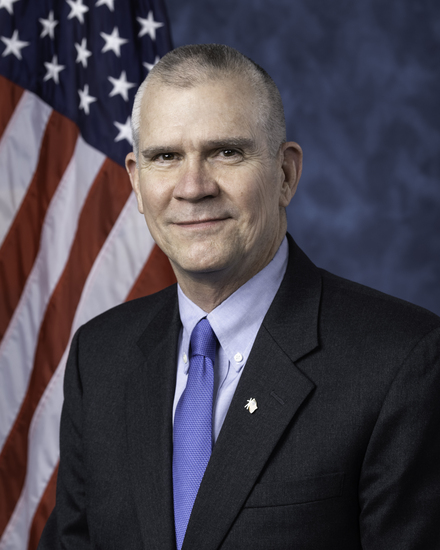
Rep. Matthew M. Rosendale, Sr.
Sponsored bills
Maddy summaryHR 5403, the CBDC Anti-Surveillance State Act, prohibits the Federal Reserve from issuing or facilitating central bank digital currency (CBDC) directly or indirectly to individuals through financial institutions. It specifically bans Federal Reserve banks from offering digital products to individuals, maintaining individual accounts, or using CBDC for monetary policy implementation. The bill also clarifies that its restrictions do not apply to existing physical cash or private, permissionless digital payment systems. This bill directly affects the Federal Reserve's ability to develop or deploy a government-run digital dollar. The law aims to prevent the Federal Reserve from creating a digital currency that could enable transaction tracking or government oversight of personal financial activity.
Maddy summaryHJRES 146 is a congressional disapproval resolution targeting a Centers for Medicare & Medicaid Services (CMS) rule published on May 8, 2024, that would have clarified eligibility for health insurance subsidies under the Affordable Care Act for Deferred Action for Childhood Arrivals (DACA) recipients and certain other noncitizens. The rule aimed to allow these individuals to access premium tax credits, cost-sharing reductions, and basic health programs through health insurance marketplaces. If enacted, this resolution would block the CMS rule from taking effect, maintaining current restrictions that prevent DACA recipients from qualifying for these subsidies.
Maddy summaryHJRES 154 is a resolution seeking to block a Bureau of Land Management (BLM) rule that would have updated the process for leasing federal lands for oil and gas extraction. The rule, published in the Federal Register on April 23, 2024, specifically addressed "Fluid Mineral Leases and Leasing Process" (89 Fed. Reg. 30916). If passed, this resolution would cancel the rule under the Congressional Review Act, preventing it from taking effect. This action would directly impact the BLM's regulatory authority and oil and gas companies operating on federal lands.
Maddy summaryHR 8459, the Stopping Traffickers and Their Accomplices Act of 2024, requires abortion providers to notify the National Human Trafficking Hotline within 24 hours if they reasonably suspect a patient is a trafficking victim. It mandates annual staff training on identifying trafficking victims and submitting certification of training completion. Violations carry penalties: $10,000 per failure to report or $1,000 per day for training noncompliance. The bill directly affects abortion providers and facilities, imposing new reporting obligations without creating a right to abortion or requiring victims to self-report. State attorneys general may also sue providers for violations.
Interstate Milk Freedom Act of 2024 This bill prohibits federal regulation of the interstate traffic of unpasteurized milk or milk products packaged for direct human consumption under specified circumstances. Specifically, the prohibition applies if such products (1) would be considered in violation of federal law solely because they are unpasteurized; (2) are allowed by the state of origin to be distributed for direct human consumption by any means; (3) are produced, packaged, and moved in compliance with the laws of such state; and (4) are moved from the state of origin with the intent to transport them to another state that allows the distribution of such products for direct human consumption.
Maddy summaryHR 8421 would abolish the Federal Reserve Board of Governors and all Federal Reserve Banks, ending the U.S. central banking system as currently structured. The bill requires a one-year wind-down period during which the Fed Chairman manages employee compensation, asset liquidation, and debt settlement, with all assets transferred to the Treasury and liabilities assumed by the Secretary of the Treasury. It repeals the Federal Reserve Act and mandates a joint Treasury-OMB report to Congress within 18 months detailing implementation progress. This bill directly affects the Federal Reserve System's operations and structure, not the general public or financial markets.
Maddy summaryHR 8410, the "Let Trump Speak Act," prohibits judges from issuing gag orders (court orders restricting speech) in criminal or civil cases, except to protect confidential information, minors' privacy, or as part of a plea agreement. It directly affects defendants in court cases who face such orders by granting them the right to file a civil lawsuit seeking an injunction if a gag order violates this law. The bill establishes a clear legal mechanism for challenging improper gag orders while explicitly stating it does not limit a judge's authority to issue orders to court officers. This is a procedural change to court procedures affecting all defendants in federal and state cases.
Maddy summaryHR 7109, the Equal Representation Act, requires the U.S. Census Bureau to add a citizenship status checkbox to the 2030 and future decennial censuses, asking respondents to identify if they are U.S. citizens, U.S. nationals, lawful residents, or unlawful residents. It then mandates excluding noncitizens (both lawful and unlawful residents) from the population count used to determine each state's number of congressional seats and electoral votes starting with the 2030 census. This bill directly affects how states are apportioned representation in Congress and presidential electoral votes, based solely on the citizen population. The key change is shifting the apportionment base from total population to citizen population alone, using the new census data.
Maddy summaryHR 8322, titled the "Study Abroad Act," would revoke F, J, or M visas for foreign students arrested for rioting, unlawful protest, or establishing/promoting campus encampments since October 7, 2023. It directly affects international students on these visa types who face such arrests. The bill mandates the Secretary of State to automatically revoke visas upon arrest for these specific campus-related activities. It does not alter study abroad programs but targets visa status for protest-related arrests. The title misrepresents the bill’s focus on visa revocation rather than study abroad support.