

Maddy summaryThe SAVE Act (HR 8281) requires U.S. citizens to provide documentary proof of citizenship when registering to vote in federal elections. It defines acceptable proof as documents like passports, REAL ID-compliant IDs, military IDs, or birth certificates, and mandates that states verify citizenship using information from government agencies like DHS and Social Security. States must establish processes for voters without required documentation to provide an attestation under penalty of perjury. The law also requires states to remove noncitizens from voter rolls when verified evidence shows they're not citizens. This bill directly affects all applicants registering to vote in federal elections and state election officials who must implement these requirements.
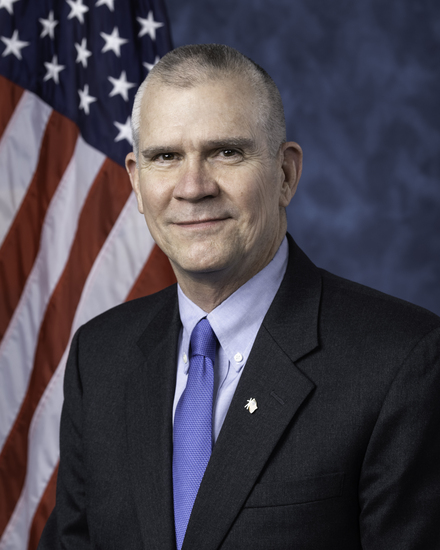
Rep. Matthew M. Rosendale, Sr.
Sponsored bills
Maddy summaryThe Fort Belknap Indian Community Water Rights Settlement Act of 2024 ratifies a water rights compact between the Fort Belknap Indian Community (Gros Ventre and Assiniboine Tribes) and Montana, confirming the Tribe's water rights held in trust by the United States. It allocates 20,000 acre-feet of water annually from Lake Elwell for the Tribe's use on or off the Reservation, authorizes land exchanges to expand the Reservation, and establishes two trust funds to support water infrastructure development and management. The bill requires the Tribe to create a Tribal water code for administering water rights, mandates waiver of historical claims against the United States, and sets an enforceability date for implementation.
Maddy summaryHR 9034, the Secret Service Accountability Act, would prevent federal funds from being used for the salary or expenses of Secret Service Director Kimberly Cheatle. This bill directly affects the current director by blocking all federal funding for her compensation and related costs. The key provision prohibits any federal money from covering her salary or expenses, regardless of other laws. This is a funding restriction targeting the director's position, not a change to the Secret Service's operations or public policies.
Maddy summaryThis bill amends federal law to clarify that veterans may lawfully carry firearms on Department of Veterans Affairs (VA) property, provided it complies with applicable state and local laws. It updates Title 18, U.S. Code, to explicitly include veterans' lawful firearm carrying on VA property as an exception to certain restrictions. The bill also adds a new provision to Title 38 confirming that such lawful possession does not violate VA regulations or penalties. It directly affects veterans using VA facilities (like hospitals or offices) and ensures VA policies align with state firearm laws where permitted. The change focuses on clarifying existing legal boundaries without altering state gun laws or expanding firearm access.
Maddy summaryHRES 1305 is a procedural resolution that formally rescinds subpoenas issued by the January 6th Select Committee to four individuals (Stephen Bannon, Mark Meadows, Daniel Scavino Jr., and Peter Navarro) and withdraws the committee’s recommendations finding them in contempt of Congress. The bill specifically cancels subpoenas from September 2021, October 2021, and February 2022, along with related contempt resolutions adopted in 2021-2022. It does not alter legal proceedings but withdraws the committee’s authority to enforce these actions. The resolution is supported by House members who argue the committee was partisan and illegitimate, though the bill itself only addresses the committee’s procedural actions.
Maddy summaryThis bill rescinds unspent funds from specific federal programs. It targets leftover money from pandemic relief (like the CARES Act and American Rescue Plan) and certain infrastructure initiatives (including education stabilization funds and transportation programs like the Congestion Mitigation Program). The rescission is limited to amounts already allocated for Israel, Ukraine, and Indo-Pacific security supplements under recent appropriations. Unspent funds must be returned to the Treasury, with no new spending created.
Maddy summaryHR 8737, the "Free Market Drives Itself Act," repeals a working group established under the Infrastructure and Investment and Jobs Act to coordinate electric vehicle infrastructure efforts and prohibits the Departments of Energy and Transportation from continuing or creating any similar advisory group. This bill directly affects these federal agencies by eliminating an existing advisory body focused on electric vehicle policy and banning its replacement. The key mechanism is the explicit repeal of Section 25006 of the Infrastructure and Investment and Jobs Act and a binding prohibition on reestablishing comparable structures. The policy change removes a specific coordination mechanism without altering broader electric vehicle funding or regulations.
Maddy summaryThis bill amends the Northern Border Security Review Act to establish a new annual deadline for threat analysis (September 2, 2025, and each year after) and requires the Department of Homeland Security to update its northern border strategy within 90 days of each analysis. It mandates that the Secretary provide a classified briefing to congressional committees within 30 days of each threat analysis and develop performance measures for U.S. Customs and Border Protection's Air and Marine Operations to secure the northern border in air and maritime areas within six months of enactment. The bill directly affects the Department of Homeland Security and congressional committees by imposing specific reporting deadlines and review requirements. These changes focus on improving the frequency and structure of security assessments without altering existing border security operations.
Maddy summaryHR 537 authorizes a Congressional Gold Medal to honor 60 diplomats who saved Jewish lives during the Holocaust by issuing visas and passports against their governments' orders, risking expulsion and personal danger. The medal will be presented to the next of kin of these diplomats, alongside representatives from their home countries, and permanently displayed at the United States Holocaust Memorial Museum. The bill also permits the sale of bronze duplicates to cover production costs, with proceeds going to the U.S. Mint. This legislation recognizes the diplomats' humanitarian actions without creating new government programs or altering existing laws.
Maddy summaryHR 8653 authorizes the posthumous award of a Congressional Gold Medal to Major Thomas D. Howie, a U.S. Army officer who died during the Battle of Normandy in WWII. The bill specifies the medal will be presented to his nephew, Tom Howie, or his next of kin, and then permanently displayed at The Citadel Museum. It also permits the U.S. Mint to produce and sell bronze duplicates to cover costs. This is a commemorative measure honoring Major Howie's military service and sacrifice, with no substantive policy changes.