

Maddy summaryHR 7415 would repeal the 1990 Gun-Free School Zones Act, which prohibited firearms within 1,000 feet of school grounds. It removes specific references to school zones from federal gun law provisions in Title 18 of the U.S. Code. This change would eliminate the federal prohibition on firearms in designated school zones, altering the scope of existing gun law enforcement. The bill does not create new safety measures but modifies how federal gun laws apply to school areas.
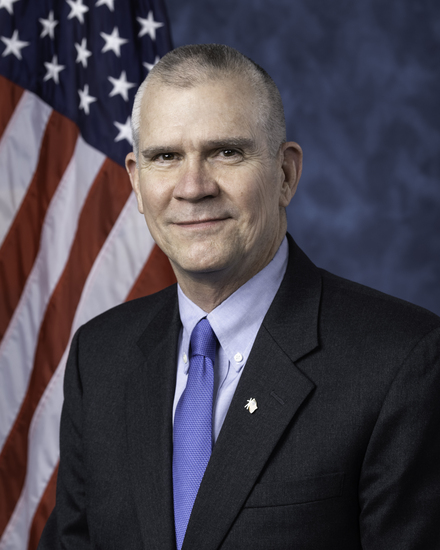
Rep. Matthew M. Rosendale, Sr.
Sponsored bills
Protecting Americans' Medical Rights Act This bill allows an individual to file a civil action for injuries sustained as a result of receiving a COVID-19 vaccine against a government entity that imposed such vaccination requirement. In addition, a state or local government receiving federal funding related to COVID-19 waives their sovereign immunity against such a civil action.
No Backdoor Gun Control Act of 2022 This bill removes the category of any other weapon from the definition of firearm under the National Firearms Act. The bill treats persons who acquire or possess any other weapon as meeting registration or licensing requirements under the National Firearms Act. The bill requires the Department of Justice to destroy any records relating to the registration of any other weapon not later than one year after the enactment of this bill.
Protecting Federal Funds from Human Trafficking and Smuggling Act of 2022 This bill prohibits a nonprofit entity from receiving federal funds (and denies a tax exemption) unless the entity certifies compliance with certain federal laws (e.g., laws with respect to human trafficking and smuggling). It also establishes reporting requirements, including that the Government Accountability Office must annually report to Congress on those nonprofit entities that do not certify their compliance with these laws.
Protecting Federal Funds from Human Trafficking and Smuggling Act of 2022 This bill prohibits a nonprofit entity from receiving federal funds unless the entity certifies compliance with certain federal laws (e.g., laws with respect to human trafficking and smuggling). It also establishes reporting requirements, including that the Government Accountability Office must annually report to Congress on those nonprofit entities that do not certify their compliance with these laws.
Stopping Traffickers and Their Accomplices Act of 2022 This bill requires an abortion provider to notify the National Human Trafficking Hotline if the provider has a reasonable suspicion that the patient is a victim of trafficking. It also requires each abortion provider to complete annual training on how to identify and respond appropriately to individuals who are at risk of or who have experienced trafficking. The bill establishes penalties for violations.
Local Control Act This bill imposes requirements on the placement in a state of a non-U.S. national ( alien under federal law) without lawful immigration status. Specifically, before such an individual may be settled in, housed in, or transported to a state or political subdivision within a state, the Department of Homeland Security must notify the office of the governor of that state and the office of the chief executive of the political subdivision. No federal funds may be used for the proposed settling, housing, or transporting if (1) the state governor's office does not approve of the action, or (2) the political subdivision in question has a law or resolution prohibiting or disapproving of such an action. These requirements shall not apply to the use of federal funds to transport or detain such an individual for civil or criminal law enforcement purposes.
Recognizing the Unborn Act of 2021 This bill replaces the term fetus with unborn child throughout federal law, including provisions relating to abortions and medical research. The bill also creates a default statutory definition for unborn child : a child in utero, or a member of the species Homo sapiens , at any stage of development, who is carried in the womb.
Illegal Immigrant Payoff Prohibition Act This bill prohibits the payment of a settlement to an alien for a civil action brought against the United States in connection with the alien's inadmissibility to, or unlawful presence in, the United States.
Protect Communities from a Porous Border Act of 2021 This bill requires the Department of Homeland Security (DHS) to notify a state before placing an alien in that state and gives the state final authority to prohibit such a placement. At least 10 business days before placing (e.g., detaining or housing) such an individual in a state, DHS must provide certain information to that state, including (1) the individual's biographic and biometric information, including DNA; and (2) a certification that the biometric and biographic information has been checked in various law enforcement and counterterrorism databases. No federal court shall have jurisdiction to review (1) the requirements and procedures established under this bill, or (2) a decision by a state to prohibit the placement of such an individual in the state. The bill also prohibits any federal official from waiving any of the bill's requirements.