This resolution asks the President to provide to the House of Representatives copies of all documents and other communications detailing expenditures of appropriated funds directed to Ukraine between January 20, 2021, and November 15, 2022. The resolution also directs the Department of Defense and the Department of State to provide such documents.
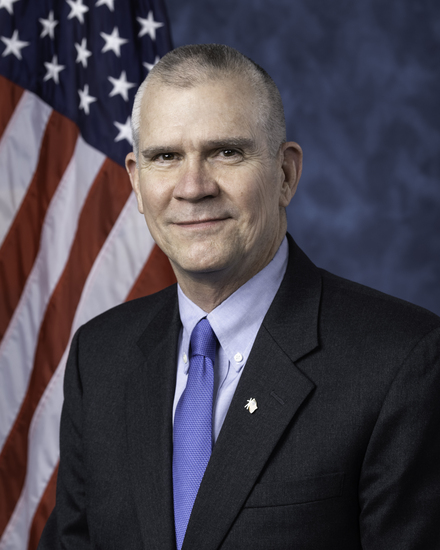
Rep. Matthew M. Rosendale, Sr.
Sponsored bills
American Safety And Fairness through Expedited Removal Act of 2022 or the American SAFER Act of 2022 This bill expands the classes of non-U.S. nationals (aliens under federal law) who are subject to expedited removal (i.e., removal from the United States without further hearing or review). Specifically, the bill nullifies a 2004 Department of Homeland Security (DHS) rule that generally limits expedited removal to certain situations, such as for non-U.S. nationals encountered within 14 days of entry into the United States without inspection and within 100 miles of a U.S. international land border. The bill also (1) prohibits DHS from implementing a rule that limits expedited removal based on how far a non-U.S. national was from the border when encountered or apprehended, and (2) modifies the relevant statute to state that expedited removal authority applies regardless of where the non-U.S. national was encountered or apprehended.
Long-Term Care Veterans Choice Act This bill authorizes the Department of Veterans Affairs (VA) to enter into contracts to pay for specified veterans (i.e., certain veterans who have service-connected disabilities and require nursing home care) to be placed in medical foster homes at their request. A medical foster home is a home designed to provide non-institutional, long-term, supportive care for veterans who are unable to live independently and prefer a family setting. Veterans receiving such care must agree, as a condition of payment for their care, to accept home health services furnished by the VA. Under the bill, no more than a daily average of 900 veterans may have their care in a medical foster home covered by the VA. The VA must create a monitoring system to assess its workload in carrying out the medical foster home payments. Additionally, the Government Accountability Office must submit to Congress reports that assess the implementation of this program and provide recommendations for improvements. The bill also extends certain loan fee rates through February 15, 2031, under the VA's home loan program.
Commitment to Veteran Support and Outreach Act This bill authorizes the Department of Veterans Affairs (VA) to provide grants to states and Indian tribes to implement programs that improve outreach and assistance to veterans and their families to ensure that such individuals are fully informed about veterans' benefits and programs. Specifically, the VA may provide grants to states and tribes to (1) implement or enhance outreach activities; (2) increase the number of county or tribal veterans service officers in the state or tribe; or (3) expand, implement, or otherwise enhance existing programs and services of the existing state or tribal organization that is recognized by the VA in the preparation, presentation, and prosecution of claims for veterans benefits through representatives who hold positions as county or tribal veterans service officers. The VA must prioritize awarding grants in areas with a critical shortage of county or tribal veterans service officers, areas with high rates of suicide among veterans, and areas with high rates of referrals to the Veterans Crisis Line. The bill also extends certain loan fee rates through February 10, 2031, under the VA's home loan program. During FY2024-FY2028, the VA is authorized to hire two or more additional full-time equivalent employees in the VA's Office of General Counsel to carry out duties under the accreditation, discipline, and fees program.
Department of Veterans Affairs Information Technology Reform Act of 2022 This bill addresses the management and implementation of information technology projects and investments of the Department of Veterans Affairs (VA). Specifically, the bill prohibits the VA from obligating or expending funds for any major information technology project that begins after the date of enactment of this bill unless a report is submitted that includes information on the cost, schedule, and performance of the project, as generated by the business owner of the project prior to the commencement of the project. The information in the report must be used as a baseline against which changes or variances are measured and reported on during the life cycle of the project. Projects must be managed by an interdisciplinary team that includes a certified project manager, a functional lead, a technical lead, a contracting officer, and other appropriate personnel. The VA's Chief Information Officer must (1) exercise authority over the management, governance, and oversight processes relating to existing or proposed information technology of the VA's Financial Services Center; and (2) supervise the information technology employees and contractors of the center. The VA must ensure its annual budget justification materials include a list of its active information technology projects and specified information about such projects, projected funding needs for projects, and a prioritized list of every proposed project that is unfunded.

This joint resolution nullifies a Bureau of Alcohol, Tobacco, Firearms and Explosives rule published on April 26, 2022, concerning regulatory definitions and identification of firearms.
Protecting Kids from Candy-Flavored Drugs Act This bill establishes enhanced criminal penalties for certain federal drug offenses involving the manufacture or distribution of candy-flavored controlled substances or similar products for minors. Specifically, the bill imposes enhanced criminal penalties for a federal drug offense that involves manufacturing, creating, distributing, dispensing, or possessing with intent to distribute a controlled substance listed in schedule I or II that is combined with a candy or drink, marketed to appear similar to a candy or drink, or modified by flavoring or coloring to appear similar to a candy or drink. To be subject to an enhanced penalty, the individual must have knowledge or reasonable cause to believe that the controlled substance will be distributed, dispensed, or sold to an individual who is under 18 years of age.
Protect Children's Innocence Act This bill places restrictions on the provision of gender affirming care. Gender affirming care includes performing surgery, administering medication, or performing other procedures for the purpose of changing the body of an individual to correspond to a sex that differs from the individual's biological sex. Specifically, the bill makes it a felony to perform any gender affirming care on a minor and it permits a minor on whom such care is performed to bring a civil action against each individual who provided the care. Additionally, the bill prohibits the use of federal funds for gender affirming care or for health insurance that covers such care. Such care may not be provided in a federal health care facility or by a federal employee. The bill also prohibits qualified health plans from including coverage for gender affirming care. Further, plans that include coverage for such care are not eligible for federal subsidies. Finally, the bill prohibits institutions of higher education from offering instruction in gender affirming care. It also makes any non-U.S. national ( alien under federal law) who performs gender affirming care on a minor deportable and inadmissible to the United States. The restrictions under this bill do not apply to the provision of care under certain circumstances such as when an individual does not have normal sex chromosome structure, sex steroid hormone production, or sex steroid hormone action.
Shall Not Be Infringed Act This bill repeals the Bipartisan Safer Communities Act, which was signed into law on June 25, 2022. The act makes various changes to federal firearms laws, including to expand background check requirements, broaden the scope of existing restrictions, and establish new criminal offenses. The act also reauthorizes, funds, and supports various programs, grants, and activities to promote access to behavioral and mental health services, enhance school safety and security initiatives, and address gun violence in communities.
Border Safety and Security Act of 2022 This bill requires the Department of Homeland Security (DHS) to suspend the entry of any non-U.S. nationals ( aliens under federal law) without valid entry documents during any period when DHS cannot detain such an individual or return the individual to a foreign country contiguous to the United States. A state may sue DHS to enforce this requirement. (Under current law, non-U.S. nationals who arrive at the border without entry documents are generally subject to expedited removal. However, if such an individual is found to have a credible fear of persecution, they are typically subject to detention while their asylum claim is being considered.) The bill also authorizes DHS to suspend the entry of non-U.S. nationals without entry documents at the border if DHS determines that such a suspension is necessary to achieve operational control over such a border.