

Maddy summaryHR 2249 sets a spending cap of $127,805,000 for the USDA's Agricultural Research Service (ARS) Buildings and Facilities program in fiscal year 2024. This bill directly affects the USDA ARS by limiting the funds available for maintaining and operating its research buildings and facilities. The key provision is a strict annual funding limit that must be adhered to, preventing the use of unspent funds beyond this amount. It does not change program requirements or policies, only restricting the budget allocation for physical infrastructure.
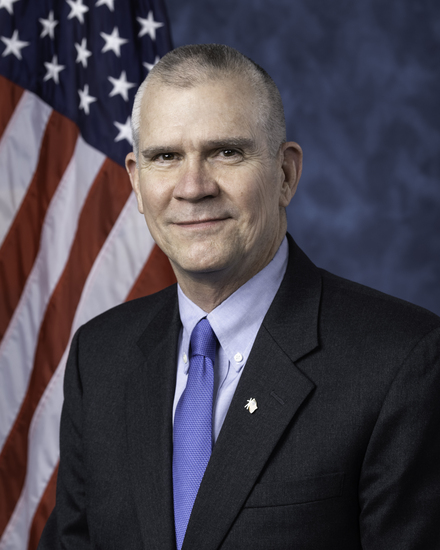
Rep. Matthew M. Rosendale, Sr.
Sponsored bills
Maddy summaryHR 2928, the Responsible Borrower Protection Act of 2023, blocks the Federal Housing Finance Agency (FHFA) and mortgage enterprises (Fannie Mae and Freddie Mac) from implementing specific changes to mortgage credit fees announced in January 2023. The bill directly affects mortgage borrowers and lenders by reversing a pricing framework update that would have altered fees for single-family mortgages. It prohibits the FHFA from enforcing the January 2023 pricing changes detailed in FHFA's announcement and related lender letters. The bill clarifies that enterprises may still use risk-based pricing for mortgage fees, but the specific fee adjustments from the 2023 framework are canceled. This is a direct policy change to mortgage fee structures, not a broader reform.
Maddy summaryHR 1948 limits funding for the Department of Labor's Veterans Employment and Training programs to $256,341,000 for fiscal year 2024. This bill directly affects veterans' job training and employment services funded through this specific program. The key provision is a strict spending cap that prevents these programs from using more than the specified amount of federal funds during FY2024. It does not change program eligibility or services, only restricts the total available budget.
Stop the Invasion Act This bill requires the President to bar the entry of certain non-U.S. nationals (aliens under federal law) into the United States if U.S. Customs and Border Protection (CBP) encounters a certain number of inadmissible non-U.S. nationals. Specifically, this bar shall apply if CBP detains or finds on average more than 30,000 such inadmissible individuals each month over the most recent 12-month period. The bar shall cease when the average drops below 30,000 encounters. Such encounters shall include non-U.S. nationals who seek entry into the United States when the President has suspended entry to prevent the spread of a communicable disease. While this bar is in effect, the President must prohibit the entry of non-U.S. nationals who are inadmissible for specified reasons related to illegal entry, violation of immigration law, or lack of documentation.
This bill directs the President to withdraw the United States from the United Nations Framework Convention on Climate Change (the entity tasked with supporting the global response to climate change). The bill also prohibits the use of funds to carry out U.S. obligations under the framework following this withdrawal.
Maddy summaryHR 2712, the Work Not Woke Act, prohibits federal agencies, contractors, and grant recipients from using workplace training that promotes specific "divisive concepts," such as claiming inherent superiority of a race or sex, blaming individuals for historical actions, or suggesting meritocracy is racist. It directly affects federal contractors (requiring contract clauses banning such training), federal agencies (mandating review of diversity training), and grant recipients (requiring certification against using federal funds for prohibited training). Key mechanisms include a Department of Labor hotline for complaints, mandatory contract provisions for contractors, and a ban on using federal funds for three executive orders focused on racial equity. The law permits diversity efforts that do not promote the banned concepts and requires agencies to certify compliance with its provisions.
Maddy summaryHR 1950 sets a spending cap of $3,414,000 for the Department of Labor's National Veteran's Employment and Training Services Institute during fiscal year 2024. This bill directly affects the funding level available to this specific institute, which provides employment and training services to veterans. The key provision is a statutory limit preventing the institute from accessing more than the specified amount in FY2024. It does not alter program requirements or eligibility but restricts the total funds that can be allocated. This is a procedural funding limitation, not a substantive policy change.
Maddy summaryThe Range Access Act (HR 1614) requires the Forest Service and Bureau of Land Management to identify existing target shooting ranges on federal lands and establish new ones where feasible. Within five years, agencies must construct or partner to build new ranges meeting specific safety standards (like berms, firing lines, and no user fees) that accommodate rifles, pistols, shotguns, and archery. The bill mandates public consultation with tribes, shooting clubs, and local governments before site selection, prioritizing proximity to recreational shooters while avoiding conflicts with existing private ranges. Annual reports to Congress will track progress toward ensuring public access to these ranges on federal lands.
U.S.A. Beef Act This bill modifies label requirements for meat food products of cattle. Specifically, the bill prohibits the label of cattle meat or a meat food product of cattle from bearing the phrase Product of U.S.A. unless such meat or meat food product is exclusively derived from one or more cattle born, raised, and slaughtered in the United States. The requirement does not apply to cattle meat or a meat food product of cattle that is intended and offered for export to a foreign country.
Maddy summaryHJRES 27 is a congressional resolution seeking to block a federal rule that redefined which waterways fall under the Clean Water Act's protections. It targets a rule submitted by the Army Corps of Engineers, Department of Defense, and Environmental Protection Agency (EPA) on January 18, 2023, which aimed to revise the "Waters of the United States" definition. The resolution would formally disapprove this rule under a specific federal procedure (Chapter 8 of Title 5), preventing it from taking effect. This would directly affect how federal agencies regulate pollution and development near water bodies, including wetlands and smaller streams.