

Maddy summaryHRES 580 is a symbolic resolution expressing the House's support for designating "Journeyman Lineworkers Recognition Day." It honors lineworkers who work in hazardous conditions (such as at heights near live wires) and respond to disasters like hurricanes and wildfires, while recognizing their contributions and the legacy of Henry Miller, an early electrical worker who died on the job. The resolution has no legal effect - it solely encourages public recognition and reflection on these workers' service.
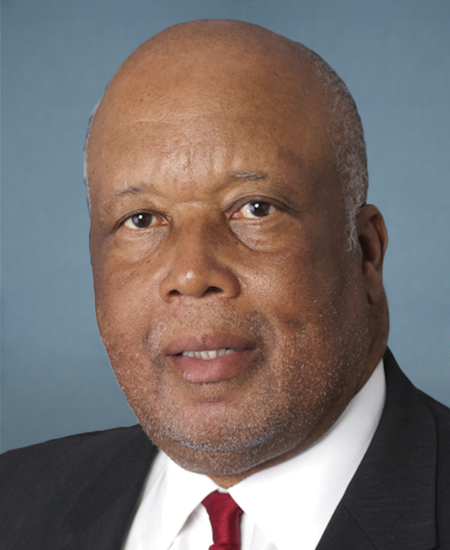
Rep. Bennie G. Thompson
Sponsored bills
Maddy summaryThis bill authorizes $30 million annually (2024-2028) for the National Institutes of Health to expand research on uterine fibroids, including studies on racial disparities (noting Black women are 80% likely to develop fibroids by menopause versus 70% of White women). It also requires the creation of a Medicaid database to track treatment services for fibroids and mandates a congressional report on related costs and coverage. The bill directs the Department of Health and Human Services to develop public education materials about fibroid symptoms, treatment options (including non-hysterectomy care), and racial prevalence differences. It directly affects women with fibroids - particularly those from racial minority groups - and aims to improve data collection and awareness around a condition causing significant health burdens and healthcare costs.
Maddy summaryThis bill establishes the Emmett Till and Mamie Till-Mobley and Roberts Temple National Historic Site in Chicago, Illinois, as a unit of the National Park System. It requires the Secretary of the Interior to create the site only after securing an agreement with Roberts Temple Church (the Roberts Temple) for public access, interpretation, and maintenance. The site preserves and interprets resources tied to the Great Migration, Emmett Till’s memorial service, Mamie Till-Mobley’s activism following her son’s murder, and the civil rights movement. The National Park Service will administer the site under standard park laws, with management plans developed in coordination with Roberts Temple. The site directly affects Roberts Temple Church (as the managing partner) and the public (through access to historical resources).
Maddy summaryThe Federal Death Penalty Prohibition Act would ban the federal government from imposing or carrying out the death penalty for any violation of federal law after the bill's enactment. It would require federal courts to resentence all individuals currently under a federal death sentence to a non-death penalty. This bill directly affects federal criminal defendants and inmates on federal death row, but does not impact state-level death penalty cases. The law would take effect immediately upon passage, ending federal death penalty sentencing for future cases and changing current death row sentences.
Maddy summaryHR 4579, the Fairness for Farm Workers Act, amends the Fair Labor Standards Act to establish phased overtime requirements for agricultural workers. Starting in 2024, most farm employers must pay overtime for hours worked beyond 55 per week (reducing to 50 in 2025, 45 in 2026, and 40 in 2027), with small farms (25 or fewer employees) getting a 3-year delay on the full 40-hour standard. The bill also removes existing exemptions that allowed some agricultural employers to avoid overtime pay for certain workers. This directly affects farm workers in agriculture and their employers, requiring compliance with standard overtime rules previously not applied to this sector.
Maddy summaryHR 4550 creates a federal grant program to help public elementary, secondary, and preschool schools recruit and retain paraprofessionals (school support staff like teaching assistants). The bill directs the Secretary of Education to fund state education agencies, which then distribute subgrants to schools - prioritizing those serving high numbers of low-income students - to support activities like mentoring programs, professional development, and wage increases or certification assistance (e.g., for special education or English learner support). States must report annually on wage baselines, paraprofessional numbers, and program outcomes. This bill directly affects schools and paraprofessionals, with funding authorized for fiscal years 2024-2028.
Maddy summaryHR 4515, the PRIME Act, provides competitive federal grants to qualifying colleges and universities to improve athletic facilities and equipment. It directly affects small-endowment institutions (with endowments under $900 million) that generate less than $20 million annually from athletic programs. Grants of at least $250,000 can be used to build or upgrade stadiums, gyms, fields, or purchase event-related materials like uniforms and equipment, following NCAA/NAIA guidelines. The bill targets schools with limited athletic revenue, aiming to support infrastructure without funding staff salaries or general operations.
Maddy summaryHR 4466 would rename the National School Lunch Program Act from "Richard B. Russell National School Lunch Act" to "Jean E. Fairfax National School Lunch Act" to honor Jean E. Fairfax, a civil rights activist who advocated for equitable access to the program. The bill would update this name in the law and over 40 other federal statutes referencing the current title, but does not alter the program's operations, funding, or eligibility. It directly affects legal references in federal law without changing how the program serves students.
Maddy summaryHRES 569 is a symbolic congressional resolution recognizing former Texas State Representative Al Edwards as "the father of Juneteenth" for his role in passing Texas House Bill 1016. This 1987 legislation made Texas the first state to establish June 19 (Juneteenth) as an official state holiday, commemorating when enslaved people in Texas learned of their freedom in 1865. The resolution formally honors Edwards' decades-long advocacy, including his work to elevate Juneteenth recognition statewide and nationally. As a non-binding resolution, it does not create new law but serves to acknowledge Edwards' historical contribution to Juneteenth's eventual adoption as a federal holiday.
Maddy summaryHR 4434, the Accountability for Acting Officials Act, clarifies rules for federal agencies appointing acting officials to fill vacancies. It requires first assistants to have served in that role for at least 30 days before assuming acting duties (except for Senate-confirmed positions), limits acting service to 120 days for cabinet-level positions (down from 210 days), and mandates agencies to report acting appointments to Congress within 7 days. The bill also adds requirements for acting officials to testify before congressional committees every 60 days and specifies procedures for vacancies during presidential transitions. These changes directly affect federal agencies and their leadership during leadership vacancies.