

Ensuring Diverse Leadership Act of 2024 This bill requires that, when appointing a president, a Federal Reserve Bank must interview at least one individual reflective of gender diversity and one reflective of racial or ethnic diversity. The bill amends numerous banking-, finance-, and trade-related acts to make references to officials (including those to the Chairman of the Board of Governors of the Federal Reserve System) gender-neutral.
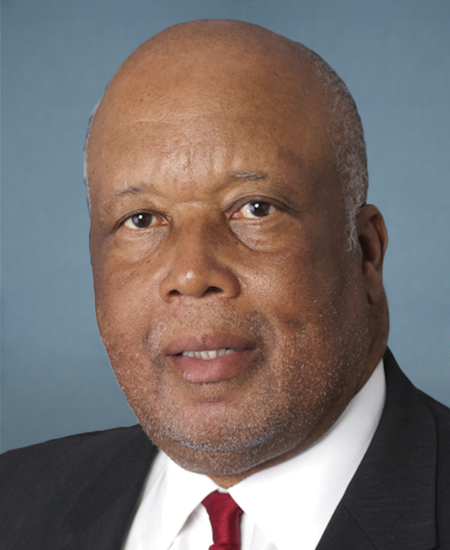
Rep. Bennie G. Thompson
Sponsored bills
Maddy summaryHR 7223 requires the Transportation Security Administration (TSA) to create guidelines improving access to Transportation Worker Identification Credential (TWIC) cards for people leaving prison. The bill directs TSA to develop tools helping incarcerated individuals apply for TWIC cards before release and assist with appeals or waivers if denied initially. This aims to speed up employment opportunities in maritime and port-related jobs - critical for 525,000 Louisiana port jobs and 260,000 oil/gas industry roles requiring TWIC cards. The guidelines must be finalized within one year of the bill’s enactment.
Maddy summaryHR 7127, the FAIR Act, establishes pay adjustments for federal employees in 2025. It increases base pay by 4% for most federal workers under statutory pay systems and for "prevailing rate" employees (like those in specific geographic areas), while raising locality pay rates by 3.4%. The bill directly affects all federal employees receiving pay under these systems, as it modifies their 2025 salary calculations. These changes are based on statutory formulas under Title 5 of the U.S. Code, with no new policy mechanisms beyond the specified percentage increases. The adjustments apply to pay rates in effect as of the end of fiscal year 2024.
Maddy summaryHR 6662 establishes the White House Rural Council, chaired by the Secretary of Agriculture, to coordinate federal efforts supporting rural economic development. The Council requires regular meetings among 26+ federal departments and agencies (including Agriculture, Labor, Commerce, and Energy) to share data, identify collaboration opportunities, and address rural economic challenges. Key provisions mandate joint planning to improve services for rural stakeholders like small businesses, Tribal governments, and agricultural organizations, while identifying gaps in current programs. The bill requires no new funding, directing agencies to use existing resources and personnel to fulfill these coordination duties. It directly affects federal departments and agencies responsible for rural economic initiatives across the U.S.
Maddy summaryHRES 882 is a non-binding resolution passed by the U.S. House of Representatives on November 21, 2023, declaring support and gratitude to food banks, food pantries, and community-based organizations addressing food insecurity. It recognizes these groups' work in serving over 5 billion meals annually, rescuing wasted food (nearly 118 billion pounds yearly), and supporting vulnerable populations including 44.2 million people in food-insecure households in 2022. The resolution specifically acknowledges their role in providing emergency aid, nutrition education, and disaster response, while highlighting that 55% of food-insecure households did not access federal nutrition programs. It does not create new policies or funding but formally commends these organizations' contributions to reducing food insecurity and improving community health.
Maddy summaryThe Stronger Communities through Better Transit Act establishes a new federal grant program to improve public transportation service. It provides funding to urban areas, states, and Indian tribes to cover up to 50% of public transit operating costs (up to 80% in persistent poverty areas and 100% for Indian tribes), with requirements to report on service frequency, access to jobs, and conduct community surveys. The program mandates that a majority of funds must benefit underserved communities and areas of persistent poverty, defined as census tracts with high poverty rates or minority populations. Recipients must maintain their transit funding levels and report on improvements in access to essential services. The bill authorizes $20 billion annually for fiscal years 2024-2027.
Maddy summaryThis resolution commemorates the 60th anniversary of President Johnson's 1964 War on Poverty declaration and acknowledges its historical achievements, such as creating Medicare, Medicaid, and SNAP, alongside its shortcomings. It specifically notes the War on Poverty's failure to adequately address fair employment, workforce preparation, and racial disparities in poverty, while recognizing that current antipoverty policies have not adapted to today's challenges. The resolution is purely symbolic, with no new policy requirements, and urges continued efforts to address poverty through existing frameworks.
Maddy summaryHRES 962 is a ceremonial resolution honoring Reverend Dr. Martin Luther King, Jr.'s legacy, specifically celebrating his 95th birthday on January 15, 2024. It symbolically affirms his teachings by condemning hate, discrimination, and prejudice against Black Americans, Indigenous people, Jewish, Asian-American/Pacific Islander, Muslim, Hispanic/Latino communities, and LGBTQ+ individuals. The resolution does not create new laws or affect any policies - it solely expresses the House's support for Dr. King's values of diversity, tolerance, and equality through non-binding statements. As a symbolic gesture, it has no legal effect or direct impact on any group or individual.
Maddy summaryThe Investing in Uniformed Division Leadership Act redesignates the Chief and Assistant Chief positions in the U.S. Secret Service Uniformed Division as career reserved positions within the Senior Executive Service (SES). This change removes these roles from the current pay schedule table and ensures they are filled by career professionals, not political appointees, aligning them with standard SES appointment practices. The bill requires current occupants of these roles to be converted to the SES as soon as practicable after enactment. This policy shift aims to enhance leadership stability and expertise within the Secret Service's Uniformed Division.
Maddy summaryThe Affordable Connectivity Program Extension Act of 2024 allocates $7 billion in funding for the Affordable Connectivity Program (ACP) during fiscal year 2024. The ACP provides subsidies to low-income households to help cover the cost of internet service and connected devices like laptops or tablets. This funding ensures the program can continue supporting eligible households throughout the year, with the money remaining available until fully spent. The bill extends existing program funding without changing eligibility criteria or service requirements.