Jobs, On-the-Job 'Earn-While-You-Learn' Training, and Apprenticeships for Young African Americans Act This bill makes changes to the national apprenticeship system aimed at promoting diversity. Specifically, the bill establishes the Diversity and Inclusion Administrator in the Office Apprenticeship within the Office of Employment and Training Administration at the Department of Labor, requires every apprenticeship program that registers or renews an apprenticeship with the Office of Apprenticeship to submit a plan to increase participation by individuals who are African American, and requires the Diversity and Inclusion Administrator to award grants to create or expand diversity in registered apprenticeship programs.
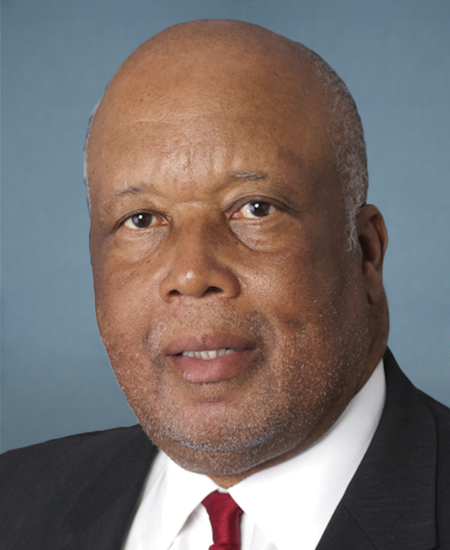
Rep. Bennie G. Thompson
Sponsored bills
Civics Learning Act of 2021 This bill expands the use of American History and Civics Education—National Activities grants to prioritize innovative civics learning and teaching. Specifically, the bill expands the allowable uses of these grants to include before-, during-, and after-school activities and extracurricular activities; activities that include service learning and community service projects that are linked to school curriculum; activities that encourage and support student participation in school governance; and online and video game-based learning. Further, the Department of Education must ensure that specified percentages of grant funds are awarded on a diverse basis to eligible entities (e.g., institutions of higher education) that serve students and teachers at elementary schools, middle schools, and high schools.
Opportunity To Address College Hunger Act This bill requires institutions of higher education (IHEs) that receive grants to operate work-study programs to notify a student receiving work-study assistance that the student may be eligible for participation in the Supplemental Nutrition Assistance Program (SNAP). The Department of Education must provide guidance to states and IHEs on how to identify and communicate with students who are potentially eligible for SNAP.
Contact Lens Prescription Verification Modernization Act This bill revises the requirements for the verification of prescriptions related to the purchase of contact lenses. Specifically, online sellers of prescription contact lenses must provide consumers with a method to transmit a digital copy of their prescriptions to such sellers. Online sellers also must encrypt protected health information they send by email. Additionally, the bill prohibits any seller of prescription contact lenses from using telephone calls with an artificial or prerecorded voice (i.e., robocalls) to verify a consumer's prescription.
Midwives for Maximizing Optimal Maternity Services Act of 2021 or the Midwives for MOMS Act of 2021 This bill establishes grants within the Health Resources and Services Administration (HRSA) for establishing or expanding midwifery programs at institutions of higher education and nursing schools. HRSA may prioritize funding for institutions that focus on increasing the number of midwife professionals from underrepresented groups and that promote practicing in areas with limited access to professional health care.
This resolution condemns the acts of gun violence that led to the tragic loss of eight lives in Georgia on March 16, 2021.
Birth Access Benefiting Improved Essential Facility Services Act or the BABIES Act This bill requires the Centers for Medicare & Medicaid Services (CMS) to establish a Medicaid demonstration program to improve freestanding birth center services for women with low-risk pregnancies. Among other things, the CMS must (1) publish criteria for freestanding birth centers to participate in the program, including specified accreditation, licensure, and service requirements; (2) publish guidance for states to establish prospective payment systems under Medicaid for program participants; and (3) award planning grants for states to develop program proposals. The CMS may choose up to six states to participate in the program.
Ghost Army Congressional Gold Medal Act This bill directs the Speaker of the House of Representatives and the President pro tempore of the Senate to award a Congressional Gold Medal to the 23rd Headquarters Special Troops and the 3133d Signal Service Company, known as the Ghost Army , collectively, in recognition of its service during World War II.
Rural STEM Education Research Act This bill specifies federal scientific research and development efforts towards STEM (science, technology, engineering, and mathematics, including computer science) workforce development and rural STEM education. (Sec. 3) The bill amends the objectives of the Manufacturing Extension Partnership program to include the provision to secondary schools of information about the job skills needed in manufacturing companies, and the promotion and expansion of certification systems offered through local high schools. The activities of a manufacturing extension center are expanded to include local high schools in the facilitation of collaborations and partnerships between manufacturing companies and schools to help those entities better understand the specific needs of manufacturers and to help manufacturers better understand the skill sets that students learn in school programs. The National Institute of Standards and Technology (NIST) must award prizes to stimulate research and development of creative technologies in order to deploy affordable and reliable broadband connectivity to underserved rural communities. NIST may award not more than a total of $5 million in prizes. (Sec. 4) The Office of Science and Technology Policy must establish a broadband research and development working group to address national research challenges and opportunities for improving broadband access and adoption across the United States. (Sec. 5) The National Science Foundation (NSF) shall enter into an agreement with the National Academy of Sciences under which the National Academy of Sciences agrees to evaluate aspects of STEM education and workforce development in rural areas. (Sec. 6) The Government Accountability Office shall conduct a study on the engagement of rural populations in federal STEM programs. (Sec. 7) Experimental Program to Stimulate Competitive Research (EPSCoR) programs shall consider modifications to award structures to increase the capacity of rural communities to provide quality STEM education and STEM workforce development programming to students and teachers. (Sec. 8) The NSF must award grants to institutions of higher education or nonprofit organizations for (1) research and development to advance innovative approaches to support and sustain high-quality STEM teaching in rural schools, (2) research and development of programming to identify the barriers rural students face in accessing high-quality STEM education, (3) development of innovative solutions to improve the participation and advancement of rural students in grades Pre-K through 12 in STEM studies, and (4) research on online STEM education courses for rural communities. The NSF may establish a pilot program of regional cohorts in rural areas to provide peer support, mentoring, and hands-on research experiences for rural STEM educators of students in grades Pre-K through 12 in order to build an ecosystem of cooperation among educators, researchers, academia, and local industry.

This resolution expresses the sense of the House of Representatives that it is the duty of the federal government to expand and strengthen the care economy. The care economy consists of child care, home health, and similar sectors where caregiving is a predominant feature of the work.