

Increasing Access to Mental Health in Schools Act This bill directs the Department of Education (ED) to establish a grant program and a student loan forgiveness program to increase the number of school-based mental health services providers in elementary and secondary schools. First, ED must award grants to partnerships between educational agencies and graduate institutions to increase the number of school-based mental health services providers employed by low-income local educational agencies (LEAs). Grant funds may be used for specified purposes, including to provide student loan forgiveness and tuition credits and to support recruitment, hiring, and training. In addition, ED must establish a program to provide student loan forgiveness for individuals who (1) are not, and have never been, participants in the grant program established by the bill; and (2) have been employed by low-income LEAs for five or more consecutive school years as mental health services providers.
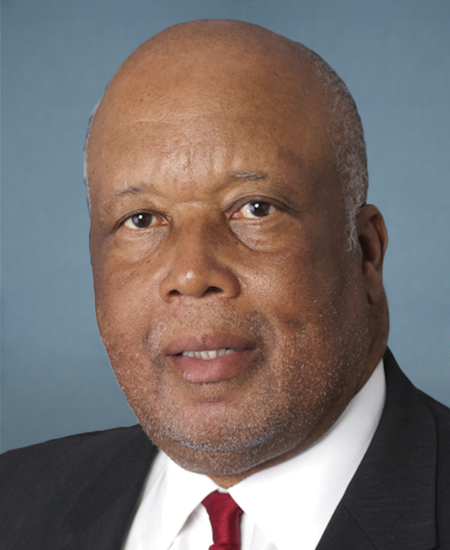
Rep. Bennie G. Thompson
Sponsored bills
Computer Science for All Act of 2021 This bill establishes a program through which the Department of Education must award grants to states, local educational agencies, and eligible tribal schools to serve as models for national replication of computer science education expansion efforts. Grant recipients must use these funds for certain activities, including training teachers to teach computer science and expanding access to high-quality learning materials and online options.
National Commission to Investigate the January 6 Attack on the United States Capitol Complex Act This bill establishes in the legislative branch the National Commission to Investigate the January 6 Attack on the United States Capitol Complex. The commission must (1) conduct an investigation of the relevant facts and circumstances relating to the attack on the Capitol; (2) identify, review, and evaluate the causes of and the lessons learned from this attack; and (3) submit specified reports containing findings, conclusions, and recommendations to improve the detection, prevention, preparedness for, and response to targeted violence and domestic terrorism and improve the security posture of the U.S. Capitol Complex. The bill gives the commission specified powers, including the authority to hold hearings, receive evidence, and issue subpoenas. The bill also provides for the composition of the commission and the appointment of staff, and it requires the commission to hold public hearings and meetings to the extent that it is appropriate. The commission must also release public versions of its reports.
John Lewis Every Child Deserves a Family Act This bill prohibits discrimination on the basis of sexual orientation, gender identity, marital status, or religion in the provision of child welfare programs and services by entities receiving federal funding. The Department of Health and Human Services (HHS) must provide technical assistance to help states follow this requirement, including (1) guidance for bringing state laws into compliance, (2) developing training to increase cultural competency related to social identity, and (3) training for judges and attorneys involved in child welfare cases, among other supports. Additionally, HHS must establish the National Resource Center on Safety, Well-Being, Placement Stability, and Permanency for LGBTQ Children and Youth Involved with Child Welfare Services to provide training, technical assistance, and guidance to applicable state and local agencies and service providers. Further, the Religious Freedom Restoration Act may not be the basis for challenging the application or enforcement of this bill. The Government Accountability Office must study and report on states' compliance with the requirements of the bill no later than three years after enactment.
Enhancing Child Passenger Safety in Underserved Communities Act This bill incorporates efforts to improve child safety into federally supported transportation programs. Specifically, the bill includes promoting the proper use of child safety seats and increasing public awareness of pediatric vehicular heatstroke within the scope of state highway safety programs. In addition, the bill expands the permitted uses of occupant protection grants. (These grants support activities to reduce highway deaths and injuries resulting from unrestrained or improperly restrained individuals riding in motor vehicles.) Currently, states may use the grants to purchase and distribute child safety seats to low-income families. Under this bill, states may also use their grants to hire and train certified child passenger safety technicians and educate parents and caregivers about the proper use of child safety seats. Further, the bill requires certain states to expend a portion of their occupant protection grant funds on projects or activities related to child safety seats.
End Polluter Welfare Act of 2021 This bill limits or eliminates certain fossil fuel oil and gas subsidies for oil companies, including by (1) eliminating the limit on liability for offshore facilities and pipeline operators; (2) eliminating the authority of the Department of Energy to carry out the Fossil Energy Research and Development Program and prohibiting funds made available to the Advanced Research Project Agency from being used to carry out any project that supports fossil fuels; (3) terminating certain provisions relating to enhanced oil recovery, producing oil and natural gas from marginal wells, and limitations on percentage depletion for oil and natural gas wells; (4) terminating other deductions and accounting methods supporting oil, natural gas, and coal companies; (5) increasing the Oil Spill Liability Trust Fund financing rate; (6) denying a tax deduction for removal costs and damages relating to oil spills; (7) imposing an excise tax on the removal price of any taxable crude oil or natural gas; (8) increasing amortization periods for tertiary injectant expenses, development expenditures of a mine or other natural deposit, mining exploration expenditures, and intangible drilling and development costs for oil and gas wells and geothermal wells; (9) repealing the tax credits for the production of electricity from refined coal and for carbon oxide sequestration; and (10) requiring a study and elimination of certain other fossil fuel subsidies.
This resolution expresses the sense of Congress that legislation and policies that address poverty, low wages, and related issues should be prioritized. Among other priorities, the resolution commits to updating the poverty measure; raising the minimum wage; expanding unemployment insurance; ensuring that all workers receive paid family and medical leave; implementing a federal jobs guarantee; guaranteeing safe and quality housing, a right to water, high-quality public education, and quality health care for all; enacting relief from household and personal debt that cannot be paid; ensuring that state, local, and tribal governments are adequately funded; expanding and protecting the right to vote; eliminating persistent racial inequities; protecting the constitutional rights of assembly and free speech; enacting comprehensive and just immigration reform; ensuring all the rights of Native and Indigenous peoples and tribal nations; transforming the economy into a green renewable energy economy; demilitarizing U.S. foreign policy, borders, and policing; enacting fair taxes on corporations and the wealthy; using deficit spending to meet pressing needs; and encouraging states and cities to enact policies that follow the direction provided by this resolution.
Young Americans Financial Literacy Act This bill requires the Consumer Financial Protection Bureau to award competitive grants to eligible institutions for the establishment of financial literacy education programs for young people and families. An eligible institution is a partnership among two or more of the following an institution of higher education; a state or local government agency specializing in financial education; a nonprofit agency, organization, or association; a financial institution; or another small organization. Authorized grant funded activities shall include developing and implementing comprehensive, research based, financial-literacy education programs for young people; designing instructional materials; developing and supporting the delivery of professional development programs in financial literacy education; improving access to, and dissemination of, financial literacy information for young people and families; developing educational programs to reduce student loan default rates; conducting ongoing research and evaluation of financial literacy education programs; and measuring the effectiveness of authorized activities. The grant program shall terminate after FY2025.
Dentist and Optometric Care Access Act of 2021 or the DOC Access Act of 20 21 This bill prohibits private health insurance plans from setting rates for items and services, except for dental cleanings, provided by a doctor of optometry, of dental surgery, or of dental medicine for which the plan does not pay a substantial amount. Additionally, an agreement between a plan and such a doctor for limited scope dental or vision benefits may last longer than two years only with the prior acceptance of the doctor for each term extension. Plans also may not restrict such a doctor's choice of laboratories or suppliers. Such doctors may elect to waive the application of the payment amount and choice of laboratories provisions of this bill. The bill establishes a private right of action for a person adversely affected by a violation of this bill. The bill does not supersede state laws regarding health insurers and dental or vision benefit plans.
Long-term Opportunities for Advancing New Studies for Biomedical Research Act or the LOANS for Biomedical Research Act This bill requires the Department of Health and Human Services (HHS), in consultation with the Department of the Treasury, to establish the Biobonds Program to support loans for clinical trials for eligible drugs and medical devices. Specifically, Treasury must contract with institutions to act as fiscal agents to carry out the program. Fiscal agents must (1) purchase loans made to borrowers engaged in eligible biomedical research activities, and (2) sell bonds comprised of such loans. HHS shall guarantee a portion of the bond payments. An eligible borrower under this program is one conducting (or seeking to conduct) research related to a drug or device that is (1) intended to meet an unmet medical need; and (2) under investigation in certain types of controlled clinical trials, including a trial to investigate the safety and effectiveness of the drug or device. HHS must issue rules relating to various aspects of the program, including rules concerning (1) which loans should be prioritized for purchase, (2) the terms and conditions of the loans, and (3) the size of each bond issuance. Treasury must issue rules relating to the program's underwriting practices and compensation for the fiscal agents. The Government Accountability Office must periodically report to Congress on the program, including an analysis of the risk to the government in guaranteeing the bonds.