

Maddy summaryHCONRES 13 is a concurrent resolution expressing Congress's support for maintaining the current policy that prohibits imposing new fees on local radio stations for playing music. It states that Congress should not impose any performance fee, tax, royalty, or charge on local radio stations for broadcasting sound recordings over the air, or on businesses like bars and restaurants that play music publicly. The resolution argues that such fees would harm local radio stations - critical sources for emergency information and community programming - and jeopardize the economic model that has supported both radio and the music industry for decades. This resolution does not create new law but formally opposes potential legislative changes to the existing fee structure.
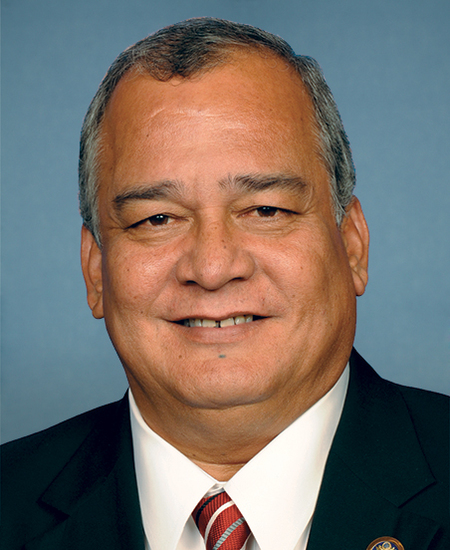
Rep. Gregorio Kilili Camacho Sablan
Sponsored bills
Maddy summaryThis is a commemorative resolution (HRES 55), not a policy bill. It formally recognizes Certified Registered Nurse Anesthetists (CRNAs) for their 150+ year service in providing anesthesia care across the U.S., including in rural areas, military facilities, and during public health emergencies like the pandemic. The resolution thanks CRNAs for their "incredible, selfless, and dedicated service" and encourages the public and healthcare stakeholders to acknowledge their work during National CRNA Week (January 23-28, 2023). It has no legal effect or policy changes - it is purely symbolic recognition.
Maddy summaryHR 789, the Caring for All Families Act, expands the Family and Medical Leave Act to allow employees to take leave for a wider range of family members, including domestic partners, son-in-law, daughter-in-law, parent-in-law, adult children, grandparents, grandchildren, siblings, and others with "close association equivalent to family." The bill adds new provisions for employees to take up to 4 hours of leave per 30 days (24 hours annually) for school activities, routine medical appointments for family members, or visiting nursing homes for elderly individuals considered family. This legislation directly affects private sector workers covered by FMLA and federal employees, broadening who qualifies for leave and what types of family care can be accommodated. The bill amends existing FMLA definitions and requirements to include these expanded family relationships and care needs.
Maddy summaryHR 787, the Empowering Nonprofits Act, reduces the non-governmental cost-sharing requirement for direct federal grants to eligible nonprofits by 25% for five years after the law takes effect. It directly affects 501(c)(3) nonprofit organizations located in states where over 20% of residents live below the federal poverty line. The bill requires executive agencies to lower the portion nonprofits must contribute toward grant costs, making federal funding more accessible for organizations serving high-poverty communities. This change applies to grants awarded directly to qualifying nonprofits, with no additional requirements for recipients.
Maddy summaryHR 814, the "Protect Social Security and Medicare Act," requires a two-thirds vote in both House and Senate to consider any bill, resolution, or amendment that would reduce benefits administered by the Social Security Administration (SSA) or Centers for Medicare & Medicaid Services (CMS). This directly affects Congress, as it raises the threshold for passing legislation impacting Social Security or Medicare benefits. The bill includes an exception for Medicare Advantage plans: reductions in payments to these plans are allowed only if offset by equal or greater increases in other Medicare payments. Determinations about whether a provision would reduce benefits are made solely by the SSA's Office of the Chief Actuary.
Maddy summaryHR 715, the Bipartisan Background Checks Act of 2023, requires background checks for all firearm transfers between private individuals, not just those through licensed dealers. It mandates that unlicensed sellers must involve a licensed dealer to conduct a background check before transferring a firearm, with exceptions for family transfers (like spouses or parents/children), law enforcement, temporary safety transfers, and certain hunting or range activities. The bill also requires licensed dealers to provide a notice and certification form in both English and Spanish to buyers. It explicitly states it won't create a national gun registry or override state laws on the same topic. The law would take effect 180 days after enactment.
Maddy summaryThis bill amends the Elementary and Secondary Education Act to require that Black history be included in all federally supported American history and civics education programs. It directly affects K-12 public schools receiving federal education funding by mandating that curriculum frameworks, teacher training, and national assessments explicitly incorporate Black history as part of American history. The key mechanism is adding "which shall include Black history" to existing provisions across multiple sections of the law, including classroom instruction, teacher academies, and national assessments. This change ensures Black history is integrated into established educational standards rather than creating new programs.
Veterans Census-Enabled National Treatment Equitable Resource Supplement for Mental Health Act of 2023 or the Vet CENTERS for Mental Health Act of 2023 This bill requires the Department of Veterans Affairs (VA) to ensure that there is a minimum number of Vet Centers located in each state. Vet Centers are community-based counseling centers that provide social and psychological services to eligible veterans, service members, and their families. The minimum number of Vet Centers required in each state is generally based on the state's geographic size or the number of veterans located in the state. The VA must establish additional Vet Centers as necessary to meet the minimum required number for each state. The VA may establish the additional Vet Centers at facilities made available by a state, local government, or recognized Indian tribe. If a state needs more than one additional Vet Center to meet its minimum requirement, the VA must establish at least one additional Vet Center and may establish Vet Center outstations to cover the difference.
Choosing Our Own Lives Over Fast Firearms Act or the COOL OFF Act This bill establishes a three-day waiting period for certain handgun transfers. Specifically, the bill makes it unlawful for a licensed importer, manufacturer, or dealer to sell or transfer a handgun to an unlicensed individual unless three business days have elapsed since the licensee initiated a background check. A violator is subject to criminal penalties—a fine, up to one year in prison, or both. Additionally, the bill makes it unlawful for an unlicensed individual to receive a handgun from another unlicensed individual unless at least three business days have elapsed since the recipient most recently offered to take possession of the handgun. A violator is subject to criminal penalties—a fine, up to five years in prison, or both. The three-day waiting period does not apply to certain handgun transfers, such as for a loan between spouses for a lawful purpose.
Maddy summaryHR 660, "Ethan's Law," requires gun owners in homes where minors (under 18) or individuals prohibited from owning firearms under federal/state law reside to store firearms securely. It makes unsecured storage unlawful if a minor or prohibited person could access the firearm, with fines of $500 per violation and enhanced penalties (up to 5 years in prison) if injury or death occurs. The bill also establishes a federal grant program to help states implement similar secure storage laws and provides funding incentives for states that already have such laws in place.