

Maddy summaryThis resolution (HRES 817) formally recognizes four African American legislators - James Lewis, John Willis Menard, Pinckney B.S. Pinchback, and Josiah Thomas Walls - as former Members of the House. It states they duly won election during the Reconstruction Era (1869-1874) but were wrongly denied seats due to contested credentials. The resolution directs the House to recognize them as former Members and display oil portraits of them in a House corridor. This is a symbolic gesture of historical acknowledgment, not a legal change to their status or voting rights.
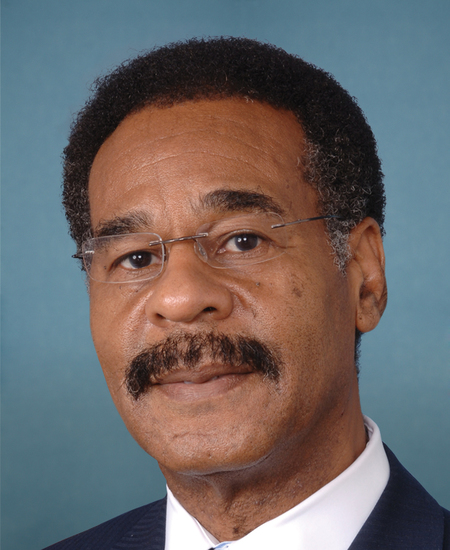
Rep. Emanuel Cleaver
Sponsored bills
Maddy summaryHRES 819 is a symbolic resolution recognizing the 5-year anniversary of the October 27, 2018, antisemitic attack at Pittsburgh’s Tree of Life Synagogue, which killed 11 people. It condemns antisemitism and references rising hate incidents, including the Anti-Defamation League’s 2022 report of record antisemitic activity (3,697 incidents). The resolution honors the victims, expresses solidarity with affected Jewish communities, and reaffirms the U.S. commitment to combatting hate and protecting religious freedom. As a procedural resolution (not a law), it has no binding effect but serves as a formal statement of congressional stance.
Maddy summaryHCONRES 72 is a non-binding concurrent resolution recognizing the wage gap between Latina women and White, non-Hispanic men, where Latina women earn 57 cents for every dollar earned by White, non-Hispanic men working full-time. It highlights that this disparity results in Latina women losing over $1.2 million in potential earnings over a 40-year career and places them at risk of poverty. The resolution reaffirms congressional support for equal pay but does not create new laws or policy changes. It serves as a symbolic statement to raise awareness about systemic inequities affecting Latina women workers.
Maddy summaryHRES 771 is a non-binding resolution expressing the U.S. House of Representatives' support for Israel following Hamas' October 7, 2023, attack. It condemns Hamas' actions, affirms Israel's right to self-defense, and calls for the immediate release of hostages. The resolution also urges enforcement of existing laws restricting aid to terrorists and sanctions against Iran for supporting Hamas. It does not create new policies or allocate funds, as it is a symbolic statement of congressional support.
Maddy summaryHRES 768 is a symbolic House Resolution expressing congressional support for Israel following Hamas' October 7, 2023 attacks. It condemns Hamas' actions, reaffirms Israel's right to self-defense, and calls for the immediate release of hostages. The resolution references the U.S. commitment to Israel's security through existing military aid programs, including the 2016 U.S.-Israel Memorandum of Understanding, and emphasizes enforcement of laws like the Taylor Force Act to prevent U.S. aid from reaching terrorist groups. As a symbolic resolution, it does not create new policy but serves as a statement of congressional support for Israel.
This resolution expresses support for the goals and ideals of National Ostomy Awareness Day. (Ostomy is a type of surgery that creates an opening in the abdomen that allows for the removal of bodily waste when an individual has lost normal functions of the digestive or urinary systems due to birth defects, colorectal cancer, bladder cancer, Crohn's disease, ulcerative colitis, or other medical conditions.)
Maddy summaryThe Safe Schools Improvement Act (HR 6031) requires public elementary and secondary schools to implement comprehensive anti-bullying policies that specifically prohibit harassment based on protected characteristics like race, gender identity, disability, religion, and sexual orientation. It mandates schools to collect and publicly report annual data on bullying incidents while establishing clear grievance procedures for students and parents. The bill also requires states to submit biennial reports on school compliance and supports evidence-based interventions, such as restorative practices, to reduce exclusionary discipline. This legislation directly affects all public K-12 schools and students in the U.S., aiming to create safer learning environments through standardized policy requirements and data transparency.
Maddy summaryThis bill removes a previous exclusion that prevented temporary federal employees (including U.S. Postal Service staff and Members of Congress) from counting service after January 1, 1988, toward their retirement benefits. It allows these workers to have their post-1988 temporary service counted toward retirement eligibility if they pay a deposit to the retirement system. The change applies to anyone employed by the federal government on or after the bill's enactment date. The Office of Personnel Management must notify affected employees and create rules to implement this change.
Maddy summaryThis bill designates the Quindaro Townsite in Kansas City, Kansas, as a National Historic Landmark, officially recognizing its historical significance. It directly affects local preservation groups, Kansas City officials, and property owners in the area by establishing a formal framework for protecting and interpreting the site. Key provisions include enabling cooperative agreements with local entities for preservation and public education, while clarifying that the designation does not restrict property owners' rights or override local administration. The landmark status acknowledges Quindaro's role in the anti-slavery movement, the Underground Railroad, and its archaeological value during the "Bleeding Kansas" era.
Maddy summaryThis bill replaces "Columbus Day" with "Indigenous Peoples’ Day" as the official federal holiday observed on the second Monday in October. It directly affects federal government operations and all federal documents, rules, or laws that previously referenced "Columbus Day" by automatically updating those references to "Indigenous Peoples’ Day" upon enactment. The key mechanism is a simple amendment to federal law (5 U.S.C. § 6103(a)) to change the holiday name and a provision ensuring all existing federal references to Columbus Day are legally treated as referring to Indigenous Peoples’ Day instead. This is a procedural change to federal holidays and references, not a new policy or program.