

Maddy summaryHCONRES 75 is a non-binding resolution expressing Congress's support for issuing a new commemorative postage stamp honoring the Buffalo Soldiers. It directly affects the U.S. Postal Service by urging the Citizens’ Stamp Advisory Committee to recommend such a stamp to the Postmaster General. The resolution highlights the historical significance of the Buffalo Soldiers - African American soldiers who served in all-Black regiments from 1866 to 1948 - and references a previous 1994 stamp that was discontinued. It does not create a new law but formally requests the Postal Service consider this commemoration.
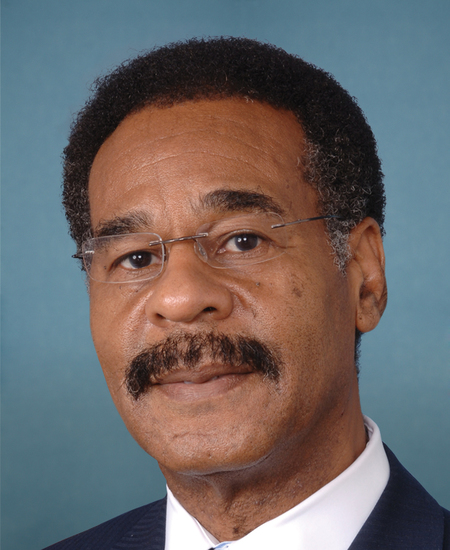
Rep. Emanuel Cleaver
Sponsored bills
This concurrent resolution recognizes the difficult challenges Black veterans faced when returning home after serving in the Armed Forces, their heroic military sacrifices, and their patriotism in fighting for equal rights and for the dignity of a people and a nation. The concurrent resolution also recognizes the need for the Department of Veterans Affairs to continue to work to eliminate any health and benefit disparities for minority veterans.
Maddy summaryHR 6121, the Filipino Veterans Fairness Act of 2023, expands U.S. veterans benefits for individuals who served in the Philippine Army, Philippine Scouts, or recognized guerrilla forces during World War II. It directly affects Filipino veterans who previously faced challenges proving service due to limited documentation. The bill allows the Secretary of Veterans Affairs to consider alternative records beyond the National Personnel Records Center rosters when determining eligibility, requires annual reports to Congress on applications and approvals, and clarifies that the Filipino Veterans Equity Compensation Fund does not apply to these veterans. These changes aim to streamline access to benefits for this specific group of veterans.
Maddy summaryThis resolution symbolically designates November 8, 2023, as "National First-Generation College Celebration Day" to honor first-generation college students (those whose parents didn't earn bachelor's degrees). It urges all U.S. residents to recognize these students' contributions to the workforce and celebrate the 1965 Higher Education Act, which established key support programs like TRIO and Pell Grants. The resolution has no legal force or funding provisions - it solely expresses support through symbolic recognition. It directly affects educational communities, institutions, and the public by encouraging annual observance of this day.
Maddy summaryHR 6293, the Fair Wages for Incarcerated Workers Act of 2023, would extend the Fair Labor Standards Act (FLSA) to require that incarcerated workers in public or privately operated correctional facilities receive fair wages. The bill directly affects individuals working in prisons or related programs (like UNICOR or work release) by prohibiting deductions for board, lodging, or court-imposed fees from their wages. Key provisions amend the FLSA to define "incarcerated worker" and explicitly state that such workers must be paid at least the minimum wage, with costs for facilities and court fees excluded from their earnings. This would ensure incarcerated workers keep more of their earnings from prison labor programs.
Maddy summaryHR 5976, the Youth Mental Health Research Act, establishes a new NIH research initiative led by the National Institute of Mental Health. The bill directs collaboration between three NIH institutes to coordinate research on youth mental health, focusing specifically on building community resilience for at-risk youth and improving how mental health services reach young people in schools, communities, and other settings where they live and work. It authorizes $100 million annually for fiscal years 2024 through 2028 to fund this research. The bill does not create direct services but aims to generate evidence to inform future mental health support strategies for young people.
Maddy summaryThe Healthcare Workforce Resilience Act (HR 6205) reallocates unused employment-based immigrant visas from fiscal years 1992-2021 to directly support foreign nurses and physicians seeking permanent residency in the U.S. It creates 40,000 new visas - 25,000 for nurses and 15,000 for physicians - available only to those with petitions filed within three years of the bill’s enactment. The bill includes expedited processing without fees, exempts these visas from country limits, and requires employers to attest that hiring foreign workers won’t displace U.S. workers. This policy change specifically targets healthcare staffing shortages by streamlining pathways for qualified foreign healthcare professionals.
Maddy summaryHRES 831 is a symbolic congressional resolution supporting October as "National Domestic Violence Awareness Month." It does not create new laws or allocate funding, but formally expresses the House of Representatives' support for the goals of raising awareness about domestic violence. The resolution urges Congress to continue highlighting domestic violence's impact and backing programs that prevent and address it. It directly affects public awareness efforts and serves as a non-binding statement of congressional support for victims and advocacy organizations.
Maddy summaryThe PHASE Act of 2023 directs the National Institute of Standards and Technology (NIST) to identify innovative traffic control technologies that improve safety for pedestrians and cyclists without causing distraction. It requires the Transportation Secretary to conduct a study analyzing urban areas with rising pedestrian fatalities and test physical safety measures like crosswalk technology, better lighting, and accessible sidewalks. The bill also creates a $5 million annual grant program for cities, tribes, and municipalities to fund specific pedestrian safety infrastructure, including marked crosswalks, adaptive lighting, accessible curb ramps, and upgraded traffic signals. These grants must comply with federal regulations and the Americans with Disabilities Act. The law directly affects local governments seeking funding and aims to protect pedestrians and vulnerable road users through concrete infrastructure improvements.
Maddy summaryHR 5983, the Clean Water Act of 2023, redefines "protected water resources" under federal law to explicitly include all interstate and intrastate waters (such as intermittent and ephemeral streams), wetlands, and their tributaries. This directly affects federal agencies like the EPA, states managing water quality, and developers or landowners needing permits for activities near these waters. The bill eliminates the Supreme Court’s narrow "navigable waters" definition from Sackett v. EPA (2023), restoring protections for tens of millions of acres of wetlands and millions of miles of small streams. Key mechanisms require the EPA to annually review and adjust exclusions from protections based on scientific evidence, ensuring water bodies critical to drinking water, flood control, and ecosystems remain safeguarded.