

Maddy summaryThe Housing Market Transparency Act (HR 8500) requires the Department of Housing and Urban Development (HUD) to collect and publicly share detailed data about low-income housing tax credit properties. Specifically, HUD must gather information from states - including development costs, ownership details, habitability records, and reasons for property sales or disposals - and make most of this data available annually. This affects HUD, state housing agencies administering tax credit programs, and owners of properties using the federal low-income housing tax credit (Section 42 properties). The law aims to improve public visibility into how these affordable housing properties are managed and maintained over time.
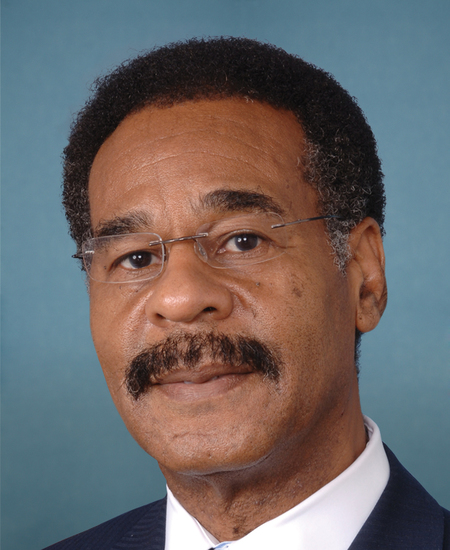
Rep. Emanuel Cleaver
Sponsored bills
Maddy summaryThe Public Service Freedom to Negotiate Act of 2024 establishes federal minimum standards for collective bargaining rights for public employees and supervisory employees. The Federal Labor Relations Authority will determine if each state's laws "substantially provide" for these rights, and if not, federal standards will apply to that state. These standards include the right to self-organization, collective bargaining, recognition of labor organizations, and procedures for resolving disputes. The bill preserves existing collective bargaining agreements and excludes certain employee categories like emergency services workers from some provisions.
Maddy summaryHRES 1206 is a symbolic House resolution supporting the designation of May 2024 as "Mental Health Awareness Month." It does not create new laws or funding but aims to raise public awareness about mental health challenges, emphasizing the need to reduce stigma and treat mental well-being as equally important as physical health. The resolution cites statistics on rising mental health crises - including increased anxiety, depression, and suicide rates among youth, LGBTQ+ individuals, veterans, and communities of color - to underscore the urgency of the issue. It encourages nationwide efforts to promote mental health awareness and access to care during this designated month.
Maddy summaryThis non-binding House resolution honors teachers' resilience during Teacher Appreciation Week (May 6-13, 2024), recognizing their efforts to address pandemic learning gaps, support diverse learners, and maintain high professional standards. It highlights teachers' work in creating inclusive school environments and their commitment to student success, citing statistics like 84% retention in the profession and 46.5% having over 15 years of experience. The resolution expresses congressional appreciation through five formal acknowledgments but does not create new policies, funding, or legal obligations. It is purely ceremonial, encouraging public gratitude for teachers' contributions without altering any laws or programs.
Maddy summaryThe Blockchain Integrity Act imposes a 2-year moratorium (starting 6 months after enactment) prohibiting financial institutions from handling funds routed through digital asset mixers or sent to them. This directly affects banks and financial services companies that process cryptocurrency transactions. The bill requires the Treasury Secretary to study digital asset mixers, privacy coins, and related technologies, including their use in both criminal activity and legitimate scenarios like journalist payments. The study must report on tracking capabilities, international approaches, and specific illicit activities like sanctions evasion and human trafficking, with findings due to Congress within 18 months.
Maddy summaryHRES 1197 is a non-binding House resolution recognizing the contributions of elementary and secondary school teachers. It formally thanks teachers for their role in building civic, cultural, and economic well-being, aligning with National Teacher Appreciation Week (May 6-10, 2024). The resolution encourages students, parents, school leaders, and officials to acknowledge teachers during this week. It does not create new programs, allocate funding, or impose obligations on schools or educators. As a symbolic gesture, it directly addresses the teaching profession without altering any laws or policies.
Maddy summaryHR 8231, the James Earl Jones Congressional Gold Medal Act, authorizes a Congressional Gold Medal to be awarded to actor James Earl Jones in recognition of his distinguished career in theater and film, and his role in advancing inclusion and equal opportunities for people of all backgrounds in the entertainment industry. The Treasury will strike the medal with an image and inscription of Jones, and may produce and sell bronze duplicates to cover costs, with proceeds deposited into the U.S. Mint's public enterprise fund. This bill serves as a ceremonial honor with no new legal requirements or policy changes.
Maddy summaryThe CROWN Act of 2024 prohibits discrimination based on hair texture or style commonly associated with race or national origin, such as braids, locs, cornrows, twists, or afros. It directly affects individuals - particularly people of African descent - who face workplace, school, housing, or public accommodation discrimination due to natural or protective hairstyles. The bill expands existing federal civil rights laws (like Title VI, the Fair Housing Act, and Title VII) to explicitly include hair-based discrimination, requiring compliance in federally funded programs, housing, employment, and public spaces. It clarifies that grooming policies targeting these hairstyles violate anti-discrimination protections without creating new legal standards.
Maddy summaryThis bill provides $13 million annually (2025-2029) to address workforce shortages in medical examiner and coroner systems. It funds grants for forensic pathology fellowships (minimum 40 annually), training for death investigators to obtain certification, and support for toxicology labs to develop expertise. Direct beneficiaries include publicly funded medical examiner/coroner offices, forensic pathology fellowship programs, and toxicology labs seeking accreditation. Funds cover stipends (tax-free) for trainees, certification costs, and lab equipment, with priority for rural areas and communities with high opioid use. The legislation focuses on building capacity through education and certification, not altering death investigation procedures.
Maddy summaryHR 8042, the Community Paramedicine Act of 2024, creates a federal grant program to fund community paramedicine programs that use specially trained paramedics to address health needs outside emergency settings. The program provides up to $25 million annually (2025-2029) for grants to eligible entities like local governments, emergency medical services agencies, and Tribal communities, with 15% reserved for Tribal programs. Funds can cover hiring staff, purchasing equipment, training, and public outreach to improve access to care for underserved populations while reducing unnecessary use of emergency resources. Grantees must report on program outcomes, and the Secretary must submit a report to Congress detailing cost-savings and best practices for rural and underserved communities.