

Maddy summaryThe EARN IT Act of 2023 clarifies that Section 230 of the Communications Act does not shield online service providers from liability for child sexual abuse material, while specifically protecting providers who use encryption technologies from liability for using those technologies. The bill amends over 50 federal statutes to replace "child pornography" with "child sexual abuse material" to ensure consistent terminology across legal contexts. It updates the CyberTipline (operated by the National Center for Missing & Exploited Children) to improve reporting of child sexual abuse material, extending the preservation period for reports from 90 days to one year. The law affects internet service providers, law enforcement, and child protection programs by clarifying legal responsibilities around child sexual abuse material.
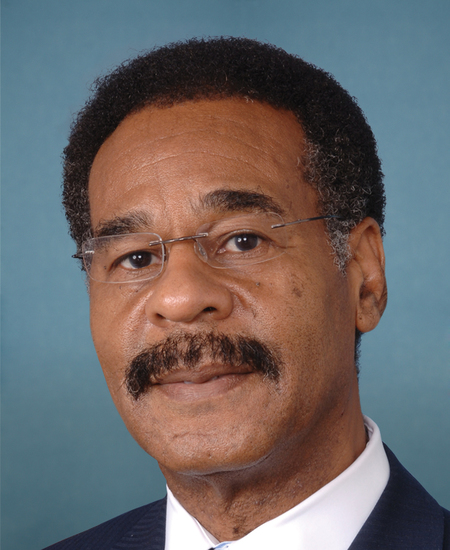
Rep. Emanuel Cleaver
Sponsored bills
Maddy summaryThis bill, HR 8117 (HEIR Act of 2024), modifies HUD's Community Development Block Grant (CDBG) disaster recovery and mitigation programs to help specific property owners access aid after disasters. It requires HUD to create a standardized affidavit of ownership form (replacing traditional deed requirements) for "heir property" owners - those inheriting residential property without a will through intestacy, often affecting Black and rural communities. Grantees must provide this form in multiple languages at application, prohibit notarization, and accept it alongside other documents like school or benefit letters. The change directly helps people who lack standard deeds to prove ownership and receive housing repair or mitigation assistance after a declared disaster.
Maddy summaryThe HEIRS Act of 2024 establishes grant programs to help homeowners resolve ownership issues with "heirs' property" - residential land passed to multiple heirs without a will, held as shared ownership. It provides $30 million annually (2025-2035) to states and local governments that adopt the Uniform Partition of Heirs Property Act, covering costs like title reports, legal fees, and estate planning. Additionally, it allocates $10 million yearly (2025-2029) for direct assistance through HUD-approved counselors and nonprofits, prioritizing minority and low-to-moderate-income homeowners in high-need neighborhoods. The law requires housing counselors to explain heirs' property risks and available solutions, aiming to clarify ownership and prevent displacement.
Maddy summaryHR 8061, the Crime Victims Fund Stabilization Act of 2024, ensures stable funding for the Crime Victims Fund by directing certain False Claims Act collections into it from 2024 through 2029. Specifically, it adds a provision requiring that amounts collected under the False Claims Act (excluding whistleblower rewards and government reimbursement for damages) be deposited into the fund during this period. This directly affects crime victims who rely on the fund for services like counseling and emergency aid, as it prevents potential shortfalls in funding. The bill makes a concrete policy change by redirecting specific federal civil penalties into the fund, rather than altering the fund's existing purposes or eligibility rules.
Maddy summaryHRES 1154 is a symbolic resolution supporting "Financial Literacy Month" to raise public awareness about the importance of personal financial education. It calls on the Federal Government, states, schools, businesses, and communities to observe the month with programs highlighting how financial literacy helps individuals manage money, credit, and debt. The resolution references statistics on financial challenges (like 37% of adults struggling with emergency expenses) but does not create new laws or funding. As a non-binding resolution, it has no direct effect on policy or affected individuals.
Maddy summaryHR 3303, the Maternal Health for Veterans Act, requires the Department of Veterans Affairs (VA) to annually report on maternity care coordination programs and maternal health outcomes for veterans receiving care through VA facilities or VA-contracted providers. The bill mandates the VA to collect data on maternal outcomes - including disparities affecting high-risk demographic groups - and submit recommendations to Congress by September 2028. It authorizes $15 million annually (2024-2028) for VA maternity care coordination programs, supplementing existing funding without reducing current resources. The law directly affects veterans using VA maternity services, aiming to improve care through data-driven strategies.
Maddy summaryHR 1083, the Caring for Survivors Act of 2023, increases financial support for surviving spouses of veterans. It amends Title 38 to raise dependency and indemnity compensation from a fixed $1,154 to 55% of the monthly compensation rate under section 1114(j), effective six months after enactment. The bill also modifies eligibility for survivors of veterans who died before 1993, ensuring they receive the greater of their current benefit or the new calculation. Additionally, it reduces the required continuous service rating period for survivors from 10 years to five years when a veteran was totally disabled at death. These changes directly affect surviving spouses, particularly those with veterans who died prior to 1993.
Maddy summaryHRES 1148 is a resolution passed by the U.S. House of Representatives that condemns the Iranian government for supporting terrorism, regional proxy conflicts, and internal suppression of dissent - including its crackdown on protests following Mahsa Amini's death in 2022. It specifically calls for maintaining sanctions against Iran, supporting the Iranian Resistance's Ten-Point Plan (which advocates for a democratic, secular, nonnuclear Iran), and protecting Iranian political refugees in Albania. The resolution also affirms the Iranian people's right to self-determination under international law and urges the U.S. to recognize their struggle for freedom. As a non-binding resolution, it does not create new laws but formally expresses congressional stance.
Maddy summaryHR 2560 establishes a federal grant program to fund sea turtle rescue and rehabilitation efforts. The program, administered by the Commerce Secretary, provides grants to organizations in designated coastal "stranding regions" for activities like rescuing stranded turtles, providing medical care, collecting research data, and covering related facility costs. Grants are capped at $150,000 per year per recipient, require a 50% non-federal cost match, and must be distributed equitably based on past stranding events and species conservation needs. The bill authorizes $5 million annually (2024-2029) for this program, directly supporting coastal rescue groups, research institutions, and conservation organizations working with stranded marine turtles.
Maddy summaryHRES 1136 is a non-binding House resolution expressing support for designating April 2024 as "Parkinson’s Awareness Month." It highlights that Parkinson’s disease affects over 1 million people in the U.S. annually, causes significant health impacts, and requires increased research and support. The resolution urges continued funding for Parkinson’s research, recognizes individuals participating in clinical trials, and commends organizations aiding those living with the disease and their caregivers. This resolution has no legal effect but aims to raise public awareness and support for Parkinson’s advocacy efforts.