Parents Bill of Rights Act This bill outlines various rights of parents and guardians regarding the elementary or secondary school education of their children. Among other requirements, the bill (1) directs local educational agencies to publicly post the curriculum for each elementary and secondary school grade level; and (2) requires schools to notify parents and guardians of their rights, including the right to review the school's curriculum and budget.
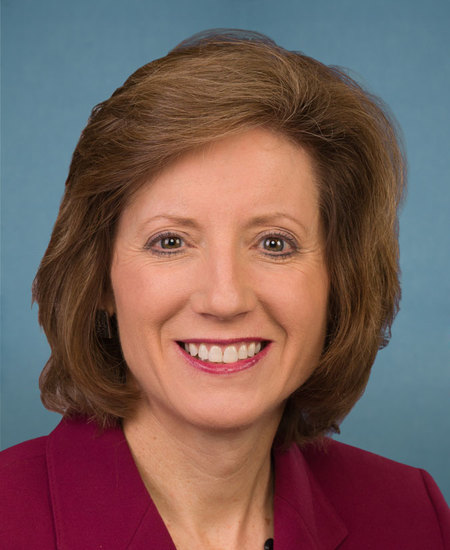
Rep. Vicky Hartzler
Sponsored bills
Fairness for Federal Contractors Act of 2021 This bill prohibits executive agencies from requiring contractors to receive a COVID-19 vaccination. The bill also requires the Government Accountability Office to study the degree to which Executive Order 14042 (Ensuring Adequate COVID Safety Protocols for Federal Contractors) caused disruptions to federal contracts, supply chains, and transportation systems.
This joint resolution nullifies a Department of Labor emergency temporary standard for preventing the transmission of COVID-19 in employment settings. Under the standard issued on November 5, 2021, employers with 100 or more employees must require their onsite employees to either be fully vaccinated against COVID-19 or undergo weekly COVID-19 testing.
This concurrent resolution declares that Congress should not impose any new performance fee, tax, royalty, or other charge relating to the public performance of sound recordings on a local radio station for broadcasting sound recordings over the air, or on any business for such public performance of sound recordings.
Veterans' Preference Parity Act This bill modifies the eligibility criteria for certain veterans to qualify for a preference in the federal hiring process. Specifically, an individual who is honorably discharged from active duty service is eligible for a veterans' preference, if the active duty service was performed for more than 180 total days (currently, consecutive days). Additionally, a retired member of the Armed Forces is eligible for a veterans' preference, even if the retiree (1) is not a disabled veteran and (2) retired at or above the rank of major or its equivalent.
Honoring Our Promises through Expedition for Afghan SIVs Act of 2021 or the HOPE for Afghan SIVs Act of 2021 This bill authorizes the Department of State and the Department of Homeland Security (DHS) to postpone the medical exam requirement for qualifying citizens or nationals of Afghanistan seeking entry into the United States as special immigrants. Specifically, this bill applies to an existing program that provides special immigrant status to an individual (or the spouse or child of such an individual) who (1) faithfully performed sensitive and trusted duties for the U.S. government or the International Security Assistance Force in Afghanistan on or after October 7, 2001, and (2) has experienced or is experiencing an ongoing serious threat due to the performance of those duties. Under this bill, the State Department and DHS may jointly issue a blanket waiver of any requirement for such individuals to undergo a medical exam before admission into the United States. DHS shall ensure, to the greatest extent practicable, that individuals admitted under such a waiver undergo medical exams no later than 30 days after admission into the United States. Such an individual shall be admitted as a conditional permanent resident. DHS shall remove the conditions once the individual receives and passes a medical examination.
Protecting America From Spies Act This bill expands the grounds for barring aliens who have engaged in acts relating to espionage or sabotage from entering the United States. Specifically, any alien shall be inadmissible if the alien has engaged in or will engage in an act that (1) violates a U.S. law relating to espionage or sabotage; (2) would violate any U.S. law relating to espionage or sabotage if it occurred in the United States; or (3) violates any U.S. law prohibiting the export of goods, technology, or sensitive information. Currently, an alien shall be inadmissible if the alien seeks to enter the United States to engage in such an action. Furthermore, the bill expands these grounds of inadmissibility and other security-related grounds to cover the spouse or child of the barred alien if the act occurred in the last five years. The bill also modifies the authority of the Department of Justice to waive certain security-related grounds of inadmissibility for an alien applying for a nonimmigrant visa.
Uyghur Stop Oppressive Sterilizations Act or the Uyghur SOS Act This bill expands existing visa-blocking sanctions to cover certain high-ranking foreign government officials who are responsible for coercive population control policies, such as forced abortions, with a focus on those responsible for such policies against ethnic minority groups in China. Specifically, the Department of State may not issue a visa to a foreign national who is a head of state, head of government, or cabinet-level minister and responsible for establishing or enforcing such policies if the policies are (1) imposed with the intent to destroy a national, ethnic, racial, or religious group; or (2) targeting ethnic minority groups (e.g., Uyghurs, Kazakhs, or Tibetans) or individuals peacefully expressing internationally-recognized human rights in China. (Currently, these sanctions do not apply to any foreign government officials at these higher ranks.) The State Department must make a public announcement each time sanctions are imposed under this bill. The bill also requires the State Department to provide all appropriate assistance to women who belong to an ethnic minority group in China and who have experienced sexual violence, torture, or coercive population control policies.

Back the Blue Act of 2021 This bill establishes new criminal offenses for killing, assaulting, and fleeing to avoid prosecution for killing a judge, law enforcement officer, or public safety officer. Additionally, the bill expands the list of statutory aggravating factors in death penalty determinations to also include the killing or attempted killing of a law enforcement officer, judge, prosecutor, or firefighter or other first responder; broadens the authority of federal law enforcement officers to carry firearms; and limits federal court review of challenges to state court convictions for killing a public safety officer or judge. Finally, it directs the Department of Justice to make grants to law enforcement agencies and nongovernmental organizations to promote trust and improve relations between law enforcement agencies and the communities they serve.
Fiscal State of the Nation Resolution This concurrent resolution requires the congressional budget committees to conduct an annual joint hearing to receive a presentation from the Comptroller General regarding (1) the Government Accountability Office's audit of the financial statement of the executive branch, and (2) the financial position and condition of the federal government.