

Maddy summaryThis bill establishes the Financial Stability Oversight Council's Advisory Committee on Economic Fallout From Chinese Military Aggression Towards Taiwan. The committee, composed of financial regulators, market participants, and geopolitical experts, will study market vulnerabilities related to potential Chinese military action against Taiwan. It must annually produce reports analyzing risks to U.S. banking systems, market volatility, economic costs, and recommendations for improving market resilience. These reports will include specific assessments of impacts on U.S. markets, Treasury holdings, and potential responses to disruptions like a Taiwan invasion or blockade. The committee's work aims to prepare U.S. financial systems for economic shocks without making direct policy changes.
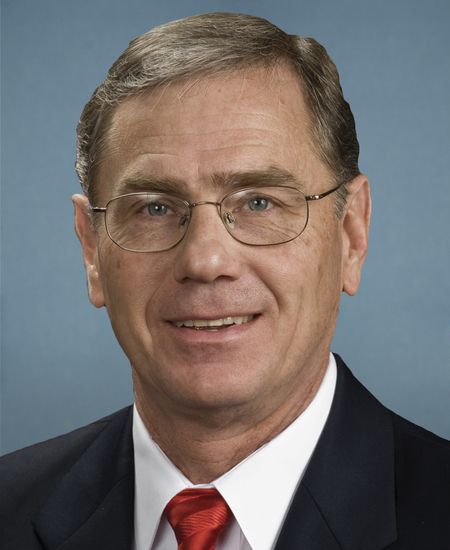
Rep. Blaine Luetkemeyer
Sponsored bills
Maddy summaryThis bill (HR 7963) is procedural and does not change regulations affecting small businesses. It requires the Director to submit quarterly reports to specific congressional committees starting in 2024, detailing how many companies reported beneficial ownership data under existing rules. The reports will track compliance with current requirements, not reduce regulatory burdens. The bill’s title ("Red Tape Relief") is misleading, as it creates a new reporting obligation rather than eliminating any existing rules.
Maddy summaryThis bill prohibits U.S. federal funds from being provided to international financial institutions (like the World Bank) if those funds could finance foreign shrimp farming, processing, or shrimp exports. It directly affects international financial institutions receiving U.S. funding, requiring them to avoid supporting foreign shrimp operations. The bill also mandates an annual report from the Government Accountability Office (GAO) to Congress on whether U.S. representatives at these institutions are following this restriction. The key mechanism is conditioning U.S. financial support on the institutions' adherence to this prohibition.
Accurate Credit Reporting for Homebuyers Act This bill requires lenders at government-sponsored enterprises (i.e., Fannie Mae and Freddie Mac) to obtain a borrower’s consumer report and credit score from all three of the national credit reporting agencies when purchasing a residential mortgage loan. Currently, lenders are allowed to use either two or three credit reports.
Maddy summaryHR 7770, the Rosie the Riveter Commemorative Coin Act, authorizes the U.S. Mint to produce and sell three commemorative coins honoring women who worked on the U.S. home front during World War II. It specifies $5 gold coins (max 50,000), $1 silver coins (max 400,000), and half-dollar coins (max 750,000), all to be issued between January 1, 2025, and December 31, 2025. Each coin sale includes a surcharge ($35 for gold, $10 for silver, $5 for half-dollar), with all surcharge funds directed to the Rosie the Riveter Trust for maintaining the Rosie the Riveter WWII Home Front National Historical Park and educational programs. The coins will feature designs reflecting the legacy of diverse women workers and must meet specific weight, diameter, and composition standards.
Maddy summaryThis resolution (HRES 1086) is a symbolic gesture expressing the House's support for designating March 19, 2024, as "National Agriculture Day." It does not create new laws or policies, but instead formally recognizes agriculture as a vital industry in the U.S. economy. The resolution celebrates agriculture's broad economic impact without imposing any requirements or changes on farmers, consumers, or government programs. It is a commemorative statement, not a substantive legislative action.
Maddy summaryThis resolution (HRES 1055) is a symbolic gesture by the U.S. House of Representatives to congratulate the Kansas City Chiefs football team for winning Super Bowl LVIII on February 11, 2024. It acknowledges their victory over the San Francisco 49ers, their status as the first NFL repeat champion in 19 years, and key player achievements like Patrick Mahomes' third Super Bowl MVP award. As a ceremonial resolution, it has no legal effect or policy impact - it simply offers formal recognition of the team's athletic accomplishment. The resolution does not affect any individuals, policies, or government actions.
Maddy summaryThe Secure Payments Act of 2024 requires the Federal Reserve to study the impacts of the proposed "Reg II" rule (which would cap debit card interchange fees) on consumers, merchants, and small banks. Specifically, it mandates a study of how fee changes affect access to low-cost bank accounts, merchant costs, fraud mitigation, and the affordability of banking products in underserved communities. The Fed must also conduct a quantitative analysis of the rule's effects on small banks' capital and earnings. The Federal Reserve cannot finalize the Reg II rule until after it completes this study, issues a report to Congress, and considers the findings - including whether fee caps benefit low- and moderate-income customers. This bill delays the final rule to ensure the impacts are fully assessed before implementation.
Maddy summaryHR 7500 allows federally recognized Indian tribes to request national security reviews (CFIUS) for transactions with foreign persons, mirroring the process available to corporations. It amends the Defense Production Act to require CFIUS to assess such tribal transactions for national security risks, treating them the same as covered business deals involving U.S. entities. This directly affects tribal governments entering business or real estate agreements with foreign entities, giving them equal access to the security review process. The bill does not change CFIUS's authority but extends its application to tribal transactions as defined under the Indian Self-Determination Act.
Maddy summaryThis bill requires the Small Business Administration's Office of Rural Affairs to submit annual reports on its rural business activities. The initial report must detail how the office promotes financial assistance, tracks statistics, and conducts outreach events, while annual reports must be submitted alongside the SBA's budget justification. It also mandates a separate report on the SBA's collaboration with the Department of Agriculture regarding rural business efforts. All reporting requirements will use existing SBA funding without new appropriations.