

Maddy summaryThis bill requires federal employees convicted of certain sex crimes after its enactment to forfeit their retirement pensions. It specifically applies to convictions for offenses listed in Title 18 (such as child sexual abuse, trafficking, and exploitation) or equivalent state crimes under federal jurisdiction. The law automatically terminates pension payments for these individuals starting on the date of conviction or the bill's enactment, whichever comes later. It affects federal retirees convicted of designated sex crimes after the law takes effect, removing taxpayer-funded retirement benefits for these offenses.
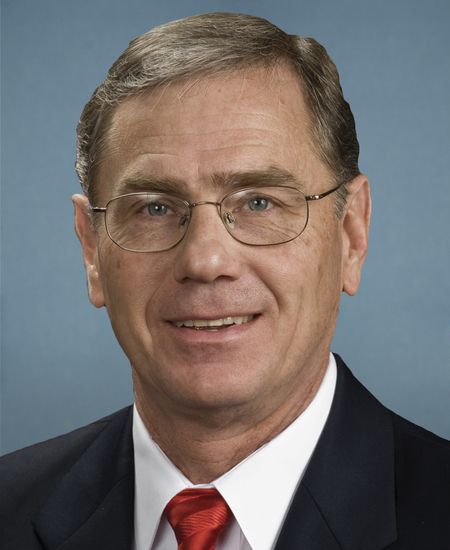
Rep. Blaine Luetkemeyer
Sponsored bills
Maddy summaryHR 8313, the Help DPA Act, streamlines federal permitting for critical national defense projects already approved under the Defense Production Act (DPA). It requires federal agencies to prioritize permits for "covered national defense activities," defined as projects funded by DPA Title III loans/grants, in sectors with a presidentially declared industrial base shortfall, or for goods/services prioritized under DPA Title I. The bill amends the FAST Act to add these projects to the list of activities eligible for expedited permitting and creates a new DPA section mandating agency prioritization. This directly affects defense-related projects needing federal permits, accelerating their approval without changing DPA funding or project eligibility.
Maddy summaryHRES 1197 is a non-binding House resolution recognizing the contributions of elementary and secondary school teachers. It formally thanks teachers for their role in building civic, cultural, and economic well-being, aligning with National Teacher Appreciation Week (May 6-10, 2024). The resolution encourages students, parents, school leaders, and officials to acknowledge teachers during this week. It does not create new programs, allocate funding, or impose obligations on schools or educators. As a symbolic gesture, it directly addresses the teaching profession without altering any laws or policies.
Maddy summaryHR 8231, the James Earl Jones Congressional Gold Medal Act, authorizes a Congressional Gold Medal to be awarded to actor James Earl Jones in recognition of his distinguished career in theater and film, and his role in advancing inclusion and equal opportunities for people of all backgrounds in the entertainment industry. The Treasury will strike the medal with an image and inscription of Jones, and may produce and sell bronze duplicates to cover costs, with proceeds deposited into the U.S. Mint's public enterprise fund. This bill serves as a ceremonial honor with no new legal requirements or policy changes.
Maddy summaryThe Investing in All of America Act of 2023 amends the Small Business Investment Act to expand eligibility for a leverage exclusion, allowing Small Business Investment Companies (SBICs) to count more investments toward their leverage limits when funding businesses in low-income or rural areas, or in critical technology sectors vital to national security. It requires the Small Business Administration to adjust exclusion limits annually using the Consumer Price Index to account for inflation and to submit annual reports to Congress on economic activity and jobs generated by these investments. This bill directly affects SBICs and the businesses they support in designated underserved communities and strategic technology industries.
Maddy summaryHR 8061, the Crime Victims Fund Stabilization Act of 2024, ensures stable funding for the Crime Victims Fund by directing certain False Claims Act collections into it from 2024 through 2029. Specifically, it adds a provision requiring that amounts collected under the False Claims Act (excluding whistleblower rewards and government reimbursement for damages) be deposited into the fund during this period. This directly affects crime victims who rely on the fund for services like counseling and emergency aid, as it prevents potential shortfalls in funding. The bill makes a concrete policy change by redirecting specific federal civil penalties into the fund, rather than altering the fund's existing purposes or eligibility rules.
Maddy summaryThis bill prevents the U.S. Postal Service (USPS) from closing, consolidating, or moving operations at any processing and distribution center in a region that missed specific delivery targets in the previous year. It directly affects USPS operations in regions failing to meet two key 2023 performance goals: at least 93% on-time delivery for two-day first-class mail and 90.3% for three-to-five-day first-class mail. The restriction applies annually during any calendar year based on the prior year's performance data. The law aims to protect postal facilities in underperforming areas from closure due to delivery metrics.
Maddy summaryThis bill requires the President to issue regulations within 180 days to block U.S. financial transactions that support Iran's sanctioned entities, terrorism, or weapons of mass destruction proliferation. It mandates annual reports to Congress evaluating these regulations' effectiveness. The bill also directs the U.S. to oppose World Bank financial aid to Iran's government, though this provision expires after 7 years or if Iran stops supporting terrorism. It directly affects U.S. financial institutions, businesses, and entities engaging in transactions with Iran, ensuring compliance with existing sanctions.
Maddy summaryHR 5921, the "No U.S. Financing for Iran Act of 2023," prohibits U.S. financial institutions from authorizing transactions related to Iran's imports or exports (excluding agricultural goods, food, medicine, and medical devices for civilians). It also requires the U.S. to oppose International Monetary Fund (IMF) financial aid to Iran and block Iran's access to IMF Special Drawing Rights. The bill amends the Export-Import Bank Act to ban U.S. financing for Iran's government or state-controlled entities. The law expires either 30 days after the President certifies Iran has stopped supporting international terrorism and is no longer a major money laundering concern, or 10 years from enactment.
Maddy summaryHRES 1148 is a resolution passed by the U.S. House of Representatives that condemns the Iranian government for supporting terrorism, regional proxy conflicts, and internal suppression of dissent - including its crackdown on protests following Mahsa Amini's death in 2022. It specifically calls for maintaining sanctions against Iran, supporting the Iranian Resistance's Ten-Point Plan (which advocates for a democratic, secular, nonnuclear Iran), and protecting Iranian political refugees in Albania. The resolution also affirms the Iranian people's right to self-determination under international law and urges the U.S. to recognize their struggle for freedom. As a non-binding resolution, it does not create new laws but formally expresses congressional stance.