Providing for Unhoused People with Pets Act of 2023 or the PUPP Act of 2023 This bill permits the Department of Agriculture to award grants for interim and permanent housing that accommodates individuals (or families) who are homeless and have pets. Entities eligible for the grant include local governments, nonprofits, and entities that house or shelter homeless individuals. Additionally, grant recipients must make available supportive services and basic veterinary care.
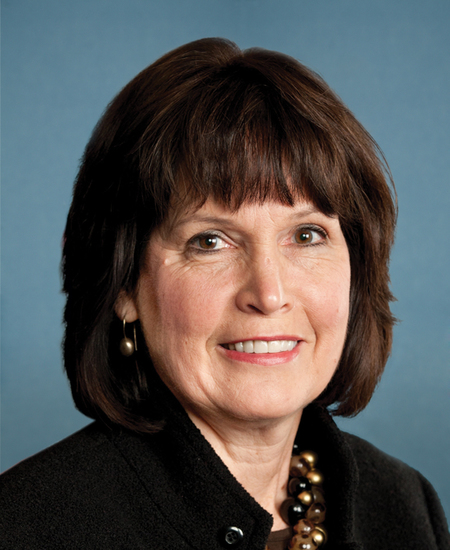
Rep. Betty McCollum
Sponsored bills
Increasing Land Access, Security, and Opportunities Act This bill provides statutory authority for and expands the Farm Service Agency's (FSA's) Increasing Land, Capital, and Market Access Program (the Increasing Land Access Program) for farmers, ranchers, and forest owners. Specifically, the FSA must make competitive grants to, enter into cooperative agreements with, or provide other capital support to eligible entities (e.g., state or local governments, Indian tribes, nonprofit organizations, and institutions of higher education) to provide direct assistance to farmers, ranchers, and forest owners who are (1) historically underserved, or (2) operating in high-poverty areas. The bill specifically excludes from assistance any foreign-based or foreign-owned corporation. The direct assistance may include payments to intended beneficiaries to acquire real property (including air rights and water rights), secure clear title on an heirs' property farmland, and improve or remediate land, water, and soil. Eligible entities may also use grants (1) to provide direct assistance to intended beneficiaries in assessing, purchasing, acquiring, or retaining eligible land; (2) for activities designed to support farm establishment and long-term viability; and (3) to provide technical assistance. The FSA must establish a stakeholder committee and, in collaboration with the committee, develop a process for evaluating proposals and distributing funds to eligible entities. In developing this process, the FSA must consider perspectives from diverse stakeholders, diverse geographic distribution, and diverse farming models, practices, and purposes.

Animal Welfare Enforcement Improvement Act This bill revises the licensing process of the Department of Agriculture (USDA) for animal dealers and exhibitors to expand USDA's oversight and enforcement of animal welfare requirements. Dealers and exhibitors must apply to USDA for licenses or renewal licenses each year. In order to obtain the licenses or renewals, dealers and exhibitors must meet certain standards for the humane treatment of animals and pass inspections as specified by this bill. USDA may not issue or renew such licenses if the dealers or exhibitors have violated laws relating to animals or if the issuance of the licenses would facilitate the circumvention of state or local laws that prohibit the private ownership of certain animals. Further, USDA must suspend the licenses of dealers or exhibitors whose violations present a risk to animal welfare. USDA must revoke the licenses if the violations persist or if the licensees commit multiple violations. Dealers and exhibitors with suspended or revoked licenses may not be (1) granted another license, (2) granted another license through another person or entity, or (3) employed by another licensee to work with animals during the period of the suspension or revocation.
This concurrent resolution opposes actions that undermine Israel's future as a Jewish, democratic state. The resolution expresses that democracy is at the core of the special relationship between the United States and Israel, and that Congress stands with all Israelis seeking to defend liberal democracy, judicial review, and independent political institutions.
Securing American Critical Minerals Act of 2023 This bill prohibits the transfer of critical minerals extracted or processed on federal land to foreign entities of concern and authorizes the Department of the Interior to enforce the bill's provisions. (Under the bill, a critical mineral is any material or other substance designated as critical by Interior.) The bill provides that an operator that extracts or processes critical minerals on federal land may not sell or transfer such critical minerals to a designated foreign terrorist organization, an entity involved in actions that resulted in a convictionfor espionage, or other foreign entity of concern. Additionally, such operators must annually report about these transfers to the public and certify that transferees are not foreign entities of concern. The reports must also specify the critical minerals affected, location of the operator's activities, and identity of the recipient of the mineral. The bill authorizes Interior to address noncompliance with the bill's requirements by (1) denying a permit or other authorization; and (2) establishing administrative, civil, and criminal penalties. Interior must annually report to Congress about its enforcement activities and operators' annual reports. Further, Interior must collect a fee for any authorization related to extracting or processing of critical minerals on federal land, with revenues to be applied toward implementing the bill’s requirements,
Maddy summaryHR 4963, the Tax Fairness for Workers Act, would restore tax deductions for certain employee expenses. It creates an above-the-line deduction for union dues and expenses paid by wage-earning employees, and allows miscellaneous itemized deductions for other work-related expenses (like uniforms or supplies) that were previously disallowed after 2017 tax law changes. These provisions directly affect employees who pay union dues or incur qualifying job-related costs. The bill amends specific sections of the Internal Revenue Code to make these deductions available for taxable years beginning after December 31, 2022. It does not change tax rates or provide new benefits, only reinstating previously eliminated deductions for eligible workers.
Maddy summaryThe PLANT Act (Peas, Legumes, And Nuts Today Act) creates new support systems for plant-based food producers by amending agricultural programs to include plant protein products like peas, legumes, and mushrooms. It increases marketing loan rates for certain commodities (including mushrooms at $1.16 per pound), defines "plant protein products" for the first time, and establishes an Office of Plant-Based Foods and Innovative Production. The bill authorizes $25 million annually for fiscal years 2024-2028 to fund research, business development, and market expansion for plant-based foods through programs like the Plant-Based Food Innovation Initiatives. It directly affects farmers growing plant-based ingredients, food processors, and rural communities working with these products. The legislation provides concrete policy changes to support the growing plant-based food industry through defined programs and dedicated funding.
Maddy summaryThe Break the Cycle of Violence Act establishes federal grants to fund community-based violence intervention programs in areas disproportionately affected by gun violence, particularly communities of color. It authorizes $300 million for 2024, increasing to $700 million annually through 2031, for evidence-informed strategies including trauma-responsive care, violence interruption, and economic opportunities for opportunity youth (ages 16-25 not in school or employment). The bill requires grantees to implement culturally competent services targeting individuals at high risk of violence or victimization, with a focus on reducing gun violence without contributing to mass incarceration. It creates a National Community Violence Response Center to coordinate data collection, research, and best practices for community violence prevention. The legislation also includes provisions for job training and workforce development programs through the Department of Labor to connect opportunity youth with in-demand occupations.
Maddy summaryHR 4965, the Kimberly Vaughan Firearm Safe Storage Act, requires the Attorney General to create voluntary best practices for safe firearm storage in homes, businesses, vehicles, and other locations within 180 days of enactment, with public input. Starting January 1, 2025, firearm manufacturers must include a "SAFE STORAGE SAVES LIVES" notice with each new handgun, rifle, or shotgun, directing buyers to the public website with these guidelines. The bill also establishes a $10 million annual grant program for states and tribes to fund public programs distributing safe firearm storage devices (like locked containers) and requires grantees to use at least 75% of funds for these programs. It does not mandate storage for individuals but provides resources and information to promote safer practices.
Maddy summaryHRES 619 is a symbolic House resolution expressing support for designating July as "Disability Pride Month." It recognizes that 61 million U.S. adults have disabilities and notes July coincides with the anniversary of the Americans with Disabilities Act (ADA). The resolution calls on the public to observe the month through celebrations and to actively prevent discrimination against people with disabilities. As a non-binding resolution, it does not create new legal requirements but aims to raise awareness of disability inclusion.