Social Security 2100: A Sacred Trust This bill makes changes to Social Security benefits, taxes, and other aspects of the program, including by raising the primary insurance amount, increasing the maximum taxable earnings that are subject to Social Security payroll taxes, and requiring Social Security account statements to be mailed unless the individual recipient opts for electronic delivery.
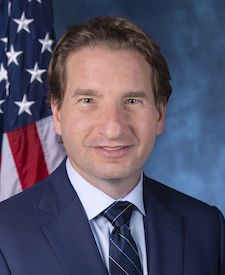
Rep. Dean Phillips
Sponsored bills
Public Service Freedom to Negotiate Act of 20 21 This bill provides minimum collective bargaining rights and procedures for public employees and prohibits strikes by certain public safety workers. The Federal Labor Relations Authority (FLRA) shall determine for each state whether the laws of such state substantially provide for each of the minimum standard collective bargaining rights and procedures specified by this bill, including the right of public employees and supervisory employees to self-organize, form or join a labor organization, or collectively bargain. The FLRA must issue rules and take actions to establish and administer bargaining rights and procedures for those states that do not substantially provide for them. No employers, emergency services employees, or law enforcement officers may engage in a lockout, strike, or any other organized job action that is likely to result in a measurable disruption of the delivery of emergency or public safety services. Furthermore, no labor organization may be the cause of a violation of such prohibition.
State, Local, Tribal, and Territorial Fiscal Recovery, Infrastructure, and Disaster Relief Flexibility Act This bill allows states, tribes, territories, and localities to use certain COVID-19 relief funds for new categories of spending, including for natural disasters and infrastructure projects. It also makes changes to expenditure deadlines and other aspects of this funding. Specifically, recipients may use funds for emergency relief from natural disasters and associated negative economic impacts of natural disasters. In addition, recipients may use a portion of their COVID-19 relief funds for designated infrastructure projects, such as nationally significant freight and highway projects. Furthermore, the bill allows recipients to expend COVID-19 relief funds on these types of infrastructure projects until September 30, 2026. Under current law, recipients must expend the funds by December 31, 2024. Other changes in the bill include (1) modifying eligibility and allocation requirements for funding set aside for counties and Indian tribes that are near public lands, (2) allowing Indian tribes an additional year to expend their COVID-19 relief funds, and (3) establishing a process for government entities to decline COVID-19 relief funds and requiring any declined funds to be used to reduce the federal deficit.
Prince Congressional Gold Medal Act This bill provides for the award, posthumously, of a Congressional Gold Medal to Prince Rogers Nelson, better known as Prince, in recognition of his achievements as a musician and contributions to American culture.
This resolution expresses the sense of the House of Representatives that the U.S. Postal Service should issue a commemorative postage stamp honoring Ralph Samuelson, known as the Father of Waterskiing, to commemorate the upcoming 100-year anniversary of the invention of waterskiing.
Meeting our Seniors' Social Security Needs Act This bill requires the Social Security Administration (SSA) to ensure that each SSA office and state agency that makes disability determinations for Social Security disability benefits is fully staffed to answer phone calls during standard business hours.
Gold Star Spouses Non-Monetary Benefits Act This bill addresses certain federal benefits for surviving spouses of members of the Armed Forces, including those who have remarried. For purposes of noncompetitive appointment to government employment, a surviving spouse of a member of the Armed Forces who was married to such member at the time they died while on active duty may be appointed as a military spouse, regardless of remarriage. Additionally, widows or widowers of certain veterans who served on active duty must be considered preference eligible for purposes of government employment, regardless of remarriage. A surviving spouse who is eligible for the gold star lapel button is entitled to commissary and exchange privileges to the same extent and on the same basis as the surviving spouse of a retired member of the uniformed services. Such spouses are also entitled, upon request, to medical and dental care provided in facilities of the uniformed services. A surviving spouse who is eligible for a gold star lapel button must be permitted to use commissary stores and certain retail facilities on the same basis as a dependent of a member of the Armed Forces on active duty. In regard to Department of Veterans Affairs (VA) benefits, the remarriage of a surviving spouse of a veteran does not bar the furnishing of non-monetary benefits to a surviving spouse who is eligible for a gold star lapel button. Such surviving spouses who are eligible for a gold star lapel button are also eligible for certain VA home loan programs.

Caring for Survivors Act of 2021 This bill increases the monthly rate of dependency and indemnity compensation payable to surviving spouses through the Department of Veterans Affairs. The bill also adjusts the amount payable to surviving spouses and children of veterans who were rated as totally disabled for a period of less than 10 years before their death.
Safeguarding Human Rights in Arms Exports Act of 2021 or the SAFEGUARD Act of 2021 This bill establishes specified measures to prevent the sale, export, or transfer of defense articles or defense services to foreign countries for use in violation of international humanitarian law or internationally recognized human rights. These measures include (1) prohibiting arms sales to countries committing genocide or war crimes, (2) requiring a consideration of human rights practices and democratization in any foreign country to which an arms sale is contemplated, and (3) providing for congressional oversight of arms exports to foreign countries wherein certain human rights violations have occurred.
Elected Official Lobbying Prohibition Act of 2021 This bill prohibits state and local elected officials from lobbying the federal government on behalf of private (i.e., nongovernmental) clients. The bill's restrictions apply to officials who serve in a statewide elected office, a state legislature, an elected office of a local government that meets specified population standards, or as the chair of a political party of a state, including officials of U.S. territories and the District of Columbia. The bill does not apply to officials acting on behalf of their constituents or who are otherwise acting in an official capacity.